
Creeping inch plant
Callisia repens L.
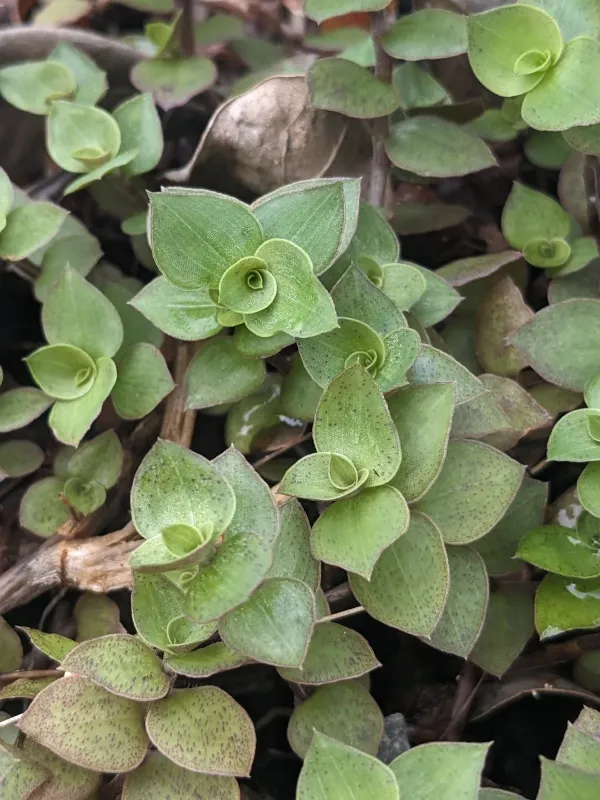
Description
Growing requirements
Creeping inch plant (Callisia repens L.) belongs to the Commelinaceae family. Native to tropical parts of Central and South America, it is widely recognized as a creeping perennial herb that thrives in shaded forest understories.
The plant features small, oval-shaped leaves arranged in two rows on slender, succulent stems. This growth habit makes it an excellent choice for ground cover in warm environments or as a trailing ornamental in containers.
Optimal development requires temperatures ranging from 20°C to 25°C. As a tropical species, it does not tolerate frost and should be protected from cold drafts, which can cause significant damage to the leaf tissues.
Regarding soil requirements, this crop demands well-draining, slightly acidic to neutral substrate. A mix of peat, bark, and perlite provides the necessary structure and aeration to support root health and prevent compaction.
Light exposure should be bright but indirect to maintain color saturation. Direct, intense sunlight often causes bleaching and necrotic spotting on the foliage, while insufficient light leads to etiolated, sparse growth.
Main diseases and pests
Common pests affecting Callisia repens include spider mites and mealybugs. These organisms thrive in low-humidity environments and can rapidly infest the dense foliage if left unchecked.
Root rot and stem rot are the primary threats caused by poor agricultural practices, specifically overwatering and inadequate drainage. These diseases are difficult to treat once the vascular system is affected.
Disease management focuses on preventive measures: ensuring adequate air circulation around the plants and avoiding water saturation of the substrate during the dormant growth phase.
Regular inspection of the leaf undersides is crucial to identify pest presence early. Chemical control via horticultural oils or systemic insecticides may be necessary in case of heavy infestation.
Maintaining proper hygiene by removing dead plant matter and using sterilized soil helps reduce the risk of pathogen spread, ensuring the longevity and health of the crop.