
Espostoa lanata
Espostoa lanata (Kunth) Britton & Rose
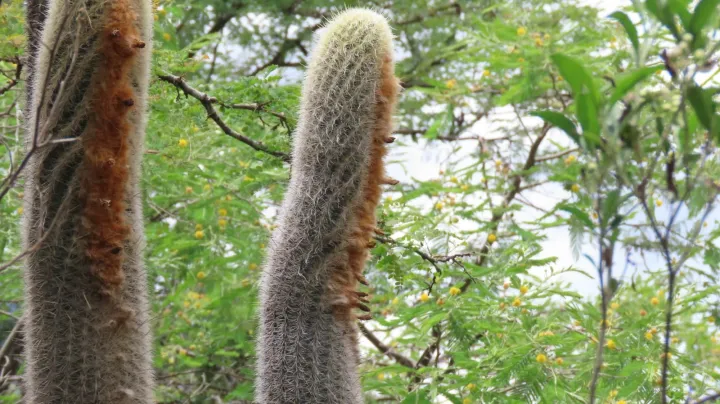
Description
Sowing dates
Propagation of Espostoa lanata is primarily achieved through seeds, which should be sown in a well-draining, gritty substrate during the spring months when temperatures are consistent.
Seeds require high humidity levels to germinate successfully, but it is essential to ensure adequate airflow immediately after germination to prevent the development of damping-off fungi.
Cuttings can also be taken from side shoots; however, it is critical to let the cut surface air-dry for several days until a callous forms before attempting to root it in sand.
Young plants develop very slowly, necessitating a patient approach to cultivation and a stable environment without sudden fluctuations in light or temperature levels.
The potting medium must be porous and inorganic-based, as organic materials can retain too much water and cause the delicate root system of young seedlings to decay.
Growing requirements
Espostoa lanata is a member of the Cactaceae family, natively inhabiting high-altitude slopes in Peru and Ecuador, where it is exposed to harsh, cool, and windy conditions.
The plant thrives in bright, direct sunlight which promotes the dense, white woolly hairs that protect the cactus from intense ultraviolet radiation in its natural habitat.
Soil requirements involve a specialized cactus mix with excellent drainage properties, typically incorporating a significant portion of pumice, coarse sand, and lava rock.
Watering must be very infrequent, especially during the winter months, when the plant enters a period of dormancy and requires significantly less moisture to survive.
Temperature management should mimic its native mountain climate, preferring cool nights and moderate daytime temperatures to maintain health and structural integrity.
Main diseases and pests
Root rot is the most common threat to this species, typically caused by overwatering or soil that stays saturated for too long, preventing oxygen from reaching the roots.
Mealybugs are frequent pests that thrive in the dense woolly covering of the plant, often going unnoticed until the infestation has caused significant damage to the epidermis.
Spider mites may appear in environments with low humidity, causing fine webbing and discoloration on the surface of the plant, which detracts from its aesthetic appeal.
Fungal infections can develop if the plant is kept in poor ventilation conditions, often resulting in localized soft spots that must be carefully excised and treated.
Routine inspection of the stem and crown is essential for early detection of pests, as the woolly layer can act as a shield for parasites attempting to feed on the plant sap.