
Echinopsis densispina
Echinopsis densispina Werderm.
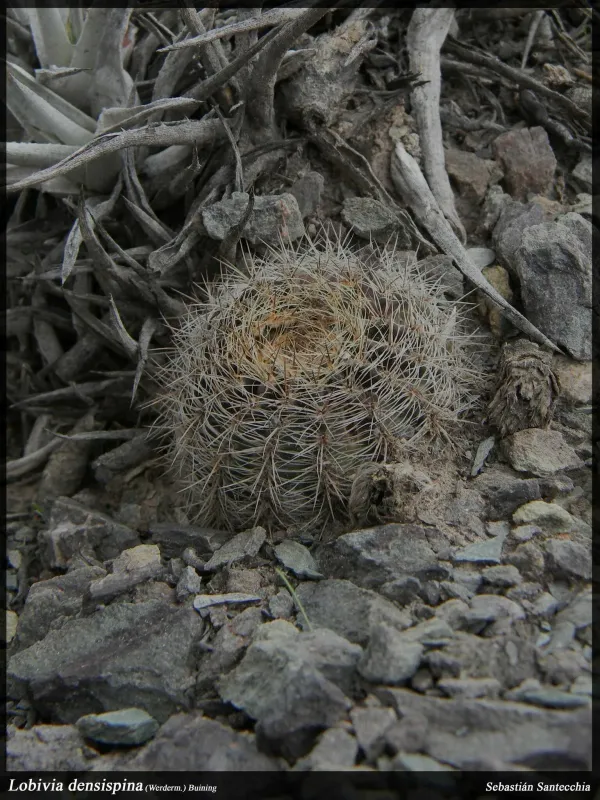
Description
Sowing dates
Propagation of Echinopsis densispina is primarily performed through seeds, which should be sown in a well-draining, sterile substrate mix.
The ideal time for sowing is during the spring, ensuring the seeds receive consistent temperatures between 20 and 25 degrees Celsius for germination.
The substrate must be porous, containing a high percentage of fine grit or perlite, to prevent the delicate seeds from rotting before sprouting.
Keep the seed trays covered with glass or transparent plastic to maintain high humidity levels until the first spines begin to appear on the seedlings.
Once established, the seedlings should be gradually acclimatized to lower humidity levels to ensure robust growth and avoid etiolation.
Growing requirements
Echinopsis densispina belongs to the Cactaceae family and is native to the rocky, high-altitude landscapes of South America.
This species requires full, direct sun exposure to maintain its compact growth form and to encourage the production of dense, colorful spines.
The soil must be highly mineral-based, typically consisting of a mix of sand, pumice, and minimal organic leaf mold for optimal aeration.
Watering should be strictly regulated: heavy watering during the active growth period, followed by a total reduction during the winter dormancy.
Adequate ventilation is critical, as stagnant air can lead to the rapid proliferation of fungal spores during hot and humid periods.
Main diseases and pests
Root rot is the most frequent agricultural challenge, usually resulting from poor drainage or excessive watering during dormant phases.
Red spider mites are common pests that thrive in dry environments and can cause significant disfigurement to the cactus epidermis.
Mealybugs can often hide in the dense spine clusters, making them difficult to detect and eradicate without systemic insecticidal treatment.
To prevent disease spread, it is essential to maintain dry conditions around the collar of the plant and avoid overhead irrigation.
Integrated pest management strategies, including biological controls or targeted chemical applications, should be utilized upon early detection of infestations.