
Echinopsis calochlora
Echinopsis calochlora K. Schum.
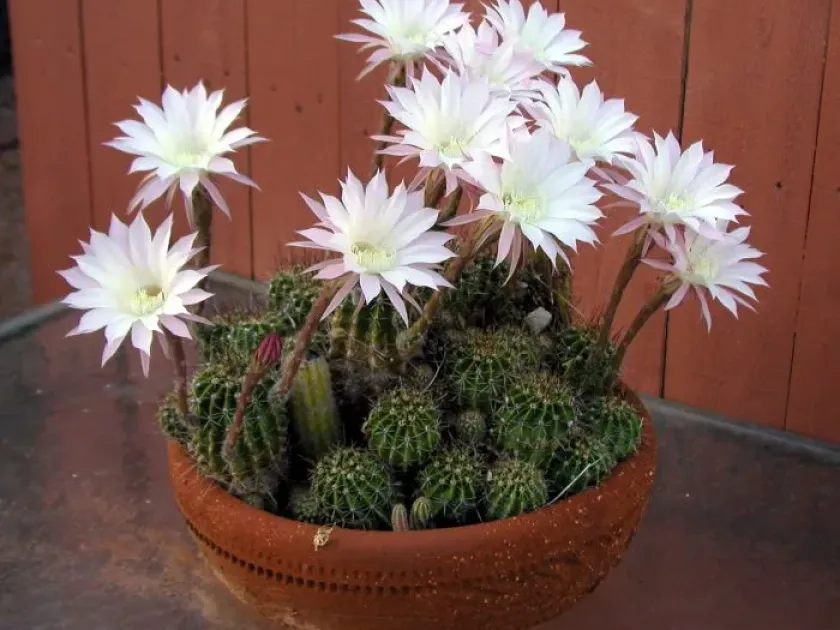
Description
Sowing dates
Propagation of Echinopsis calochlora is typically achieved through seeds or vegetatively by separating offsets, known as 'pups'. Seeds are best sown during the spring when increasing daylight hours promote successful germination.
For sowing, use a lightweight, sandy-peat substrate mixed with fine gravel. Containers should be covered with transparent plastic or glass to create a greenhouse effect, maintaining a temperature between 22–25 degrees Celsius.
It is essential to maintain moderate and regular surface moisture using a spray bottle. Proper ventilation must be introduced immediately after the first seedlings appear to prevent the onset of fungal diseases.
Pricking out the young cacti is recommended once they reach the size of a pea, transplanting them into individual pots. Be careful not to bury the root neck, as this can easily lead to rotting in young plants.
Vegetative propagation via offsets allows for faster maturation. The separated pup should be dried for a few days to form a protective callus before being placed in moist soil to facilitate rooting.
Growing requirements
Echinopsis calochlora is a member of the Cactaceae family, native to South America, specifically regions of Brazil. In its natural habitat, it thrives on well-drained, rocky slopes and outcrops.
For optimal development, this cactus requires bright, direct sunlight, especially during the active growing season. Insufficient light causes the stem to stretch, leading to a loss of its characteristic spherical shape and natural color.
The culture requires high-quality, porous, and well-aerated soil with a slightly acidic to neutral pH. An ideal mix consists of turf soil, leaf humus, and coarse river sand to ensure excellent drainage.
During the summer, the temperature should range between 20–28 degrees Celsius, while winter requires a dormancy period. A cool wintering phase at 10–12 degrees Celsius in dry conditions is crucial for inducing blooms.
Watering must be strictly regulated: during the growing season, water only after the substrate has completely dried out. Excess moisture is the primary threat to the plant, quickly damaging the delicate root system.
Main diseases and pests
The main pests threatening Echinopsis calochlora include mealybugs and spider mites. Upon detecting white, cotton-like masses or fine webbing, immediate treatment with appropriate insecticides or acaricides is required.
Root and stem rots are primarily caused by systemic overwatering or water accumulation in the drainage saucer. The first visual symptom of disease is a discoloration of the cactus epidermis near the base.
To prevent fungal infections, avoid letting water touch the cactus stem during watering, especially in cooler weather. Bottom watering is recommended to keep the epidermis dry and protect the root zone.
Improperly chosen pots without drainage holes are a significant risk factor leading to plant death. Always ensure there is a layer of expanded clay or pebbles at the bottom to facilitate the free outflow of water.
Regular inspection of the plant allows for early detection of issues before they become critical. A healthy cactus should exhibit a firm epidermis and well-developed, radial spines.