
Echinopsis albispinosa
Echinopsis albispinosa K. Schum.
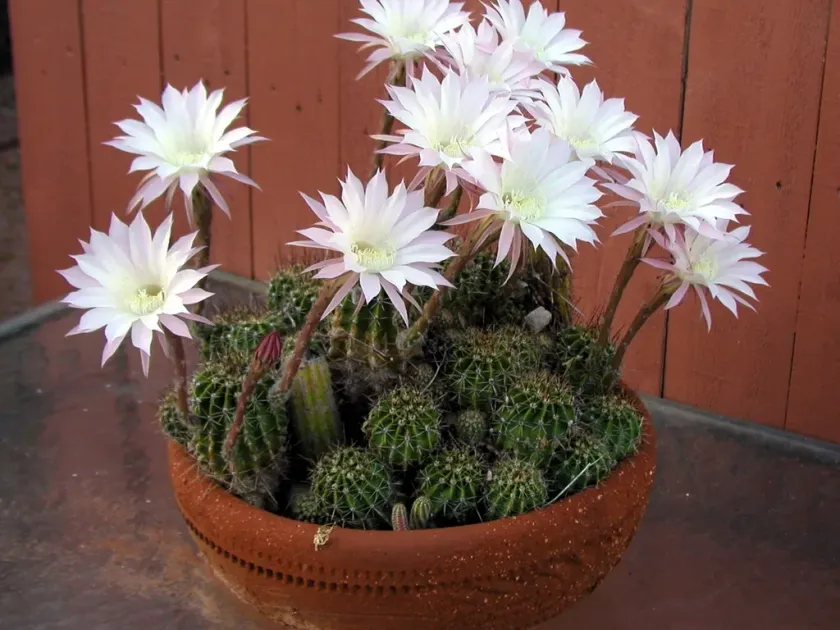
Description
Sowing dates
Echinopsis albispinosa is typically propagated through seeds sown in late winter or early spring. This allows the young plants to establish strong root systems during the primary growing season.
A well-draining, sterilized mineral-based substrate is essential for seed germination. The seeds should be pressed into the surface and kept in a warm environment, ideally between 22 and 26 degrees Celsius.
High humidity levels must be maintained initially using a transparent cover. However, once germination occurs, ventilation must be increased gradually to prevent seedling rot and damping-off disease.
Seedlings should remain in the germination container until they are robust enough for individual potting. This usually takes several months of careful care and monitoring.
Vegetative propagation via offsets is also common. These pups are carefully removed from the mother plant, left to callus for several days, and then planted in a dry sandy medium until rooted.
Growing requirements
As a member of the Cactaceae family native to South America, this plant requires abundant natural sunlight. Direct exposure is necessary for healthy, compact growth and proper spine development.
The potting medium must be porous and inorganic-heavy. A mix of peat-free soil, coarse sand, and expanded clay or pumice provides the aeration needed to keep the root system oxygenated.
Irrigation should follow the "soak and dry" method during the growing season. It is critical that the soil is entirely dry before the next watering session begins to avoid root death.
A distinct winter dormancy period is required for the plant to thrive. Maintaining temperatures around 10 degrees Celsius and keeping the soil completely dry triggers the plant's blooming cycle.
Proper drainage is the most vital technical requirement. Using pots with large drainage holes and ensuring the plant never sits in a tray of standing water prevents most common physiological issues.
Main diseases and pests
Mealybugs are a frequent pest for Echinopsis albispinosa, often clustering in the areoles. Their feeding weakens the plant and can facilitate secondary bacterial infections.
Spider mites often attack the epidermis in low-humidity conditions, causing unsightly corky patches or discoloration. Regular misting or monitoring can help manage mite populations.
Fungal infections, specifically root rot, are the primary cause of mortality in cultivated cacti. This is almost always triggered by overwatering or poor drainage in the growth substrate.
Treatment involves using appropriate systemic fungicides or insecticides. Affected tissue should be cut away to healthy growth if the rot is caught in the early stages, followed by a drying period.
Maintaining a clean, airy environment with excellent ventilation reduces the risk of fungal spread. Avoid overcrowding plants, as stagnant air promotes the development of various pathogens.