
Vriesea fosteriana
Vriesea fosteriana L. B. Sm.
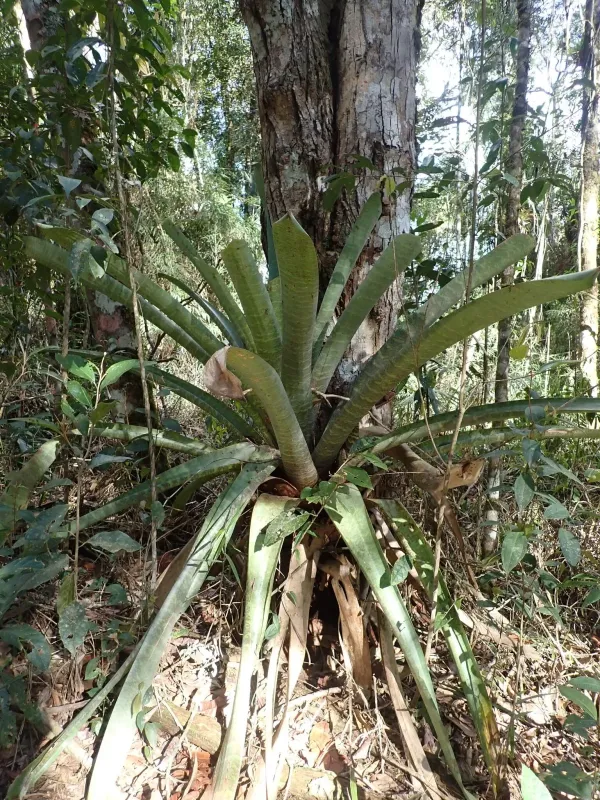
Description
Growing requirements
Vriesea fosteriana is a prominent member of the Bromeliaceae family, known for its architectural beauty and large, rosette-forming leaves. Originating from the tropical rainforests of Brazil, this species thrives in environments that mimic its natural epiphytic habitat.
To ensure healthy growth, the plant requires a stable temperature range between 20 °C and 25 °C throughout the year. It is sensitive to cold drafts and should be positioned away from ventilation systems or windows that admit direct, freezing air currents.
Bright, indirect sunlight is essential for this species. While it can tolerate some shade, too little light may cause the foliage to lose its vigor, whereas direct harsh sun can result in significant leaf scorch, damaging the plant's aesthetic and photosynthetic capacity.
The root system requires a specialized, well-draining substrate. A mix consisting of orchid bark, perlite, sphagnum moss, and high-quality peat is recommended to maintain the necessary balance between moisture retention and essential root aeration.
Watering should be carried out by filling the central tank (the leaf rosette) with soft, chlorine-free water. Additionally, the substrate should be kept lightly moist, ensuring that the plant never sits in standing water to prevent root asphyxiation.
Main diseases and pests
Vriesea fosteriana is susceptible to common pests such as mealybugs and scale insects, which often colonize the hidden areas deep within the leaf bases. Regular manual inspection and the use of insecticidal soap are effective methods for controlling these infestations.
Fungal pathogens and rot often occur due to poor air circulation or over-watering during dormant periods. It is vital to maintain a clean environment and ensure that excess water can evaporate easily from the rosette to prevent tissue decay and secondary bacterial infections.