
Narrowleaf Yucca
Yucca angustissima
Description
Sowing dates
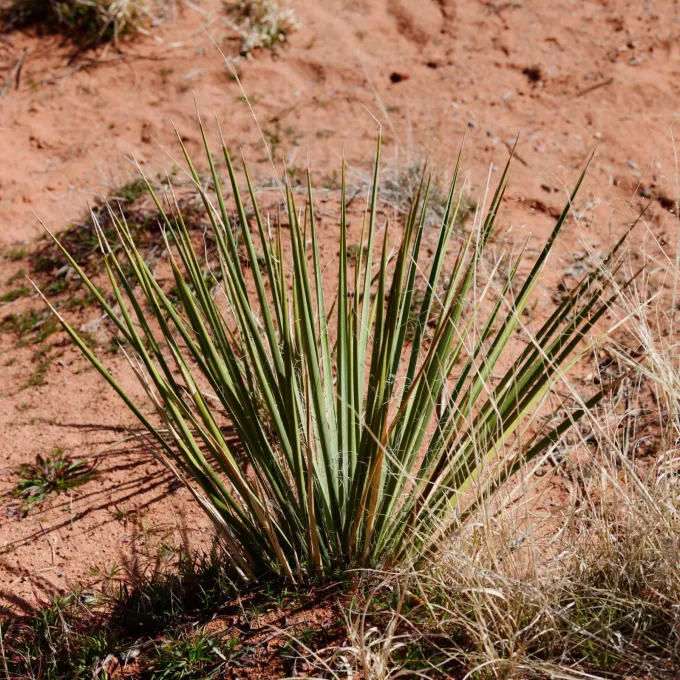
The Narrowleaf Yucca (Yucca angustissima) is a perennial member of the Asparagaceae family. It is native to the arid environments of the Southwestern United States, where it thrives in rugged, desert-like conditions.
In a commercial agricultural context, the crop is typically established via seeds or propagation of basal offsets. Sowing occurs in the spring when soil temperatures reach a consistent minimum of 15°C.
Seeds require proper stratification to break dormancy and ensure high germination rates. They should be sown at a shallow depth, usually not exceeding 2 cm, to avoid burying the seeds in environments where moisture is scarce.
When using vegetative propagation, planting is conducted during the onset of the growing season. This ensures that the root system develops sufficiently before the intense summer heat sets in.
Spacing is a critical factor for plantation management. A density that allows for adequate airflow between plants helps maintain health and prevents the accumulation of pathogens in the dense leaf rosettes.
Growing requirements
This species is a true xeric plant, exhibiting remarkable resilience to extreme heat and prolonged moisture stress. Its physiological adaptations allow it to store water in its fibrous tissues, ensuring survival in arid climates.
The crop thrives in well-drained, sandy, or gravelly soils. Soil aeration is essential; any condition leading to waterlogging or compaction is detrimental to the fibrous roots and typically results in rapid plant decline.
Exposure to full, direct sunlight is a mandatory requirement for the Narrowleaf Yucca. Sufficient solar radiation is necessary for both plant development and the maturation of the fibers within the leaves.
Regarding climate, the plant is hardy and capable of tolerating fluctuating temperatures, including periods of freezing, provided the soil remains dry during these dormant cold intervals.
Agronomic management is minimal. It focuses on weed control in the initial stages and ensuring that the plant is not subjected to artificial irrigation, which can encourage disease development.
Main diseases and pests
The primary threats to Yucca angustissima are fungal pathogens, specifically those causing root and crown rots. These diseases are almost exclusively linked to poor drainage or excessive soil moisture.
Foliar diseases, including various leaf spot fungi, can occur in stagnant air conditions or high humidity, negatively impacting the quality and tensile strength of the harvested fiber.
Pests such as scale insects and spider mites frequently colonize the leaf surfaces, piercing the tissues and withdrawing sap, which weakens the plant and stunts growth.
Weevil infestations pose a significant risk, as larvae can bore into the crown of the plant, potentially destroying the central growing point and leading to the eventual death of the individual.
Integrated Pest Management (IPM) practices, emphasizing cultural controls like proper spacing and site selection, are the most effective strategies for mitigating these biological risks.
Harvesting
The economic value of the Narrowleaf Yucca lies in its high-quality, durable leaf fiber. Harvest cycles typically begin once the plants reach maturity, usually between three and four years after initial planting.
The harvesting process involves the selective removal of the lower, older leaves. These leaves contain the most developed and robust fibers, which are ideal for industrial or artisanal rope and textile production.
Post-harvest processing involves decortication, which separates the rigid fibers from the succulent plant pulp, followed by sun-drying to stabilize the material and prepare it for final manufacturing.
Fiber yields are dictated by environmental consistency. In ideal arid conditions, the plant continuously produces new leaves, allowing for periodic harvests without jeopardizing the long-term health of the plantation.
Beyond its fiber production potential, the species is increasingly recognized for its role in sustainable landscape restoration and as a decorative plant in water-conscious gardening.