
Ornithogalum baeticum
Ornithogalum baeticum
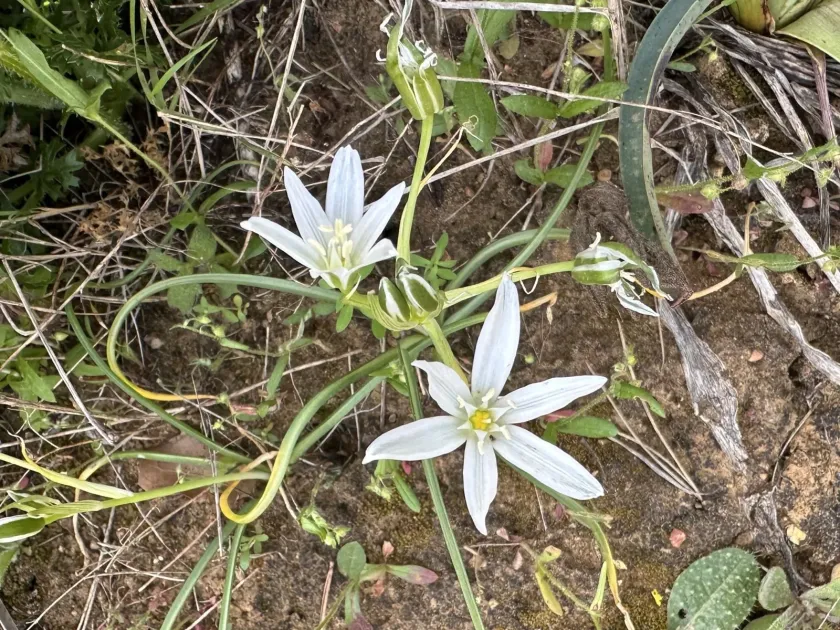
Description
Sowing dates
The planting of Ornithogalum baeticum bulbs should ideally take place in the autumn, allowing the roots to establish before the onset of winter.
Bulbs are typically planted at a depth of 8 to 10 centimeters, ensuring they are placed in well-draining soil to prevent winter rot.
Proper spacing of 10 to 15 centimeters between individual bulbs is necessary to provide enough room for healthy leaf development and flowering.
If spring planting is necessary, ensure the bulbs have been stored in a cool, dry place to maintain their viability until the soil warms up.
Selecting a location with consistent light exposure is crucial, as this promotes the development of robust, high-quality bulbs for the following season.
Growing requirements
Ornithogalum baeticum belongs to the Asparagaceae family and is native to the Iberian Peninsula, where it thrives in Mediterranean conditions.
The plant requires full sun to partial shade and prefers sandy or gritty soils that provide excellent drainage throughout the year.
It is well-adapted to warm, dry summers, which constitute the plant's natural dormancy phase after the spring flowering period concludes.
During the active growing season, moderate irrigation is required, but it is vital to reduce water significantly as the foliage begins to wither.
The soil pH should ideally range from neutral to slightly alkaline, supporting the plant's mineral uptake and overall physiological health.
Main diseases and pests
The most significant pathological threats include fungal infections such as Fusarium bulb rot, which is often exacerbated by poor drainage and excessive moisture.
Pests like bulb mites and larvae of the onion fly can cause substantial damage to the subterranean parts of the plant during the early growth stage.
Preventative measures, including the application of systemic fungicides and proper sanitation of the planting site, are essential for successful cultivation.
Slugs and snails may target emerging leaves; using physical barriers or organic repellents can effectively mitigate this risk to the crop.
Environmental stress, particularly sudden temperature drops after a mild spell, can weaken the plant and make it more susceptible to opportunistic pathogens.
Harvesting
Harvesting should only occur once the foliage has completely died back naturally, as this indicates that energy has returned to the bulb.
Once lifted, the bulbs must be cleaned of excess soil and cured in a shaded, well-ventilated area to allow the outer tunics to dry properly.
Storage requires a cool, dry environment with good airflow, which is critical for preventing fungal outbreaks and dehydration of the bulb tissue.
The process of dividing clusters of bulbs should be performed during the harvest to ensure each bulb has sufficient space to grow in the next cycle.
Quality control during the post-harvest phase involves inspecting bulbs for softness or lesions, ensuring only healthy specimens are kept for propagation.