
Bellevalia eigii
Bellevalia eigii
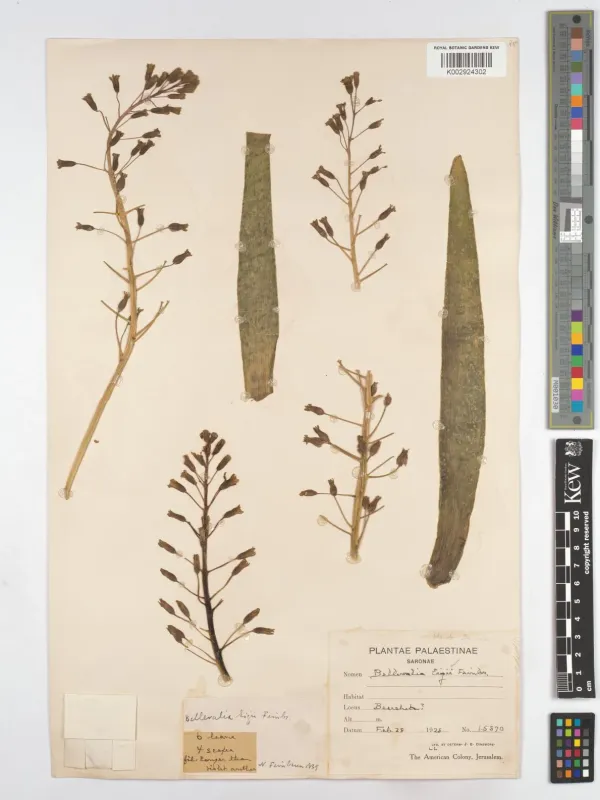
Description
Sowing dates
Bellevalia eigii is a bulbous perennial plant from the Asparagaceae family. In agricultural and horticultural contexts, it is primarily propagated vegetatively by dividing daughter bulbs during the plant's dormant period, which typically occurs after the foliage has withered.
Seed propagation is also possible but requires a period of stratification. Seeds should be sown in the autumn in a well-drained substrate, allowing them to undergo natural temperature fluctuations during winter, which is essential for breaking dormancy.
For bulb planting, the optimal time is early autumn. Planting depth should be approximately 5 to 8 centimeters, which protects the bulbs from extreme temperature fluctuations and encourages strong root development before winter dormancy sets in.
Spacing is critical for the health of Bellevalia eigii colonies. Providing at least 10–15 centimeters between bulbs ensures adequate airflow, which is a major factor in preventing the spread of fungal pathogens in the soil.
The establishment of a new planting bed requires careful soil preparation. The substrate must be loose and free of debris, with added organic matter if necessary, although this species generally thrives in lean, well-draining soils typical of its native Mediterranean habitat.
Growing requirements
This culture requires excellent drainage. The most suitable soil types are sandy or gritty loams that do not retain excess water, as waterlogged conditions quickly lead to bulb rot, which is the primary cause of failure in this species.
Full sun exposure is preferred for Bellevalia eigii. While the plant can tolerate light partial shade, maximum flowering intensity and bulb maturation occur when the plant receives direct sunlight for the majority of the day during its spring growing phase.
The plant is adapted to a Mediterranean-like climate, characterized by cool, wet springs and hot, dry summers. During the summer dormancy period, it is crucial to keep the soil dry to mimic the natural ecological cycle of the species.
Soil reaction should ideally be neutral or slightly alkaline. If the soil is too acidic, applying lime or crushed limestone can help achieve the necessary pH balance to ensure nutrient availability for the plant.
Moderate irrigation should be provided during the spring vegetative growth phase. As soon as the foliage begins to turn yellow after flowering, all watering should be ceased to allow the bulbs to undergo proper summer maturation.
Main diseases and pests
Fungal diseases are the most significant threat to Bellevalia eigii. Pathogens such as Botrytis or various soil-borne rots can destroy a collection if humidity remains high during the plant's dormant phase.
Soil-dwelling pests like wireworms and larvae of various beetles pose a threat to the bulb integrity. Regularly inspecting the planting site and using appropriate organic or chemical controls can help manage these populations.
Aphids can infest the flower spikes in spring, weakening the plant and potentially transmitting viral diseases. If an infestation is detected, timely application of insecticidal soap or other appropriate treatments is recommended.
The bulb scale mite can also cause significant damage by feeding on the internal tissues of the bulb. Using only clean, healthy-looking bulbs for planting and rotating the cultivation area every few years can reduce the risk of infestation.
In regions with harsh winters, frost heaving of the soil can expose bulbs to freezing temperatures. Applying a light layer of mulch or protective material can prevent this and safeguard the root system throughout the colder months.