
Asparagus racemosus
Asparagus racemosus
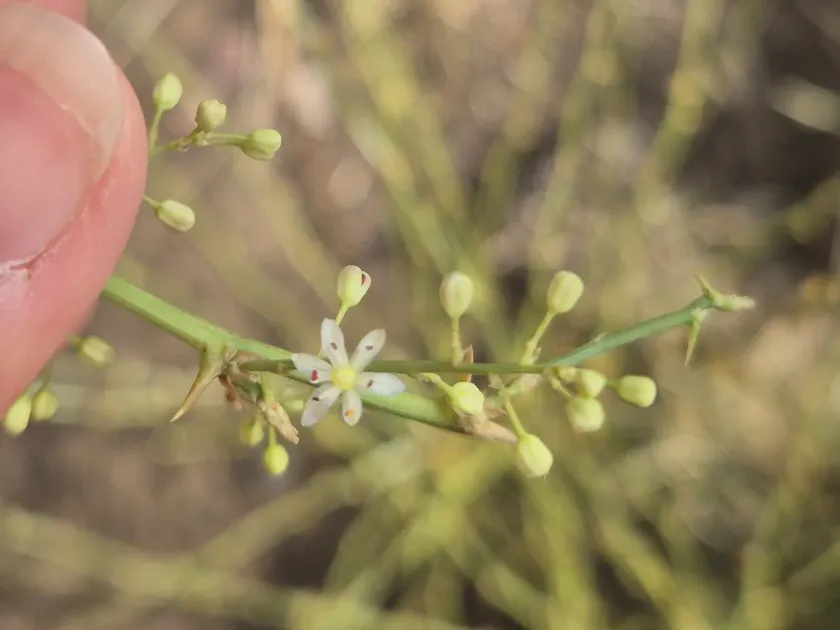
Description
Sowing dates
Propagating Asparagus racemosus typically involves starting from seeds, which require careful handling due to their hard coat. Scarification or soaking in warm water for at least 24 hours is highly recommended to break dormancy and ensure uniform germination.
Sowing should ideally occur in the spring when soil temperatures reach approximately 20 degrees Celsius. In tropical environments, planting can be performed throughout the year, provided there is adequate moisture for initial seedling development.
Seeds should be planted at a depth of 1 to 2 centimeters in a well-draining, nutrient-rich potting mix. Seedlings usually emerge within two to four weeks and should be moved to individual containers until they are robust enough for field transplanting.
When establishing a plantation, maintain a spacing of roughly 60 to 80 centimeters between plants. This distance provides enough room for the extensive root system to develop, which is the most valuable part of this medicinal crop.
Vegetative propagation by dividing the root clumps is also a viable method. This approach is often preferred by commercial growers to maintain genetic consistency and achieve a faster harvest compared to seed-based methods.
Growing requirements
Asparagus racemosus, a member of the Asparagaceae family, is a vigorous climbing shrub that thrives in well-draining sandy or loamy soils. It requires an environment with good aeration to prevent root rot, which is the most common cause of failure in this crop.
The plant performs best in areas receiving bright, filtered sunlight. While it is hardy, extreme midday heat can scorch the foliage, so many growers utilize shading structures to maintain optimal physiological activity during the peak summer months.
Water requirements are moderate, but the plant requires a consistent supply during its active growth phases. It is drought-tolerant once established due to its tuberous roots, but excessive soil moisture should be strictly avoided at all times.
The ideal temperature range for growth is between 20 and 30 degrees Celsius. In regions prone to frost, the plant must be protected or grown in controlled environments, as the aerial parts are sensitive to freezing conditions.
Organic matter supplementation, such as well-rotted compost, should be applied at the beginning of the growing season. A balanced fertilization program focusing on phosphorus and potassium encourages healthy tuber development and improves overall crop vigor.
Yield
The primary yield of Asparagus racemosus is its fleshy tuberous roots, harvested for pharmaceutical and medicinal applications. Yields are heavily dependent on soil quality, plant age, and the implementation of proper cultivation practices.
A full-scale harvest is typically conducted three years after planting. By this stage, the tubers have accumulated the necessary concentrations of saponins and other bioactive compounds required for high-quality herbal medicine.
Commercial yields can range from 1 to 2 tons of dried roots per hectare under optimal conditions. Maintaining consistent moisture levels and weed-free conditions during the first two years is essential for achieving these productivity levels.
Post-harvest processing involves thorough cleaning and rapid drying to ensure stability. The ratio of fresh to dried root weight is typically significant, and growers should calculate their production costs based on the dried product volume.
Crop rotation is recommended after every cycle of 5 years to maintain soil fertility and break the life cycles of soil-borne pathogens, ensuring that future plantings remain productive and disease-free.
Main diseases and pests
The most significant threats to Asparagus racemosus are fungal diseases such as Fusarium wilt and various root rots, often triggered by waterlogged soil conditions. Proper irrigation management is the primary defense strategy.
Pests such as aphids and spider mites frequently target the tender shoots during dry periods. Early detection and the use of integrated pest management practices are crucial to preventing large-scale damage to the foliage.
Chemical control should be applied judiciously, especially considering that the roots are harvested for human consumption. Many growers prefer biological agents or neem-based solutions to manage pest populations without leaving harmful residues.
Weed management is critical during the establishment phase, as the young plants are poor competitors. Mechanical cultivation or mulching helps reduce weed pressure while conserving soil moisture and promoting a healthier root environment.
Maintaining high plant immunity through balanced nutrition and avoiding stress factors like physical damage during weeding are effective ways to minimize the impact of common diseases on the plantation.
Harvesting
Harvesting the roots requires precision to avoid damaging the fleshy tubers. The procedure is best performed when the soil is slightly damp, making it easier to extract the root systems without causing excessive breakage.
Once harvested, the roots must be immediately cleaned, washed, and trimmed of all non-tuberous material. The tubers are then sliced to facilitate more efficient drying, which is essential to prevent microbial growth.
Drying should be conducted in shaded, well-ventilated areas or in controlled ovens at temperatures not exceeding 45 degrees Celsius. This method preserves the chemical integrity of the roots, which is vital for the medicinal market.
Proper storage is required to maintain quality, utilizing moisture-proof containers to protect the dried roots from humidity and pests. Consistent monitoring of storage conditions prevents degradation and ensures a longer shelf life.
Effective record-keeping of every harvest batch, including cultivation techniques and drying parameters, is highly recommended to maintain standardization and transparency for buyers in the pharmaceutical industry.