
Asparagus hybrids
Asparagus hybrids
Description
Sowing dates
Sowing seeds of asparagus (Asparagus officinalis) for seedling production begins in late March or early April. In warmer regions, direct seeding is possible, but using transplants significantly shortens the time to achieve harvestable production.
The optimal temperature for seed germination of asparagus hybrids is 20–25 degrees Celsius. Seeds have a hard seed coat, so they are often soaked in warm water for 2–3 days, with regular water changes, to accelerate the germination process.
Transplanting prepared seedlings to the permanent location is carried out at the age of 60–90 days, once the risk of spring frost has passed. Planting density should ensure sufficient space for root system development, typically 40–50 cm between plants in a row.
It is crucial to choose fields free of perennial weeds, as asparagus is highly sensitive to competition during the early stages of establishment. The use of mulch film helps suppress weeds and creates a favorable microclimate for young shoots.
When cultivating modern hybrids, one must consider their high growth vigor compared to traditional open-pollinated varieties. Using high-quality planting material from reputable breeders ensures uniform emergence and resilience against environmental stress factors.
Growing requirements
Asparagus prefers well-drained sandy loam or light loam soils with a neutral to slightly acidic pH (6.0–7.0). Poor drainage is unacceptable, as it triggers root rot in rhizomes that can extend up to two meters deep into the soil.
This crop is heliophilic, meaning it requires full sun; therefore, sites should be selected that are free from shading by trees or buildings. Insufficient sunlight leads to thin, spindly shoots and lower commercial quality.
Climate requirements involve a long warm season to allow the accumulation of carbohydrates in the rhizomes. However, asparagus exhibits good winter hardiness, successfully surviving soil freezing provided there is a snow cover.
The nutritional needs of hybrids are higher than those of standard varieties, particularly regarding nitrogen and potassium fertilizers. Regular fertilization during the summer period supports the formation of robust buds for the following season.
Wind conditions are an important factor: asparagus does not tolerate strong drafts but requires good aeration to prevent moisture accumulation around the stems, which minimizes the risk of fungal pathogen development.
Yield
Modern F1 asparagus hybrids significantly outperform traditional varieties in terms of potential yield. With proper agricultural practices, the productive life of an asparagus plantation can span 12–15 years or more.
No harvest is taken during the first two years after planting, allowing the plant to develop a massive vegetative canopy. Full harvest begins from the third year, with the duration of the harvest window gradually increasing as the crowns mature.
Average yields range from 5 to 8 tons per hectare, though intensive technology and top-performing hybrids can push these figures higher. Uniform harvesting is vital to prevent shoots from fern-out, which reduces overall quality.
Yield is directly dependent on the number and quality of fertile buds on the rhizome. Hybrids usually possess high shoot density, resulting in more consistent produce in terms of size and marketability.
After the harvest season ends, plants are allowed to grow vegetatively until autumn. This stage is critical as it is when sugar accumulation occurs in the rhizomes, which determines the yield potential for the following year.
Main diseases and pests
The primary threats to asparagus are root rots caused by Fusarium species. These pathogens thrive under conditions of excessive soil moisture and mechanical injury to the root system during cultivation or harvesting.
Asparagus rust (Puccinia asparagi) appears as brown pustules on the stems, leading to premature dieback of the vegetative mass and weakening of the plant. Fungicides and strict sanitation practices are used for control.
Among pests, the asparagus beetle and asparagus fly cause the most damage, with larvae feeding on young shoots and rendering them unsuitable for sale. Leaf beetles can also devastate the vegetative canopy during the summer.
Nematodes can infest the roots, leading to stunted growth and deformed shoots. Prevention involves using certified healthy planting material and adhering to crop rotation, avoiding fields previously planted with solanaceous crops.
- Fusarium wilt
- Asparagus rust
- Asparagus fly
- Asparagus beetle
- Root-knot nematodes
Harvesting
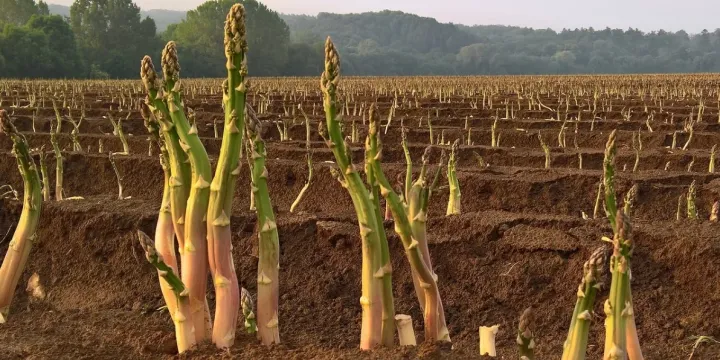
Harvesting is conducted daily from early spring through the end of June. It is essential to harvest shoots when their tips are still tightly closed, as opening of the tip indicates a decrease in flavor and commercial grade.
Harvesting is performed by carefully cutting the shoot with a sharp knife 2–3 cm below the soil surface or using specialized mechanical tools to extract spears that are 20–25 cm long.
To preserve freshness, cut spears must be cooled immediately. The ideal storage temperature is 0–2 degrees Celsius at high relative humidity, which helps maintain turgor and color in the asparagus.
For white asparagus, additional mounding of soil ridges is required. Harvesting this product requires extreme caution to avoid damaging neighboring developing spears that have not yet emerged through the soil surface.
Once the harvest period concludes in mid-summer, the plantation is cleared of weeds and fertilized. Ceasing the harvest at the correct time is crucial to allow the plant to recover before winter and initiate bud formation for the next season.