
St. Bernard's lily
Anthericum liliago
Description
Sowing dates
Seeds of Anthericum liliago are best sown in autumn, directly into outdoor seedbeds, allowing them to benefit from natural winter stratification.
For spring sowing, seeds must be kept in cold storage for several weeks to break dormancy and ensure consistent germination rates.
The seeds should be covered with a light layer of soil, approximately 1–2 cm deep, and kept consistently moist until emergence.
Thinning is necessary once the seedlings are established, keeping a distance of 25 cm between plants for adequate development.
Patience is required when growing from seed, as the plant typically reaches its first blooming stage in the second or third year.
Growing requirements
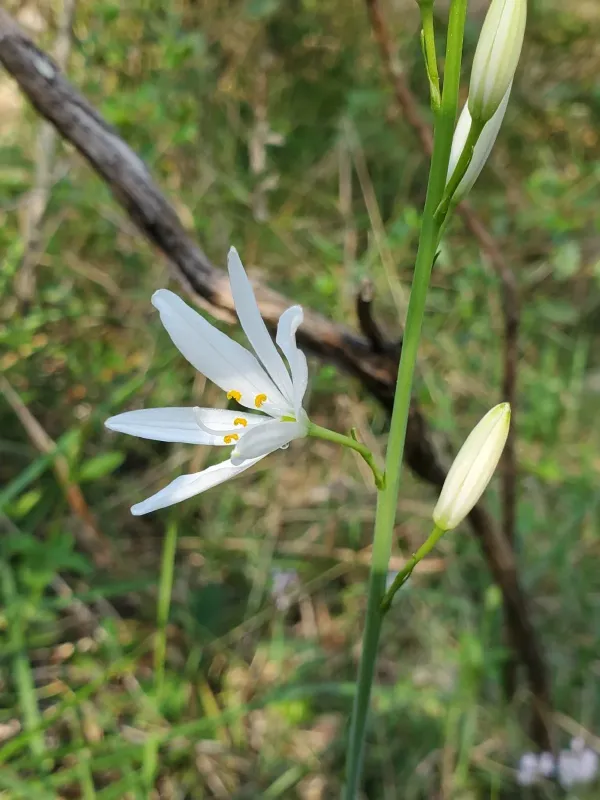
St. Bernard's lily is a perennial herb belonging to the Asparagaceae family, characterized by its elegant, star-shaped white flowers.
It is native to temperate regions of Europe and Western Asia, preferring open, sunny habitats with well-drained substrate.
This species thrives in light, sandy, or rocky soils and is highly adapted to dry conditions, requiring little maintenance once established.
The plant is frost-tolerant and hardy, making it a reliable choice for temperate climate landscaping and perennial borders.
Adequate sunlight is essential for vigorous growth, although the plant can tolerate light shade during the hottest parts of the day.
Main diseases and pests
Snails and slugs are the primary threats, especially for young plants in early spring, as they target the succulent foliage.
Excessive soil moisture is the most common cause of root rot, which can prove fatal to the plant during wet winters.
Aphids might occasionally colonize the inflorescences, though they rarely cause structural damage to established specimens.
Maintaining proper spacing and ensuring good air circulation around the plants significantly reduces the risk of fungal leaf spot.
Avoid heavy mulching near the base of the plant to prevent moisture accumulation and potential fungal outbreaks.
Harvesting
For ornamental use, the flowering stems are harvested when the first few buds begin to open, ensuring a long vase life.
Spent flower spikes should be trimmed back to the base after blooming to maintain the plant's tidy appearance and conserve energy.
Seed harvesting should be performed as soon as the capsules turn brown and brittle, usually in late summer or early autumn.
Harvested seeds must be dried in a cool, well-ventilated area before being packed into breathable envelopes for storage.
Proper cleaning of the seed material from any vegetative debris is essential to prevent contamination by rot during storage.