
Sawtooth agave
Agave xylonacantha
Description
Growing requirements
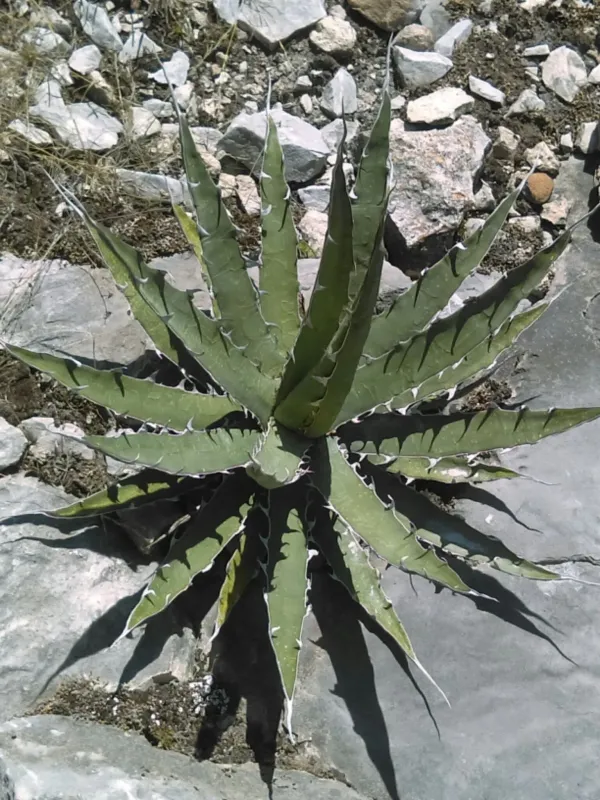
Agave xylonacantha, commonly known as the Sawtooth agave, belongs to the Asparagaceae family. Native to the Mexican states of Hidalgo and San Luis Potosi, this plant is perfectly evolved for survival in rocky, desert-like environments where rainfall is scarce.
The core requirement for successful cultivation is intense, direct sunlight, which promotes the growth of its signature rigid, spine-tipped leaves. In indoor settings, it should be placed in the sunniest spot available, preferably in a south-facing location.
The substrate must be highly porous and inorganic. A standard mixture for this agave includes cactus potting soil combined with volcanic rock or coarse pumice to ensure drainage is maximized, preventing root asphyxiation during wet periods.
Watering strategy should mimic the natural desert cycles: deep, thorough watering during the active growth phase, followed by a long, dry dormant period during the winter months. Excess moisture during the cold season is the most common cause of crop failure.
Agave xylonacantha is prized for its architectural form, featuring distinctively serrated leaf margins. It thrives in well-ventilated areas where temperatures range from 20 to 30 degrees Celsius, requiring a significant thermal drop at night to thrive.
Main diseases and pests
Root rot, primarily caused by Pythium and Phytophthora fungi, is the most lethal threat to this species. It is triggered by over-irrigation and stagnant soil moisture, leading to the rapid decay of the vascular system of the agave.
Mealybugs are the most persistent insect pests, often found nestled deep within the base of the leaves or near the central growth point. These pests weaken the plant by feeding on its sap, leading to stunted and distorted growth patterns.
Scale insects can attach themselves to the hard leaf surface, causing localized damage to the waxy cuticle. Their presence is often marked by sticky honeydew excretions, which can further attract sooty mold if not treated promptly.
Spider mites can become a significant issue in dry, warm environments with poor air circulation. They cause fine webbing and discoloration of the leaf tissue, significantly reducing the aesthetic and physiological vigor of the plant.
Integrated pest management, including regular inspection of the leaf axils and maintaining proper spacing between plants, is essential for keeping the collection healthy and free from opportunistic pathogens.