
Weber agave
Agave weberi
Description
Growing requirements
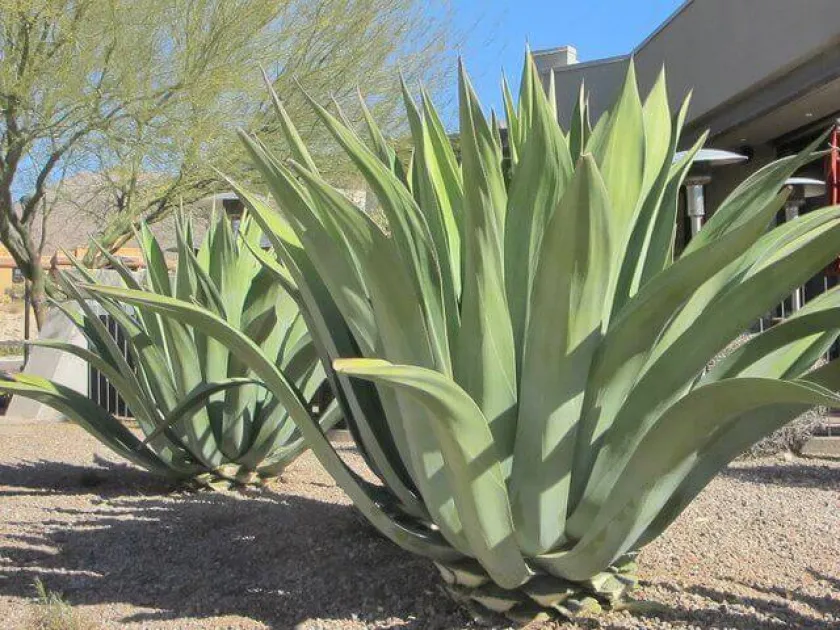
Weber agave (Agave weberi) is a perennial succulent plant belonging to the Asparagaceae family. It is characterized by its large, robust rosettes consisting of long, fleshy, grey-green leaves that can grow up to two meters in length.
Native to Mexico, this plant is well-adapted to arid and semi-arid climates. It thrives in sunny locations with well-drained, neutral to slightly alkaline soil types, which are essential for preventing root damage.
The plant is highly drought-tolerant, capable of storing moisture in its leaves to survive prolonged dry periods. However, excessive moisture is detrimental, as it often leads to fungal infections and rot in the crown area.
Ideal temperatures for active growth range between 20 and 30 degrees Celsius. While it prefers tropical conditions, it displays a higher cold tolerance compared to many other agave species, allowing for cultivation in cooler regions.
Agricultural management is relatively low-maintenance, requiring minimal fertilization. Focus should be placed on maintaining soil aeration and ensuring that the plant receives adequate space to reach its full size.
Yield
The primary agricultural utility of Agave weberi lies in the production of high-quality fiber. This fiber is highly valued in the textile and rope-making industries for its durability and structural integrity.
Compared to other fiber crops, the Weber agave offers leaves that are wider and easier to process mechanically, increasing the overall efficiency of the extraction line.
Economic yields are achieved through organized plantations with a density of approximately 3,000 plants per hectare, ensuring that every individual plant has room for optimal leaf development.
Commercial harvesting can begin when the plants are between 4 and 6 years old, with the plantation providing a consistent supply of leaves for the next decade or more.
Beyond fiber, the plant is explored for biomass energy and livestock feed supplements, which are obtained from the residual pulp after the fiber extraction process is complete.
Main diseases and pests
Fungal diseases such as anthracnose are among the most common threats, typically emerging in plantations with poor air circulation or excessive environmental humidity.
The agave snout weevil remains the most significant pest. Larvae of this beetle tunnel into the heart of the rosette, which can cause the sudden collapse and death of the plant.
Root rot, driven by stagnant water in the soil, is a critical issue that requires strict management of irrigation and drainage systems to maintain plant health.
Integrated pest management, including regular monitoring and the removal of infected plants, is crucial to prevent the spread of diseases across the agricultural site.
- Regular site monitoring for pest activity.
- Proper drainage to prevent root infections.
- Density management for better airflow.
Harvesting
Harvesting involves the selective cutting of mature, lower leaves, which ensures that the plant continues to grow from its central core without being compromised by the process.
Specialized tools are required for the harvest to prevent unnecessary mechanical damage to the remaining leaf structure, which could act as an entry point for plant pathogens.
The logistics of the harvest are time-sensitive, as the leaves need to be processed quickly after being cut to maintain the quality and tensile strength of the fiber.
Large-scale operations typically employ mechanical harvesters tailored for succulent plants, significantly increasing the daily output of raw material for processing centers.
Effective plantation management balances the frequency of leaf harvesting with the overall vitality of the agave, ensuring long-term sustainability and consistent annual production yields.