
Agave vivipara
Agave vivipara
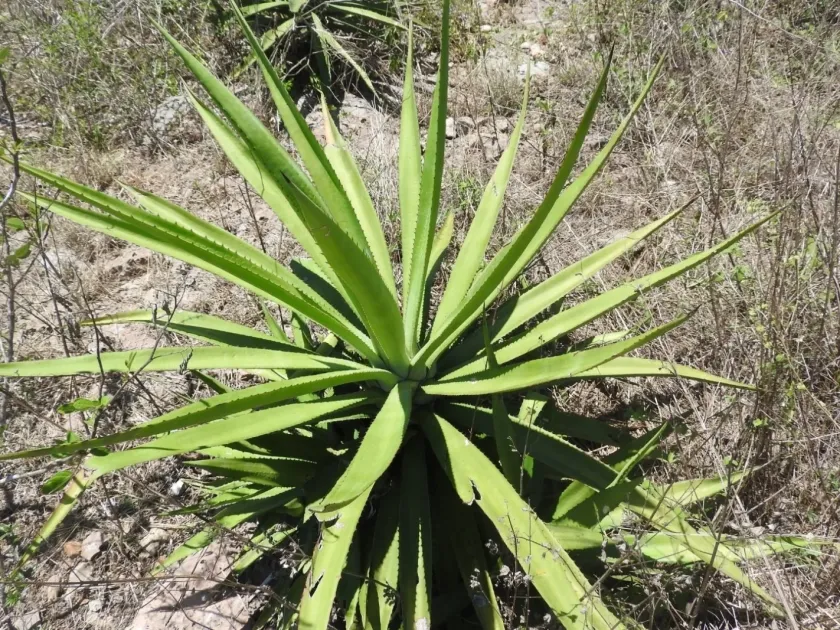
Description
Sowing dates
Propagation of Agave vivipara is primarily carried out vegetatively using offshoots (pups) that form at the base of the parent plant or bulbils developing in the inflorescence. Planting should take place during the spring when the soil has warmed sufficiently to ensure root development.
If seeds are used for propagation, they are sown in a well-draining substrate consisting of sand and loam. The sowing depth is minimal, as the seeds require sufficient light to germinate effectively in a controlled greenhouse environment.
Acclimatization of young plants before transplanting to the field is a critical stage. Seedlings should typically reach 1-2 years of age to ensure they possess a root system robust enough to survive in open-field conditions.
The planting density is determined by the specific cultivation goals, with typical spacing between rows being 2–3 meters. This spacing provides enough nutrient area for each individual plant and facilitates access for maintenance operations.
Maintaining appropriate density is essential for the healthy development of the leaf rosette and ensures a consistent yield of high-quality fiber throughout the plant's productive life.
Growing requirements
Agave vivipara is a succulent belonging to the Asparagaceae family, native to tropical regions of the Americas. It is highly photophilous and requires full sun exposure throughout the day to optimize biomass accumulation and fiber synthesis.
The plant thrives in well-draining, sandy, or rocky soils with a neutral or slightly alkaline pH. Waterlogging is detrimental, as it quickly leads to root rot and systemic failure of the leaf rosette.
The optimal temperature range for active growth is 20–30 degrees Celsius. While the agave is drought-tolerant, prolonged water scarcity significantly reduces the growth rate and overall leaf development.
In regions with high precipitation, it is necessary to implement raised beds or specialized drainage systems. This prevents excessive moisture buildup, which remains a primary challenge in commercial agave production.
The crop is not highly demanding regarding soil fertility; however, supplemental applications of phosphorus and potassium during early growth stages can significantly enhance total productivity and fiber quality.
Yield
The primary commercial product derived from Agave vivipara is the strong, durable fiber utilized in the textile and paper manufacturing industries. Leaf harvesting usually commences when the plants reach 4–6 years of age.
Yield depends heavily on irrigation management, solar exposure, and general field care. With proper agrotechnical practices, a mature plant produces a substantial weight of foliage suitable for decortication.
Beyond fiber, the plant is valued for its potential in producing inulin and specialized sugars, making it a promising candidate for various biotechnological applications and industrial raw material sectors.
The long-term economic viability is supported by the plant's regenerative ability. If harvested correctly, the plant continues to produce new leaves, allowing for multiple harvest cycles from a single established plantation.
Peak yields are typically observed in regions characterized by long growing seasons and high intensity of solar radiation, which are ideal for the development of the succulent's massive leaf structure.
Main diseases and pests
The most significant pests affecting Agave vivipara include agave snout weevils and various species of root mealybugs. These pests damage plant tissues and create entry points for secondary bacterial or fungal infections.
Fungal diseases, often triggered by excessive humidity or poor soil drainage, manifest as leaf spots and basal rots. Prevention focuses on managing plantation density and strictly removing infected plant materials.
Root rot caused by soil-borne pathogens is particularly dangerous, as the infection is often invisible until the plant shows signs of severe wilting or imminent collapse of the rosette.
Management strategies involve the targeted use of fungicides and insecticides, though primary focus must remain on optimizing agricultural conditions to eliminate environmental stressors for the crop.
- Regular inspection of all plants for early signs of tissue distress.
- Using only certified disease-free propagation material.
- Adhering to strict quarantine protocols when introducing new stock.
Harvesting
Harvesting Agave vivipara involves the selective removal of mature leaves, starting from the outer base of the rosette. This selective approach allows the plant's core (heart) to remain intact for continued growth.
A sharp, sterilized cutting tool is mandatory to ensure clean wounds. Ragged cuts take longer to heal and increase the susceptibility of the plant to environmental pathogens and pests.
Harvested leaves must be processed immediately to avoid moisture loss and degradation of the fiber quality. The extraction process mechanically separates the fleshy pulp from the vascular fiber bundles.
Waste biomass left after fiber extraction can be composted and returned to the field as organic fertilizer, effectively closing the production loop and reducing environmental impact.
Harvesting is ideally scheduled during dry periods, as moisture during this stage can hinder the subsequent fiber drying process and significantly increase the risk of mold and decay.