
Agave utahensis
Agave utahensis
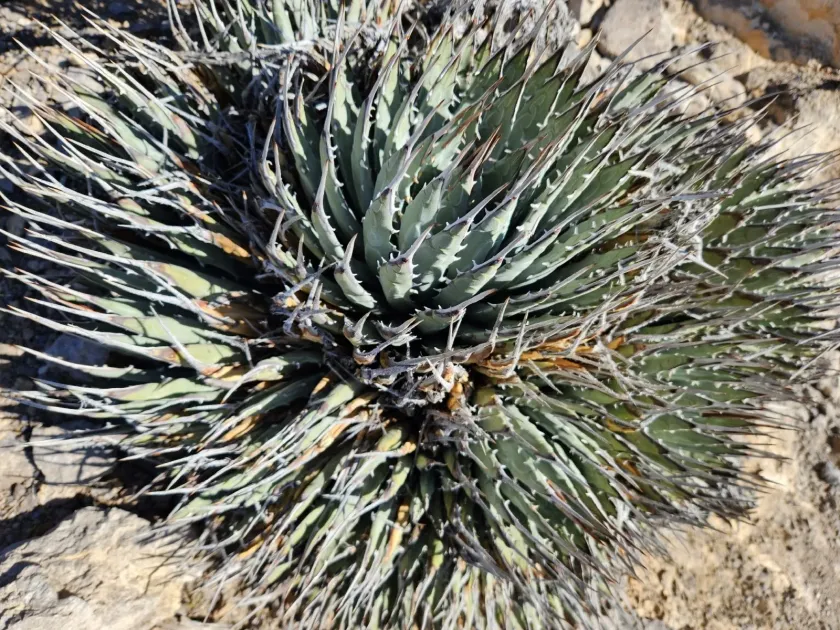
Description
Sowing dates
Propagation of Agave utahensis is performed either via seeds or by separating offsets that naturally grow around the base of the mother plant. Sowing seeds requires a sterile, well-draining sandy medium kept at a constant temperature range between 20°C and 25°C for optimal germination.
To propagate via offsets, young rosettes should be carefully detached from the parent plant using a sharp, sanitized blade during the active growth phase. Before replanting, the cut areas must be left to callous in a dry, shaded area for several days to prevent rot.
Seed containers should be kept in a bright location but shielded from direct, scorching sun during the initial emergence phase. Providing adequate ventilation is critical to prevent the damping-off of young seedlings, which are particularly sensitive to stale air and moisture.
Once seedlings have developed their first true leaves, they can be transplanted into individual small pots with a specialized grit-heavy succulent mix. This early adaptation ensures that the young root system develops properly within a controlled, well-aerated environment.
The selection of an planting site for young plants should prioritize high sun exposure. Agave utahensis requires consistent light to maintain its compact form; any deficiency in sunlight will lead to etiolation and a weakened physical structure of the rosettes.
Growing requirements
Agave utahensis is a member of the Asparagaceae family, native to the arid rocky slopes of the Southwestern United States. This plant is renowned for its ability to survive in harsh conditions where extreme temperature fluctuations and limited water availability are the norm.
The primary soil requirement for this species is exceptional drainage. A mixture composed largely of coarse sand, perlite, and small gravel mimics its natural habitat and ensures that water does not remain in contact with the plant's roots for extended periods.
Climate preferences involve long, hot, dry periods coupled with cool nights. While Agave utahensis is one of the most cold-hardy species of the genus, its ability to withstand frost is strictly contingent upon the substrate remaining dry throughout the winter months.
Watering must be minimal and conducted with extreme caution. The goal is to provide enough moisture to prevent total desiccation without saturating the soil. It is imperative to avoid getting water inside the central rosette, as this is the most common cause of rot.
Fertilization should be kept to an absolute minimum, as these plants have adapted to nutrient-poor soils. If feeding is necessary, a dilute mineral-based fertilizer formulated specifically for cacti and succulents should be applied only during the spring months.
Main diseases and pests
The most significant threat to Agave utahensis is root rot, which typically stems from overwatering or inadequate soil aeration. Once rot begins to affect the base of the rosette, it is often irreversible, necessitating early detection through regular inspection.
Pests such as mealybugs and scale insects are frequent invaders that target the tight spaces between leaves. Regular monitoring of the leaf axils is essential; any infestation should be treated immediately with targeted systemic insecticides or organic insecticidal soap.
Fungal leaf spotting can occur if the humidity levels remain too high for prolonged periods, especially in non-native climates. Providing sufficient space between individual plants helps promote air circulation and significantly reduces the likelihood of fungal outbreaks.
Protection from excessive winter rain is vital for outdoor cultivation. Implementing physical shields or cold frames can protect the plants from precipitation, effectively preventing the damp conditions that favor the development of various pathogens during dormancy.
If tissue softening is detected at the base of the leaves, immediate corrective action must be taken, including removing the affected plant material and improving the surrounding soil drainage. In many cases, early intervention can save the plant from complete collapse.