
Blue Agave
Agave tequilana
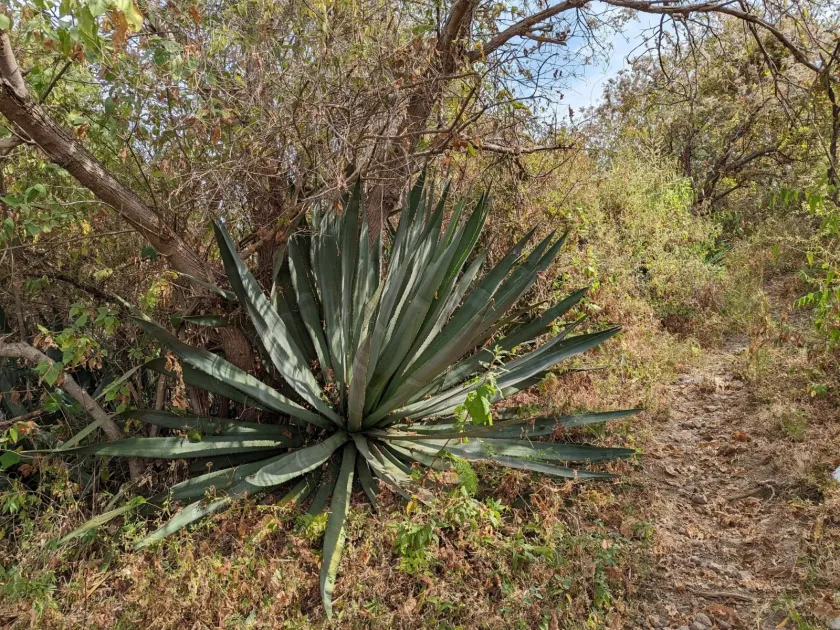
Description
Sowing dates
In industrial cultivation, Blue Agave is primarily propagated vegetatively rather than through seeds. The main planting material consists of "hijuelos" (pups or suckers) that emerge from the base of the mother plant when it is between two and three years old.
These pups are carefully separated once they reach a height of 20 to 40 centimeters. Before being planted in the field, the selected sprouts are allowed to air-dry in the shade for several days, which helps to prevent fungal infections at the cut sites.
The optimal time for planting is at the beginning of the rainy season, ensuring sufficient soil moisture for the rapid establishment of the root system. Proper spacing is strictly regulated to allow for adequate airflow and sunlight exposure for each individual plant.
Planting density typically ranges from 2,500 to 3,500 plants per hectare. This density maximizes land efficiency while ensuring that mechanical equipment can still navigate between rows for maintenance and weed control during the early growth stages.
Close monitoring is required during the first few months after transplanting to ensure high survival rates, as young agave plants can be sensitive to extreme temperature fluctuations or waterlogged soils.
Growing requirements
Blue Agave belongs to the Asparagaceae family and is a hardy succulent adapted to semi-arid environments. It thrives best in well-draining, sandy, or volcanic soils that possess a neutral to slightly acidic pH level.
The culture performs optimally at altitudes between 1,500 and 2,000 meters above sea level in regions with a temperate climate. Stable temperatures are essential, and the area must be free from frosts, which can cause severe damage to the plant's succulent leaves and core.
Agave is highly heliophilic and requires full sun exposure throughout the day. Sufficient solar radiation is critical for the metabolic processes that lead to the accumulation of sugars within the plant’s core, which is the primary raw material for the industry.
While the plant is famous for its drought tolerance, it requires moderate rainfall during the active growing season to reach its full size. Excessive soil moisture must be avoided, as it leads to root rot and other systemic health issues.
- Ideal temperature: 20–30°C.
- Annual precipitation: 600–900 mm.
- Soil type: Loose, permeable, mineral-rich.
Yield
The growth cycle for Blue Agave typically lasts between 6 and 8 years. During this period, the plant develops a rosette of fleshy, fibrous leaves and a large, starch-rich core known as the "piña" (pineapple).
The weight of a mature piña ranges from 30 to 70 kilograms, depending on genetic lineage and the effectiveness of the agricultural management practices. Yield per hectare can reach 80 to 100 tons under optimal conditions.
Harvesting is performed once in the plant's life cycle. The timing is determined by the accumulation of carbohydrates within the core, which reaches its peak just before the plant prepares to produce its massive floral stalk.
Agronomists use refractometers to measure the Brix levels, indicating sugar concentration. Harvesting at the precise moment of maximum sugar content is essential for ensuring the profitability and quality of the final distilled product.
Yield consistency relies heavily on selecting high-quality clonal pups and maintaining the health of the entire plantation to avoid premature loss of individual plants.
Main diseases and pests
The most significant pest is the agave snout weevil (Scyphophorus acupunctatus), which bores into the core of the plant to lay eggs. The larvae cause severe damage, often making the plant susceptible to secondary bacterial infections.
Fungal pathogens, including various leaf spots and Fusarium wilt, represent a constant threat, especially in humid conditions or where mechanical damage to the leaves has occurred. These diseases hinder photosynthesis and weaken the core.
Integrated pest management strategies are employed, including the use of pheromone traps to monitor weevil populations and the targeted application of biological or chemical controls to protect the crop.
Proactive removal and destruction of infected plants are standard practices to prevent the spread of diseases within the plantation. Sanitizing tools between plants is also a vital biosecurity measure.
Maintaining strong plant vigor through appropriate nutrient management and avoiding water stagnation are the most effective ways to bolster the agave's natural resistance to pests and diseases.
Harvesting
Harvesting is a labor-intensive, manual process carried out by skilled professionals known as "jimadores." They utilize a specialized tool called a "coa," which features a sharp steel blade on a long handle to remove the leaves.
The jimador must skillfully prune the leaves away from the core, leaving only the stripped piña. This technique requires precision to ensure that no leaf bases remain, as they can impart bitter flavors during the cooking process.
Once harvested, the piñas must be transported to the processing facility as quickly as possible. Rapid processing prevents oxidation and the loss of fermentable sugars, which occur if the plant is left exposed to the elements for too long.
The harvested piñas are graded by size and maturity. Proper organization at the plant ensures that the processing load is balanced, maximizing the conversion of starches into fermentable sugars.
After the harvest, the field is cleared of leaves, which are often composted or left to enrich the soil, preparing the land for the next generation of agave plantings.