
Agave temacapulinensis
Agave temacapulinensis
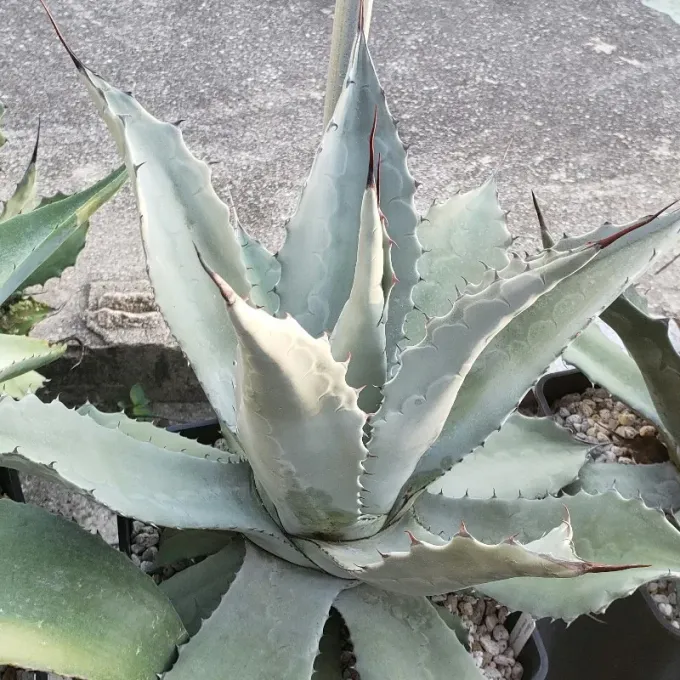
Description
Sowing dates
Propagation of Agave temacapulinensis in agricultural settings is most commonly achieved through vegetative means, utilizing offsets that develop at the base of the parent plant. Planting these offsets into the soil is typically conducted at the onset of the rainy season to ensure young specimens have sufficient soil moisture to establish roots before the dry season begins.
On a commercial scale, seed propagation is less common due to the long developmental cycle of the crop, although it helps preserve the genetic diversity of the species. Seeds are sown in prepared nurseries with a light, sandy substrate, maintaining a stable temperature above 20°C until germination occurs.
The optimal planting density for this crop ranges from 2,000 to 2,500 plants per hectare. This spacing scheme provides plants with adequate access to sunlight and facilitates mechanized agronomic operations for maintaining inter-row spaces.
Initial soil preparation before planting includes deep tilling to ensure excellent drainage, as the crop is extremely sensitive to moisture stagnation in the root zone. Incorporating organic fertilizers during the early stages encourages more vigorous development of the young agave's root system.
The adaptation period after transplanting lasts between four and six weeks. During this time, it is critical to monitor moisture levels, avoiding both the drying of the root ball and excessive watering, which could provoke tissue rot.
Growing requirements
Agave temacapulinensis belongs to the Asparagaceae family and is a typical representative of the succulent flora native to the Mexican highlands. It is well-adapted to the specific conditions of the Jalisco highlands, where the climate is seasonal with a marked alternation between rainy and dry periods.
The crop prefers well-lit areas, as it is a sun-loving plant. Insufficient insolation leads to leaf stretching, a decrease in sugar content within the heart (piña), and a weakened immune response against infectious diseases.
Soil requirements include well-drained, stony, or sandy loam soils with a neutral to slightly acidic pH. Water stagnation is fatal for this species; therefore, on heavy clay soils, it is necessary to construct raised beds or organize a high-quality drainage system.
The temperature optimum for vegetation is between 18°C and 30°C. The plant possesses moderate resistance to short-term temperature drops, but prolonged frost can cause significant damage to the rosette and lead to plant mortality.
Irrigation must be strictly controlled. During the active growth phase, agave requires moderate watering, whereas during the dormancy period, when temperatures drop, watering should be almost entirely ceased to mimic natural environmental conditions.
Yield
The economic value of Agave temacapulinensis lies in the accumulation of significant amounts of carbohydrates in the heart, which reaches commercial maturity on average within 6 to 8 years after planting. Yield depends on the intensity of care and regional climatic conditions.
The quality of the harvest is determined by the concentration of fermentable sugars required for distillery production. Agronomists monitor the plant's biomass, conducting regular measurements of the leaf rosette and evaluating the state of the central stem.
With proper agronomic practices, a single plant can yield a substantial amount of raw material for processing. The weight of a mature heart varies greatly but averages between 15 and 30 kg, depending on the age and cultivation conditions of the individual specimen.
Yield is also limited by planting density and nutrient availability. Despite its high drought tolerance, supplementary irrigation during critical growth phases can significantly increase the final weight of the heart.
Harvesting is performed manually using a specialized tool called a "coa," used to trim leaves (xima) and free the heart from external biomass. Harvesting efficiency is highly dependent on the worker's skill and the overall condition of the plantation.
Main diseases and pests
The primary threat to this crop is insect pests, such as the agave snout weevil (Scyphophorus acupunctatus). Larvae of this pest tunnel inside the heart, which leads to plant death or secondary fungal infections.
Fungal diseases, such as anthracnose and various types of rot, develop primarily in conditions of high humidity and poor soil aeration. Affected tissues turn brown and lose their technological value.
Disease prevention includes regular monitoring of plantations and timely isolation or removal of infected specimens. It is also important to avoid mechanical damage to leaves, as these wounds serve as easy entry points for pathogens.
Biological control methods against pests are becoming increasingly popular, as they reduce the chemical load on the soil and the final raw material. The use of pheromone traps helps control weevil populations during early stages.
Improper agronomic management, including excessive nitrogen fertilization, can reduce the plants' resistance to pathogens. A balanced nutrient profile is the key to forming robust, healthy plants with high resistance to external environmental pressures.
Harvesting
The harvesting process for Agave temacapulinensis is labor-intensive and requires high skill. Specialists determine harvest readiness based on external plant signs: changes in leaf color, rosette density, and the appearance of specific morphological characteristics.
The harvesting tool, the "coa," features a long metal handle with a sharp circular blade at the end. Using this tool, workers carefully trim all leaves as close to the base as possible, leaving only the central heart, known as the piña.
Cut hearts must be transported for processing as quickly as possible after harvest to prevent juice loss and the onset of spoilage processes. Transportation is carried out using specialized vehicles designed to ensure the cargo remains intact.
After the leaves are removed, the raw material undergoes cleaning to remove remaining fibers. High-quality cleaning is essential for subsequent processing stages, as remaining leaf matter can impart undesirable flavors to the final product.
The harvest season is generally tied to the end of the vegetative cycle. At this time, sugar content in the plant reaches its peak, which is the key economic indicator for production efficiency and raw material quality.