
Agave sebastiana
Agave sebastiana
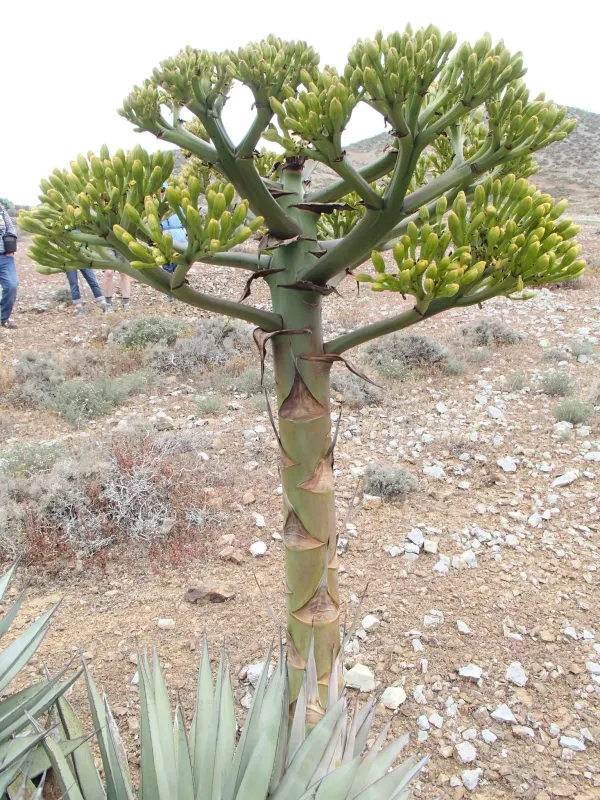
Description
Growing requirements
Agave sebastiana is a notable perennial succulent belonging to the family Asparagaceae. Native to the island of Cedros and surrounding islands off the coast of Baja California, this plant has evolved to survive in harsh, arid coastal environments.
The plant thrives in full sun exposure, which is essential for maintaining its compact, structural form. It is highly adapted to high light intensity and requires significant exposure to sunlight to undergo healthy metabolic processes.
Soil requirements for Agave sebastiana are centered on drainage. It demands a gritty, mineral-based soil mix that prevents water accumulation. Standard potting mixes for cacti or rocky desert soils are suitable for optimal development.
As a drought-tolerant species, it requires minimal irrigation once established. During the growing season, deep but infrequent watering is recommended, while the winter months should remain almost completely dry to prevent rot.
Climatic requirements involve stable temperatures typical of the Mediterranean or desert-coastal zones. It is not frost-tolerant and requires protection if environmental temperatures drop consistently below freezing points, typically achieved in greenhouse settings.
Main diseases and pests
Mealybugs are the most common pests affecting Agave sebastiana. These insects cluster in the crevices between succulent leaves, feeding on the sap and potentially weakening the overall structure of the plant.
Root rot is the primary physiological and pathological threat to this species. It is caused by fungal pathogens that thrive in excessively damp soil or in environments with insufficient airflow around the root collar.
Spider mites can occasionally infest the plant, particularly in dry and poorly ventilated indoor environments. These pests create fine webbing and cause discoloration on the leaf surface, which can be mitigated with consistent moisture control.
Bacterial soft rot can occur if leaves are damaged mechanically. Infections spread rapidly through the fleshy tissue, turning it mushy and malodorous; immediate excision of the affected area is often necessary to save the plant.
Preventive management involves careful observation of leaf base integrity. Utilizing systemic insecticides or fungicides is only recommended as a last resort, as the plant is highly sensitive to chemical burns if dosages are not carefully monitored.