
Agave pringlei
Agave pringlei
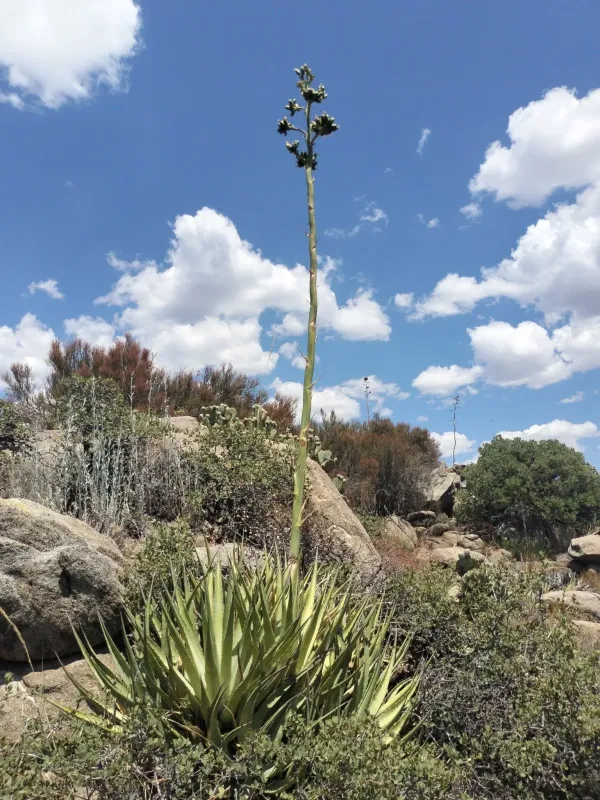
Description
Sowing dates
The propagation of Agave pringlei in commercial and horticultural scales is primarily carried out through vegetative methods, specifically using offshoots or "pups" that develop at the base of the mother plant.
Seed propagation requires strict control over temperature and moisture levels, so sowing is performed in a controlled greenhouse environment from February to April to produce high-quality seedlings.
Using the vegetative method, offshoots are separated from the parent plant during dormancy or at the beginning of the growing season, which allows young plants to adapt more successfully to new planting sites.
An important factor during sowing or transplanting seedlings is the pre-preparation of the soil substrate, which must feature high permeability and a neutral pH level.
Maintaining proper distance between plants is critical to prevent competition for sunlight and nutrients; a typical planting scheme requires at least 1.5 to 2 meters between plants in a row.
Growing requirements
Agave pringlei belongs to the family Asparagaceae and is a perennial herbaceous plant ideally adapted to arid climatic zones and desert ecosystems.
The natural distribution range of this culture is limited to the arid regions of Mexico, where it thrives in rocky soils that offer excellent natural drainage.
The plant possesses a distinct xerophytic structure, allowing it to store moisture in its fleshy leaves, which are covered with a protective waxy bloom to minimize evaporation.
For optimal growth, the crop requires a significant amount of direct sunlight and the absolute absence of water stagnation in the root system, which is fatal to this species.
The temperature regime should remain consistently high during the vegetative period, while the plant demonstrates good tolerance to short-term temperature drops within dry environments.
Main diseases and pests
The primary phytosanitary risk for Agave pringlei is the development of fungal root rot diseases, often caused by excessive irrigation or a lack of soil aeration.
Among pests, various species of agave snout weevils pose the greatest danger, capable of causing irreparable damage to both the leaf rosette and the plant's core.
To prevent the spread of pests, regular inspection of plantings is recommended, along with the timely removal of damaged specimens followed by proper tool disinfection.
Bacterial rots act as secondary infections that develop in areas of mechanical tissue damage, especially during periods of high atmospheric humidity.
The application of systemic insecticides is only appropriate in cases of severe infestation, always in compliance with strict ecological standards and safety protocols.
Harvesting
The commercial use of Agave pringlei focuses on the extraction of high-quality vegetable fibers, which are prized for their exceptional strength and resistance to decay.
Harvesting (the cutting of mature leaves) is conducted manually once the plant has reached the necessary age for biomass accumulation, typically not sooner than 5 to 7 years after planting.
The collected raw material undergoes primary processing near the plantation sites to remove pulp and extract the long, durable fibers from the leaf structure.
In various instances, the plant is grown as an ornamental crop in landscape design, where its architectural form and ability to beautify xeriscapes are highly valued.
Following the completion of the fiber production cycle, the remaining rhizomes can be utilized for plantation regeneration or processed into compost after mechanical shredding.