
Palmer's agave
Agave palmeri
Description
Sowing dates
Propagation of Agave palmeri is primarily achieved through seeds or vegetative reproduction using offsets that grow around the mother plant. Seeds should be sown in a well-draining substrate, maintaining soil temperatures between 20–25 degrees Celsius to ensure optimal germination rates.
In commercial operations, seedlings are transplanted into open fields during the spring, once the threat of night frost has passed, as cold temperatures can damage young leaves. Optimal planting density is calculated based on the size of mature plants, usually maintaining a distance of up to two meters between rows.
It is preferable to select areas with maximum sun exposure, as the plant critically requires direct sunlight to accumulate biomass. Excessive shade during the rooting phase leads to elongated rosettes and reduces the overall vitality of the crop.
Soil preparation involves deep tilling and the incorporation of mineral amendments that mimic the rocky composition of its natural habitat. The pH level should be neutral or slightly alkaline, promoting active development of the root system.
Acclimatization is a crucial step, carried out over 2–3 weeks before final planting. This process allows the plant to adjust to ultraviolet radiation and temperature fluctuations characteristic of open terrains.
Growing requirements
Agave palmeri belongs to the Asparagaceae family and is a typical succulent adapted to the arid conditions of Mexico and the southwestern United States. It is highly capable of surviving extended periods of drought by storing moisture in its fleshy leaves.
The crop requires minimal moisture; excessive watering or standing water in the root zone inevitably leads to tissue rot. The soil must possess high permeability and a coarse, rocky texture to facilitate drainage.
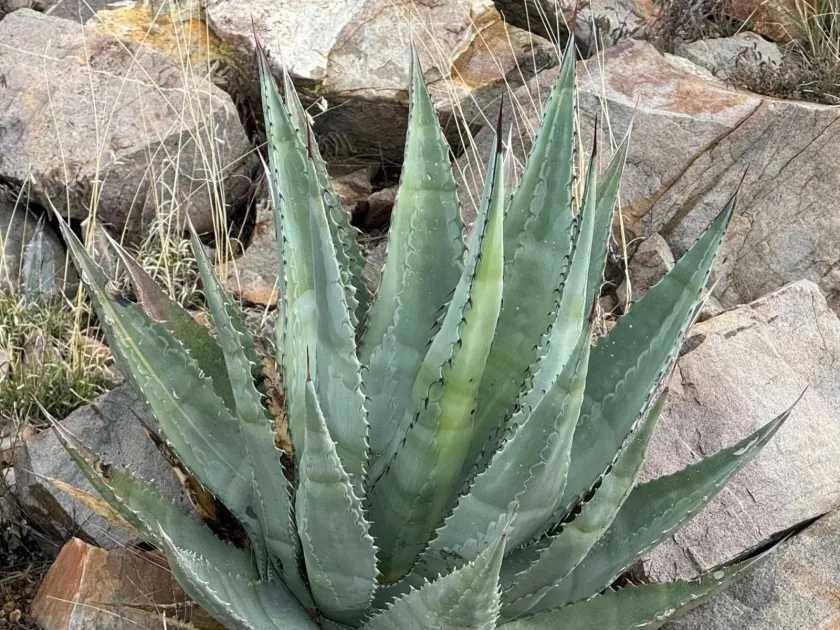
The plant features a distinct morphology: it forms a dense rosette of rigid, linear-lanceolate leaves reaching up to 60–80 cm in length. The leaf margins are armed with sharp teeth and a powerful terminal spine, providing defense against herbivores.
The cultivation temperature range varies from moderate values to extreme heat. Agave palmeri is relatively cold-tolerant for its genus, though prolonged temperatures below minus 5 degrees Celsius can damage the leaf blades.
In terms of agrotechnics, ensuring proper drainage is essential, as even short-term waterlogging during cool weather is lethal for the agave. Regular weeding around young plants is mandatory during the first two years of growth.
Yield
The economic utility of Agave palmeri is focused on the production of technical fiber, which is valued for its high tensile strength and resistance to decay. Fibers are extracted from the leaves through decortication — a process that cleans pulp from the tough vascular bundles.
Beyond textile applications, the plant is a valuable honey producer, secreting nectar during its singular flowering phase. The flower stalk can reach heights of 4–5 meters, attracting numerous pollinators.
Harvesting is performed once the plant reaches technical maturity, which typically takes between 5 to 8 years. During this period, the fiber content in the leaves is maximized, ensuring high quality for the end product.
Economic efficiency depends on planting density and regular maintenance, which directly influences leaf blade size. In plantation settings, fiber yield per hectare is comparable to other industrial succulents.
A promising direction is the use of agave biomass in the production of environmentally friendly packaging materials and bioplastics. This makes the crop relevant in the context of sustainable agriculture.
Main diseases and pests
The primary biological threats to Agave palmeri are various types of fungal rots, caused by waterlogged substrates or poor ventilation on the plantation. These pathogens typically attack the root crown and the base of the leaves.
Regarding pests, agave weevils cause the most damage, as their larvae burrow into the rosette and consume the central tissue. Timely monitoring and the use of systemic insecticides are essential methods for control.
Leaf damage can also be triggered by sucking insects such as mealybugs. Their presence not only weakens the plant but also encourages secondary infections at the site of the punctures.
To prevent the spread of pests, it is recommended to adhere to quarantine protocols when importing planting material. Removing and destroying heavily infested specimens is necessary to protect the entire plantation.
- Regular inspection of leaf bases.
- Ensuring dry conditions during winter.
- Using high-quality planting material.
Harvesting
Harvesting fiber agave is a labor-intensive process requiring specialized machinery for primary leaf processing directly in the field. Cutting is performed with sharp blades as close to the base of the rosette as possible.
After collection, the leaves undergo mechanical decortication. This process must be completed as quickly as possible to avoid enzymatic browning of the fiber and the loss of its physical-mechanical properties.
It is important to sort the raw material based on fiber length and thickness to categorize them for subsequent processing. Once cleaned, the fibers are air-dried in a shaded area away from direct sunlight.
For seed-based propagation, collecting the flower stalks after flowering allows for the acquisition of seeds to renew the population. However, seeds should only be gathered from the strongest and healthiest specimens.
Logistics for the harvest must account for the sharp spines of the leaves, requiring laborers to use specialized protective equipment during field operations.