
Black Agave
Agave nigra
Description
Growing requirements
The Black Agave (Agave nigra) is a fascinating succulent belonging to the Asparagaceae family. Originally native to the arid landscapes of Mexico, it has evolved to thrive in harsh, desert-like conditions where water is scarce and sun intensity is high.
The cultural requirements for this plant focus heavily on soil structure. It necessitates a highly porous, gritty, and well-draining soil mix, typically consisting of pumice, coarse sand, and a small amount of organic matter to prevent any water retention around the roots.
Light exposure is the most critical environmental factor for this species. To maintain its deep, dark, almost black foliage, the plant requires full sun for most of the day. Insufficient light causes the leaves to lose their dark pigmentation and become soft and stretched.
Regarding climate, the plant prefers warm conditions and is not frost-tolerant. In agricultural or horticultural settings, it must be protected from temperatures below freezing, as cold moisture often leads to irreversible tissue damage.
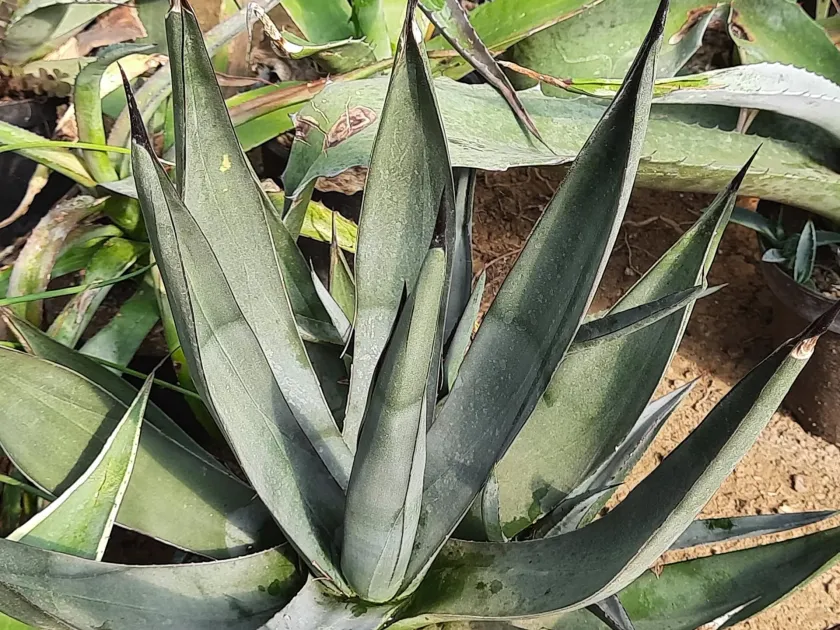
Botanically, Agave nigra is recognized for its dense, symmetrical rosette of stiff, thick leaves. As a slow-growing species, it is highly valued in specialty nurseries and landscape design as a low-maintenance, drought-tolerant architectural plant.
Main diseases and pests
The primary threats to the Black Agave are moisture-related pathogens. Fungal infections, such as root rot and leaf spot, are prevalent in environments with high humidity or poor soil drainage, which quickly compromise the structural integrity of the succulent.
Insect pests include the mealybug, which is particularly problematic due to its tendency to hide deep within the crevices of the leaf rosette. Spider mites are also a threat, often appearing during hot, dry periods when the plant's natural defenses are lower.
Management of these pests requires a combination of physical removal and targeted chemical treatments. Systemic insecticides are often preferred, as they provide longer protection for the dense leaf structure where pests easily evade surface sprays.
To prevent disease, growers should strictly follow a "dry-between-waterings" policy. Ensuring that no water pools in the center of the rosette during irrigation is a simple yet effective practice for preventing crown rot.
Monitoring the health of the root system is essential, especially after winter dormancy. If any softening or discoloration is observed at the base of the plant, immediate intervention with fungicide application and substrate replacement is necessary.