
Murphy's agave
Agave murpheyi
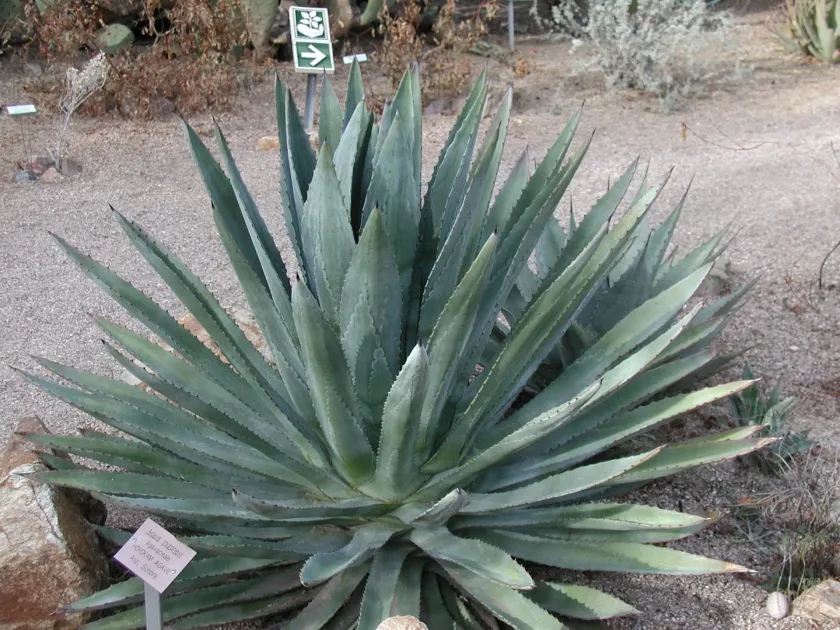
Description
Growing requirements
Murphy's agave (Agave murpheyi) is a perennial succulent plant species belonging to the Asparagaceae family. It is historically significant for its role in the agricultural systems of indigenous peoples in the southwestern United States and northwestern Mexico.
This species thrives in arid environments and requires well-drained, sandy, or rocky soils. It is highly drought-tolerant and is specifically adapted to regions with low annual rainfall, making it an excellent candidate for sustainable desert agriculture.
Climatic requirements are focused on high solar radiation and warm temperatures. The plant is sensitive to excessive moisture, which can trigger fungal diseases and root rot. Consequently, sites with natural slopes or excellent drainage are preferred for cultivation.
Agronomic management of Murphy's agave involves minimal soil intervention. As it naturally propagates via vegetative offsets (pups) produced at the base of the parent plant, managed fields can maintain stable populations for many years without frequent replanting.
Fertilization should be handled with caution, as high nutrient levels, particularly nitrogen, can encourage excessive succulent growth at the expense of fiber strength. Maintaining the soil's natural nutrient balance is generally sufficient for healthy development.
Main diseases and pests
The agave snout weevil (Scyphophorus acupunctatus) represents the most severe biological threat to Agave murpheyi. The larvae bore into the heart of the plant, often causing complete collapse before the infestation is even visible.
Fungal pathogens causing leaf spot and crown rot are frequent issues if the plantation layout does not allow for proper airflow. Standing water or humid stagnant conditions must be strictly avoided to prevent the spread of these fungal spores.
Root system pests and pathogens, such as Phytophthora, can devastate entire clusters if the drainage systems fail. Regular field monitoring is essential to isolate and remove any diseased plants before the infection spreads to adjacent offsets.
Sap-sucking insects like mealybugs and scale insects can colonize the tight leaf bases. While they rarely kill mature plants directly, they weaken the overall vigor and leave the plant susceptible to secondary bacterial infections.
Proactive management includes sanitation practices such as removing dead leaf material and maintaining adequate spacing between individual plants, which creates an environment where pests are less likely to proliferate successfully.
Harvesting
The primary economic use of Murphy's agave is fiber production. The leaves contain long, durable fibers that have been utilized for generations to create cordage, nets, and various types of textiles, valued for their tensile strength.
Harvesting is typically performed before the plant initiates its reproductive phase. Once the plant produces its tall inflorescence, the structural integrity and quality of the leaf fibers begin to degrade as energy is diverted to seed production.
Leaves are harvested manually, usually by cutting them as close to the base of the rosette as possible. This requires specialized tools and protective gear, as the leaf tips are equipped with sharp spines and the sap can be a skin irritant.
Post-harvest processing involves decortication, which is the mechanical extraction of fibers from the leaf tissue. This process is followed by thorough washing and sun-drying to ensure the fibers reach the desired quality standards for industrial usage.
Proper management of the population is vital, as growers must carefully select which plants to harvest and which to leave to provide the next generation of offsets, ensuring the long-term viability of the agricultural patch.