
Agave missionum
Agave missionum
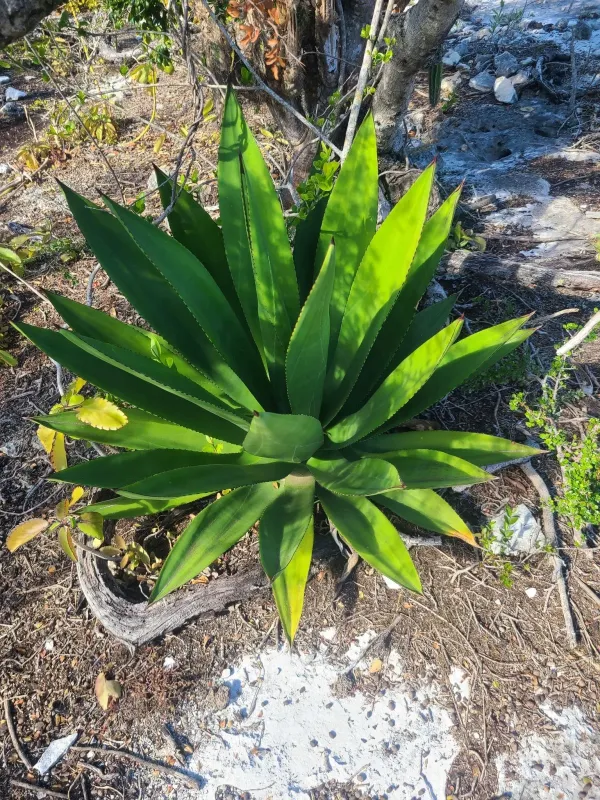
Description
Sowing dates
Agave missionum is a succulent plant species belonging to the Asparagaceae family. It is typically propagated vegetatively, utilizing suckers that develop around the base of the mature plant to ensure clonal consistency.
Planting is ideally scheduled at the onset of the rainy season to establish the root system before the dry period. Proper spacing is crucial, generally maintaining about 1.5 to 2 meters between plants to allow for healthy development.
The selection of a site with excellent drainage is paramount for successful cultivation. Agave missionum thrives in sandy or rocky soils that prevent waterlogging, which is the primary cause of root rot.
In its native range, including Puerto Rico and other Caribbean regions, this plant is well-adapted to high solar radiation. Growers must ensure that the planting site is open and free from any shading canopy.
Initial establishment phase requires diligent weed control, as young agaves can be easily outcompeted by fast-growing grasses and herbaceous weeds common in tropical climates.
Growing requirements
As a true xerophyte, Agave missionum is highly resistant to drought. However, for industrial fiber production, consistent moisture during the vegetative growth phase helps in achieving larger leaf size and improved fiber quality.
The plant prefers soils with a neutral to slightly alkaline pH. High soil acidity can negatively impact nutrient uptake and the structural integrity of the leaf fibers.
Temperature management is critical as the species is strictly tropical; it does not tolerate frost. The metabolic processes are most efficient within a temperature range of 20°C to 35°C.
Strategic fertilization with potassium and phosphorus is recommended to bolster the mechanical strength of the leaves and increase the overall resilience of the plants against environmental stress.
Maintaining adequate airflow between rows is essential in humid environments to prevent the proliferation of pathogenic fungi and bacterial blight on the succulent foliage.
Yield
The primary economic value of Agave missionum lies in the extraction of high-quality, durable fibers from its large, sword-shaped leaves. These fibers are traditionally used in cordage, textiles, and packaging materials.
Yields are determined by the age of the plantation. Harvesting typically commences 3 to 5 years after planting, with subsequent harvests possible from the same plant if managed correctly.
Mechanical decortication is the standard method for fiber extraction, where leaves are crushed to remove fleshy pulp, leaving behind the clean, raw fibers for drying and sorting.
Beyond fiber, the cultivation of this species aids in soil stabilization, especially on hilly terrains where its robust root system prevents erosion and improves soil structure.
Sustainable plantation management allows for the utilization of byproduct biomass as compost, which can be returned to the soil to improve long-term fertility and water retention.
Main diseases and pests
The agave snout weevil (Scyphophorus acupunctatus) is the most significant pest, as its larvae burrow into the base and leaves, eventually killing the entire plant by destroying the meristem.
Fungal pathogens such as anthracnose can severely impact production by causing dark necrotic lesions on the leaves, which significantly degrades the quality of the harvested fibers.
Integrated pest management strategies, including the use of pheromone traps and regular field scouting, are necessary to mitigate the risks posed by insect and fungal outbreaks.
Proper field hygiene, including the sterilization of cutting tools between plants, is an essential preventative measure against the spread of viral and bacterial infections.
Over-irrigation in stagnant conditions can lead to secondary infections and crown rot, necessitating constant monitoring of the field's drainage systems.
Harvesting
Harvesting is performed by manually cutting mature, lower leaves while ensuring the central, younger leaves remain intact to support the continued growth of the plant.
Operations should be carried out during dry weather to ensure quick healing of the cut surfaces and to minimize the risk of pathogen entry into the succulent tissues.
Timely processing is crucial; leaves should be transported and decorticated within 48 hours of harvest to prevent moisture loss and ensure efficient separation of the fiber from the pulp.
Skilled labor is required to select only the leaves that have reached technical maturity, which is indicated by their size, color, and density of the internal fiber bundles.
After the fibers are extracted, they are usually washed and sun-dried, a process that preserves their natural strength and makes them ready for industrial baling and export.