
Agave lehmannii
Agave lehmannii
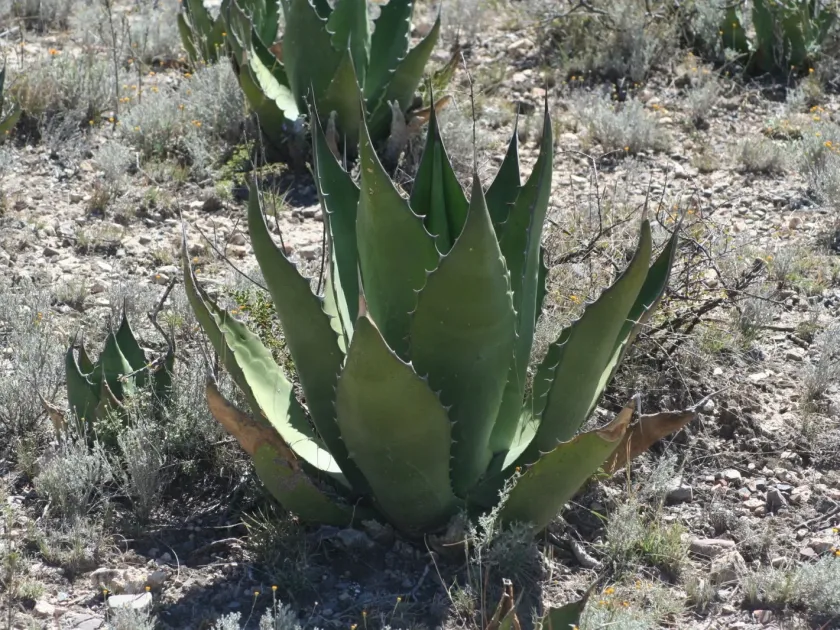
Description
Sowing dates
Agave lehmannii is a member of the Asparagaceae family, known for its rosette-forming habit and resilient nature in arid environments.
Propagation is primarily achieved through offsets, which are small plantlets that sprout around the base of the mature parent plant during the active growing season.
Seeds can be sown in controlled greenhouse settings with high temperatures, though this method is slower compared to vegetative propagation for commercial purposes.
Young plants should be hardened off before being transferred to outdoor fields to ensure they can withstand environmental fluctuations.
Spacing between plants must be sufficient to allow for the horizontal expansion of leaves, ensuring each plant has adequate access to sunlight and airflow.
Growing requirements
The plant requires extremely well-draining, gritty soil to prevent moisture from sitting around the roots, which is the primary cause of death in cultivation.
Full sun exposure is a mandatory requirement for Agave lehmannii, as insufficient light will result in etiolation and structural weakness of the leaves.
Watering should be deep but infrequent, allowing the substrate to dry out completely between sessions to mimic the natural desert conditions.
Temperatures should ideally remain moderate to high, as the species is sensitive to prolonged periods of frost combined with high soil moisture.
Minimal fertilization is required; a balanced, low-nitrogen liquid fertilizer applied during the summer months is sufficient for optimal growth.
Yield
Yield for Agave lehmannii is measured by the biomass of its leaves, which are rich in high-quality structural fibers used in various industrial applications.
A mature plant provides a significant amount of material, though growth rates are relatively slow compared to common agricultural crops.
Optimal fiber production is achieved when the plants are grown in stable, warm climates that allow for continuous development without dormancy periods.
Productivity is also linked to the plant's health; well-tended specimens develop larger rosettes with higher concentrations of secondary metabolites.
- Dry weight of harvested leaves.
- Extraction rate of structural fibers.
- Bioactive chemical yield for research purposes.
Main diseases and pests
Root rot is the most common disease associated with this species, often triggered by overwatering or poorly draining soil mediums.
Pests such as mealybugs and scale insects are frequent problems, feeding on the thick sap and weakening the plant structure over time.
In humid or stagnant greenhouse conditions, fungal infections can manifest as leaf spots or soft tissue necrosis, requiring immediate intervention.
Weed control is essential, as invasive plants compete for nutrients and can significantly reduce the overall health of the agave stand.
Integrated pest management, including the use of horticultural oils and systemic fungicides, is recommended to keep plants healthy and productive.
Harvesting
Harvesting involves the selective removal of the outer, mature leaves using sharp, sterilized tools to ensure a clean cut that heals quickly.
Workers must wear heavy-duty protective gloves and clothing, as the leaf tips are typically armed with sharp, rigid spines.
Post-harvest processing should be immediate to ensure that the fiber quality remains high and that the sap does not oxidize or degrade.
The core of the plant must remain intact to allow for continued growth and the production of future leaves or offsets for next season.
By staggering the harvest, farmers can maintain a consistent supply of raw material throughout the year without exhausting the entire plantation.