
Agave kavandivi
Agave kavandivi
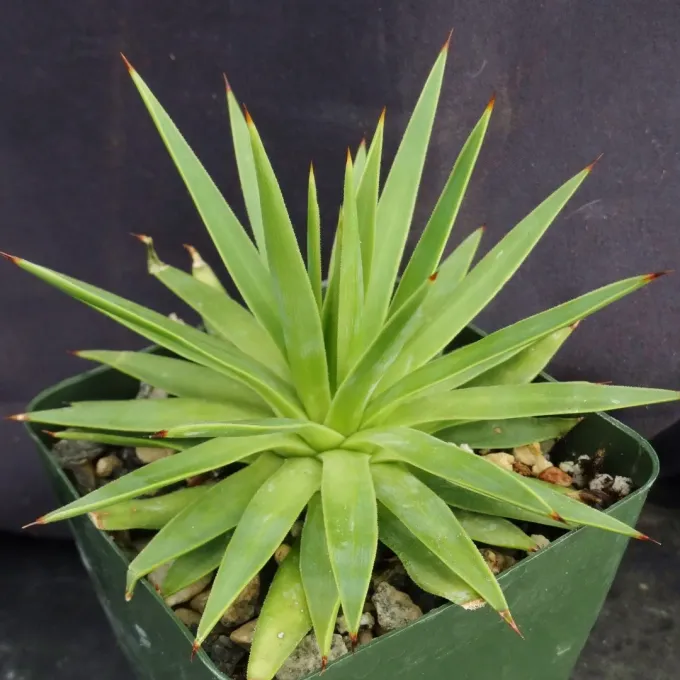
Description
Growing requirements
Agave kavandivi is a perennial succulent plant belonging to the Asparagaceae family. This species is native to the high-altitude landscapes of Mexico, specifically identified within unique ecological habitats in Oaxaca.
The plant exhibits a rosette form with stiff, succulent leaves that function as water storage reservoirs. This evolutionary adaptation allows Agave kavandivi to thrive in environments with erratic rainfall patterns and limited water availability.
Optimal growth requires a well-draining substrate, such as a mix of pumice, grit, and sandy loam. The soil must allow for rapid water drainage to prevent the root system from remaining in a saturated state for extended periods.
The species prefers full to partial sun exposure, which is essential for maintaining compact leaf growth and proper pigment development. In terms of temperature, it is sensitive to frost and requires a stable, warm environment to flourish.
In practice, Agave kavandivi is primarily valued as an ornamental specimen for xeriscaping or specialized succulent collections. It is not traditionally harvested for fiber or industrial nectar production, making its preservation focused on botanical conservation.
Main diseases and pests
The primary threats to Agave kavandivi are root and crown rot, which are triggered by excessive moisture and inadequate soil aeration during the dormant winter months.
Pests such as mealybugs and scale insects represent significant challenges in cultivation, as they often hide between the tight leaf bases where they are difficult to treat with topical applications.
To mitigate pest infestation, growers should maintain strict hygiene in the cultivation area and use systemic pesticides when infestation symptoms become apparent.
Fungal pathogens can spread rapidly in crowded conditions, necessitating adequate spacing between individual plants to ensure proper airflow and humidity management.
Integrated pest management protocols, including regular visual inspections and the removal of dead lower leaves, are crucial for maintaining the health and vigor of this succulent species.