
Isthmus agave
Agave isthmensis
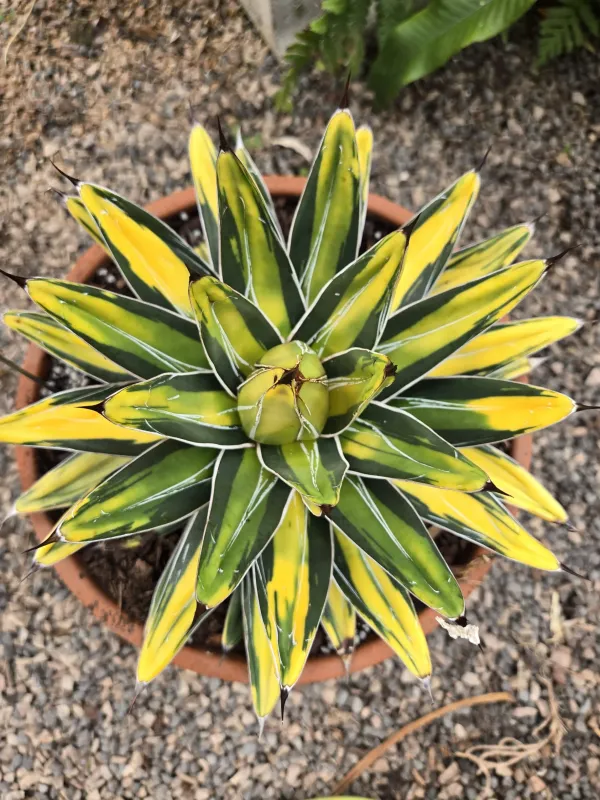
Description
Growing requirements
Isthmus agave (Agave isthmensis) is a member of the Asparagaceae family, native to the Isthmus of Tehuantepec in Oaxaca, Mexico. This small, ornamental succulent is highly prized for its dense, rose-like rosette of broad, thick leaves.
The plant thrives in full sun exposure. In cultivation, high light intensity is crucial to maintain the plant's characteristic compact shape and prevents etiolation, where the leaves become stretched and weak due to insufficient light.
Soil requirements focus on drainage. A specialized succulent or cactus mix is essential. Adding inorganic components such as pumice, perlite, or coarse sand helps improve drainage, preventing the roots from suffocating in wet, heavy soils.
Climate needs are strictly tropical to arid. While it can withstand occasional heat, it is sensitive to cold. It should be grown in frost-free conditions, ideally maintaining temperatures above 50°F (10°C) during the winter dormant season.
Irrigation practices must be disciplined. Water the soil thoroughly but allow it to dry out completely between waterings. During winter, reduce watering to an absolute minimum to simulate the natural dry season of its native habitat.
Main diseases and pests
The primary threat to the health of Agave isthmensis is root rot, triggered by overwatering or poorly draining soil. If the base of the plant feels soft or discolored, it is a clear indication that the moisture levels are too high.
Mealybugs are the most common pest observed on this species. They settle in the tight spaces between the leaves and are often protected by a waxy coating, making them difficult to remove without systemic insecticides.
Scale insects can also attach to the foliage, weakening the plant by sucking sap. Regularly wiping the leaves or using targeted horticultural oils can help manage these infestations effectively.
Fungal leaf spots can occur if the humidity levels are too high combined with a lack of airflow. Ensuring good air circulation around the rosettes is a preventive measure against most foliar diseases.
Another danger is physical damage to the leaf cuticle, which allows opportunistic pathogens to enter the plant tissues. Always handle the plants with care to avoid creating wounds that could lead to infections.