
Agave hybrids
Agave hybrids
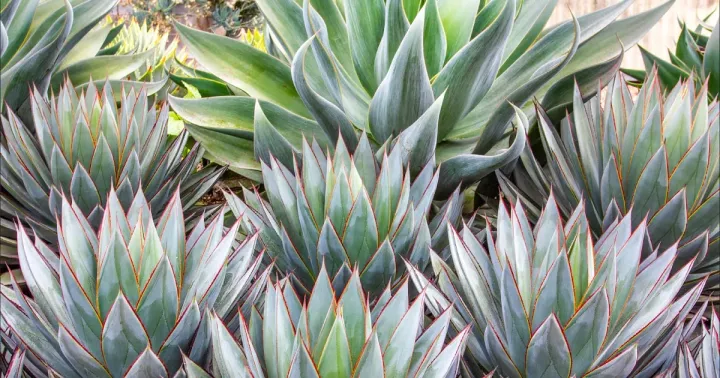
Description
Sowing dates
Agave hybrids are primarily propagated through vegetative means, as seed propagation often leads to genetic segregation and loss of desired traits. In commercial farming, offsets or pups developed at the base of the mother plant are used to establish new plantations.
The optimal planting time is at the beginning of the rainy season, which ensures sufficient soil moisture for successful root establishment. In areas with controlled irrigation, planting can occur year-round, provided that extreme heat peaks are avoided.
Planting density varies significantly based on the intended use; for fiber production, growers may plant up to 5,000 plants per hectare. For agave intended for syrup or inulin production, wider spacing is preferred to allow better root development and larger piña growth.
Deep plowing before planting is essential to ensure proper soil aeration, as agave roots are highly sensitive to soil compaction. Only healthy, vigorous nursery-grown materials should be used to minimize early-stage mortality.
Weed control is critical during the first two years after planting. Young plants need to be kept free from competition to ensure fast growth, and shading may be necessary in extremely high-light environments until the plants are fully established.
Growing requirements
Agave hybrids are succulent perennials belonging to the Asparagaceae family, engineered for enhanced growth rates, fiber quality, or sugar content. These hybrids are specifically developed to thrive in arid and semi-arid climates where traditional crops fail.
The ideal soil for agave is well-drained, sandy, or gravelly with a neutral or slightly alkaline pH. Proper drainage is the most important factor; waterlogging leads to rapid root rot and the death of the succulent tissue.
Agave requires intense solar radiation and high temperatures to accumulate sugars and develop strong fiber. The plants are drought-tolerant, but their growth rate is significantly improved by judicious, infrequent irrigation during the hottest months.
The optimal temperature range is between +20°C and +35°C. A distinct temperature difference between day and night is often beneficial for the metabolic processes that lead to sugar accumulation in the core of the plant.
Fertilization should be managed carefully, as excessive nitrogen can lead to poor-quality fiber and reduced sugar concentration. Balanced phosphorus and potassium levels are recommended to promote root health and drought resistance.
Yield
Yield in Agave hybrids depends on the specific cultivar, plantation age, and management intensity. The maturation cycle typically ranges from five to eight years, depending on whether the plant is harvested for fiber or sugar extract.
For fiber-producing hybrids, the goal is to maximize the length and strength of the leaves, whereas for sugar production, the focus is on the mass and sugar concentration of the piña (the core). Harvesting must be timed precisely to capture maximum yield.
Modern breeding programs have succeeded in shortening the maturation period for many hybrids. This allows for faster crop rotation and higher economic returns, making the plantation more sustainable and profitable.
Yield estimation is performed through periodic sampling of the piña for sugar content (Brix degrees) or by measuring the physical properties of the leaves. These data points help in predicting harvest volumes and planning factory logistics.
Advances in precision agriculture allow farmers to monitor the growth of Agave hybrids using satellite imagery and soil moisture sensors. This technology helps optimize water usage and predicts the optimal harvest window with higher accuracy.
Main diseases and pests
The agave snout weevil (Scyphophorus acupunctatus) is the most devastating pest, as its larvae bore into the core of the plant, causing complete collapse. Immediate detection and removal of infested plants are necessary to prevent the spread of the population.
Fungal diseases, including Fusarium and Phytophthora, thrive in poorly drained soils or when plants are injured during maintenance. These pathogens cause crown rot, leading to wilting and the total decay of the plant tissue.
Bacterial infections can be easily transmitted through contaminated cutting tools used during maintenance or harvest. Strict sanitation protocols are required to prevent the spread of pathogens throughout the plantation.
Sucking insects can act as vectors for various plant viruses, causing leaf yellowing and stunted growth. Integrated Pest Management (IPM) strategies, combining biological controls and targeted chemical treatments, are the most effective approach.
- Regular field inspections for signs of pest damage
- Prompt removal and destruction of infected plants
- Sanitization of all harvesting and trimming equipment
- Installation of drainage systems to prevent water pooling
- Selection of disease-resistant hybrid cultivars
Harvesting
Harvesting agave is a labor-intensive operation, often requiring skilled workers (jimadores) who manually trim the leaves to expose the core. While partial mechanization is possible, the precision required for core harvesting remains high.
For fiber-rich hybrids, leaves are processed shortly after cutting to prevent oxidation and deterioration of the fibers. Fiber extraction machines use mechanical pressure and water to separate the fibers from the pulp.
When harvesting for sugar, the piña must be carefully trimmed of all leaf bases to ensure pure, high-quality juice. The harvesting window is narrow, as the chemical composition of the plant changes during its final growth phase.
Efficient logistics are essential to ensure that harvested materials reach the processing facility while fresh. Timely processing is key to maintaining the quality of the end products, whether they are fibers or sugars.
The residual biomass remaining in the field is often mulched and left to decompose, providing organic matter and essential nutrients back to the soil, which helps maintain the long-term fertility of the land.