
Agave gracilipes
Agave gracilipes
Description
Growing requirements
Agave gracilipes is a perennial succulent plant belonging to the Asparagaceae family. Native to the arid regions of the Southwestern United States, specifically parts of Texas and New Mexico, this species is well-adapted to rocky, limestone-rich soils found in desert landscapes.
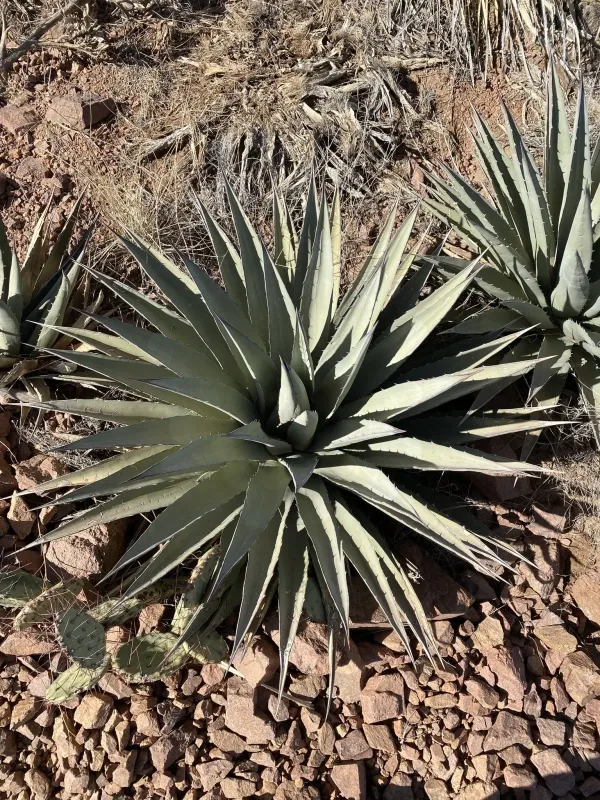
Botanically, the plant forms a distinct, compact rosette of rigid, narrow leaves equipped with sharp spines. These physical adaptations allow the plant to minimize water loss through transpiration while maintaining structural integrity in harsh, windswept environments.
Regarding cultivation requirements, Agave gracilipes thrives under intense, full-sun exposure. It requires minimal irrigation, as it is highly drought-tolerant. The soil must have excellent drainage properties, as standing water is the primary cause of plant death in cultivation.
Climatic conditions for optimal growth involve hot summers and cool to cold winters. The plant is noted for its ability to withstand significant diurnal temperature variations, which is typical for its natural habitat in high-desert elevations.
The agricultural usage of this species is primarily focused on ornamental landscaping and ecological restoration in arid regions. Its hardy nature makes it a sustainable choice for xeriscaping projects where water conservation is a top priority.
Main diseases and pests
The most significant threats to Agave gracilipes are fungal pathogens, particularly root rot, which occurs in environments with poor drainage or excessive soil moisture. Overwatering during dormancy is the primary culprit in most loss cases.
Pest pressures primarily include the agave snout weevil (Scyphophorus acupunctatus). These insects burrow into the base of the plant, introducing secondary bacteria that lead to rapid internal decay and total collapse of the succulent rosette.
Additionally, infestations of mealybugs and scale insects can occur, particularly in protected or nursery settings. These pests cluster in the leaf axils, draining sap and creating entry points for opportunistic fungal infections.
Disease management involves strict adherence to irrigation schedules and ensuring sufficient airflow between individual plants. Proper spacing during planting significantly reduces the risk of moisture-related rot and pest transmission.
Chemical control is an option for severe infestations, involving systemic insecticides or targeted fungicide treatments. However, biological control and good field sanitation remain the most effective methods for maintaining a healthy stand of Agave gracilipes.