
Agave garciae-mendozae
Agave garciae-mendozae
Description
Growing requirements
Agave garciae-mendozae is a distinct species of succulent belonging to the Asparagaceae family. Native to the arid regions of Mexico, specifically the state of Oaxaca, this plant thrives in rocky, high-altitude terrain, adapting perfectly to the harsh environmental conditions of its origin.
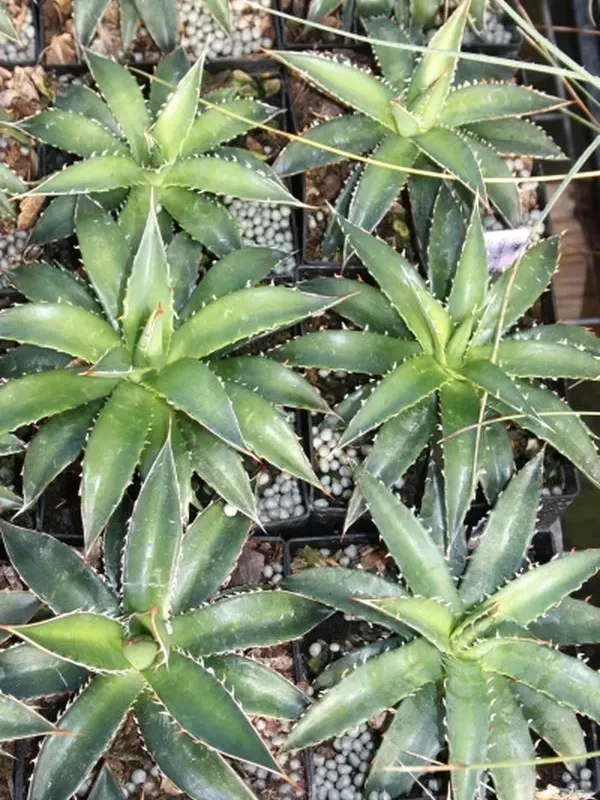
Botanically, the plant features a dense rosette of stiff, thick, grey-green leaves. These leaves are typically armed with sharp marginal teeth and a sturdy terminal spine, serving as evolutionary defenses against herbivores and helping to minimize water loss in an arid climate.
The cultivation of this agave requires specific soil conditions, prioritizing excellent drainage. Sandy or rocky substrates are preferred to prevent moisture accumulation around the roots, which can lead to rapid decay of the plant tissue if the soil remains waterlogged for extended periods.
Agave garciae-mendozae demands high levels of sunlight to maintain its structural integrity and health. In cultivation, it is best suited to regions with hot, dry summers and cool, dry winters, mirroring the temperature cycles of its native habitat to ensure robust growth and longevity.
Economically, this species is highly valued in horticulture as a decorative specimen for xeriscaping and sustainable landscape design. Its slow growth rate and unique architectural form make it a prized subject for conservation efforts and specialized collections of rare desert flora.
Main diseases and pests
The primary threats to this species include fungal infections resulting from overwatering or poor soil drainage, which often lead to crown rot. Additionally, certain coleopteran pests, such as agave snout weevils, pose a serious risk by boring into the heart of the plant.