
Agave fourcroydes
Agave fourcroydes
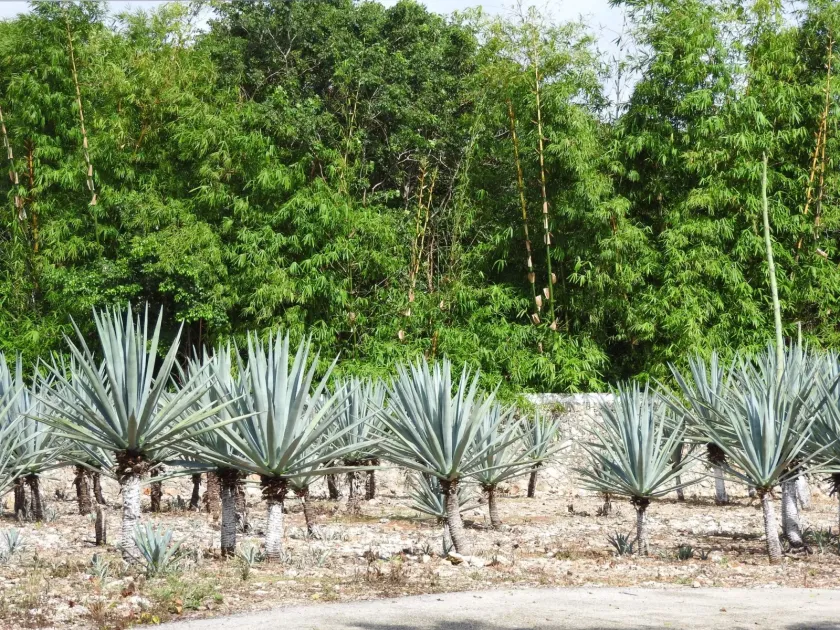
Description
Sowing dates
Agave fourcroydes, commonly known as henequen, is propagated primarily through suckers or bulbils. Planting is best timed at the beginning of the rainy season to allow the root systems to establish properly in the soil with sufficient moisture.
The planting density typically ranges between 2,500 and 3,000 plants per hectare. Rows are designed to facilitate machinery access for plantation maintenance and the periodic harvesting of mature leaves.
During the initial growth stages, the young plants require diligent weed control. Weed competition can significantly hinder development and delay the first harvest, which usually occurs 5 to 7 years after the initial planting.
The cultivation cycle of henequen is long-term, as mature plantations can remain productive for 15 to 20 years. Maintaining the health of the primary rosette is essential for a continuous and stable supply of fiber over the plant's lifetime.
This species is a perennial succulent native to tropical regions of Mexico. It has been cultivated extensively as an industrial fiber crop, favored for its ability to thrive in harsh, arid environments where other crops fail.
Growing requirements
Henequen thrives in dry tropical climates and prefers well-drained, limestone-based soils. It is highly sensitive to waterlogging, as heavy clay soils with poor drainage quickly induce root rot and systemic plant failure.
While extremely drought-tolerant, the plant requires a moderate amount of rainfall during the active growing season to maximize leaf biomass and fiber quality. An ambient temperature range of 22–30 degrees Celsius is considered optimal.
Full sun exposure is a requirement for healthy development. Shaded environments lead to etiolation and a decrease in the concentration of the stiff, vascular fiber bundles within the leaves that are vital for industrial use.
The plant is not frost-tolerant and requires frost-free regions for viable production. Even mild frost events can lead to significant damage to the leaf tissue, affecting both the yield and the quality of the harvested fibers.
Soil pH levels should remain in the neutral to slightly alkaline range. High calcium content in the soil is beneficial, as it promotes the development of robust, high-quality fibers and enhances the plant's resistance to minor environmental stressors.
Yield
Yield is measured by the number of leaves harvested per plant annually. A healthy, mature plant can produce between 15 and 25 leaves per season when managed with proper agronomic care, ensuring the central growth point remains intact.
The fiber yield generally accounts for 3–5% of the total green leaf weight. Extraction is performed using specialized decorticating machinery that strips away the non-fibrous pulp from the hard, woody vascular bundles.
Intensive plantation management can yield up to 1,200 kilograms of dry fiber per hectare per year. This productivity is heavily influenced by soil fertility, plant spacing, and the overall age and vigor of the plantation population.
The durability of henequen fiber is a major commercial asset, particularly its high tensile strength and natural resistance to saltwater degradation. These properties ensure steady demand for use in marine ropes and industrial textiles.
Monitoring for nutrient depletion is crucial for sustaining yields. Periodic soil testing and the application of micronutrients help prevent chlorosis and ensure that the plant continues to produce high-quality foliage over its 20-year lifespan.
Main diseases and pests
Fungal diseases, such as Fusarium wilt, represent a major biological threat, particularly in regions with improper water management. Effective drainage is the primary defense against the proliferation of these soil-borne pathogens.
The agave snout weevil is one of the most destructive pests for Agave fourcroydes. The larvae burrow into the plant's core, causing rapid structural collapse and necessitating the immediate removal and destruction of the infected plants.
Bacterial pathogens often enter the plant through mechanical wounds caused by harvesting tools. Strict sanitation protocols, including the regular disinfection of blades, are essential to prevent the spread of infections throughout the plantation.
Weeds not only compete for water and nutrients but also provide harbor for various pests. Integrated pest management (IPM) strategies, including mulching and controlled mechanical cultivation, are necessary for long-term health.
Environmental stress, particularly excessive moisture during the plant's dormant period, can lead to rot in the root and base regions. Proactive site selection and field profiling to ensure efficient water runoff are critical preventative measures.
Harvesting
Harvesting is performed manually by cutting the lower, most mature leaves from the base of the rosette. Skilled workers ensure that the central, younger leaves and the growth point are left undisturbed to sustain the plant.
Harvesting takes place throughout the year, ensuring a steady flow of raw material for fiber processing facilities. This continuous operation maximizes the utilization of machinery and maintains consistent labor productivity.
Speed is critical after harvesting; leaves should be processed within 24 to 48 hours. Delayed processing allows oxidation and fermentation to occur within the leaves, which negatively impacts the color and tensile strength of the fiber.
Logistics are vital, as the harvested leaves are heavy and voluminous. Efficient transport systems, ranging from field carts to light rail, are often employed to minimize transit time and reduce the overall cost of production.
Over-harvesting is a common error that must be avoided. Removing too many leaves triggers the plant's biological stress response, which often leads to the premature production of a flower stalk, ultimately resulting in the death of the plant.