
Desert agave
Agave deserti
Description
Growing requirements
Desert agave (Agave deserti) is a member of the Asparagaceae family. This long-lived succulent is biologically adapted to harsh desert environments, primarily located in the Southwestern United States and Northern Mexico.
The plant thrives in well-draining, gravelly, or sandy soils. In agricultural or horticultural settings, it is essential to ensure that water never pools around the base of the plant to prevent physiological distress.
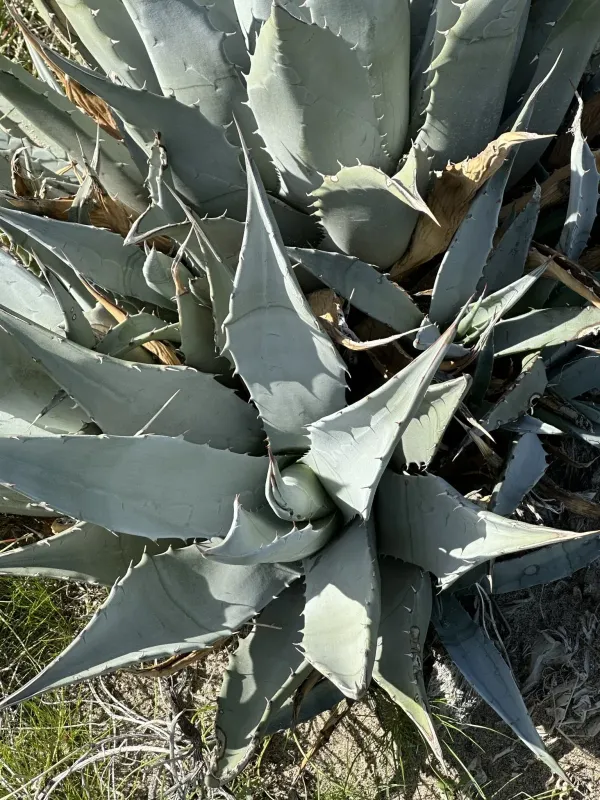
Botanically, it features thick, fleshy leaves arranged in a basal rosette, armed with sharp marginal teeth and a terminal spine. These morphological adaptations are crucial for water storage and defense against herbivores.
Desert agave requires full solar exposure to maintain its dense rosette form and health. It is highly resistant to heat and drought, but sensitive to prolonged periods of high humidity combined with low temperatures.
Economically, while historically used by indigenous populations for food and fiber, it is currently primarily valued for ornamental use in xeriscaping and sustainable desert landscaping due to its minimal irrigation requirements.
Main diseases and pests
Root rot, often caused by poor drainage or overwatering during the dormant winter period, is the most common threat to the vitality of Agave deserti. This condition is usually lethal if not addressed immediately.
The agave snout weevil (Scyphophorus acupunctatus) is the primary pest threat. Adults and larvae bore into the heart of the plant, causing the rosette to collapse as internal tissues are consumed.
Scale insects and mealybugs can also infest the succulent leaves, causing minor damage, though they are usually considered secondary pests compared to the devastating impact of the agave snout weevil.
Prevention is the best strategy against diseases. Proper plant spacing ensures adequate airflow, which reduces the moisture level around the leaf base, hindering the growth of fungi and pathogens.
Regular monitoring of the crown area is vital. If a plant shows signs of sudden wilting or structural collapse, it should be thoroughly inspected for weevil infestation and removed if the pest is confirmed to be present.