
Delamater's agave
Agave delamateri
Description
Growing requirements
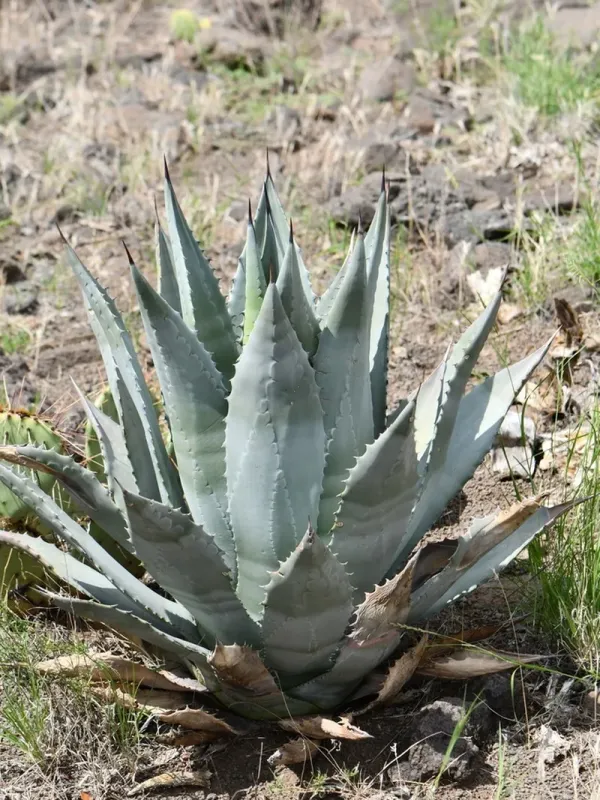
Delamater's agave (Agave delamateri) is a hardy perennial succulent belonging to the Asparagaceae family, native to the arid desert landscapes of Arizona, USA. It is characterized by its large, succulent rosettes of leaves that serve as water reservoirs during prolonged dry spells.
The plant thrives in well-draining, sandy, or rocky soils, which are essential to prevent root rot. It requires full sunlight exposure to maintain its structural integrity and ensure the healthy development of its characteristic rosette shape.
Climatic preferences include hot days and mild nights, typical of its native desert environment. While it is quite drought-tolerant, it requires careful management during the establishment phase to ensure proper root development.
Agricultural practices for this crop focus on minimal irrigation and soil aeration. Fertilization should be kept to a minimum, as these plants have adapted to nutrient-poor soils and excess nutrients can cause excessive, weak growth.
The primary use of Agave delamateri is ornamental and botanical, but like many species in this genus, it has historical significance in the cultural practices of indigenous peoples for its fibrous materials and succulent tissues.
Main diseases and pests
Fungal pathogens are the most significant threat to the crop, typically triggered by poor drainage and excessive soil moisture, which lead to necrotic decay of the roots and base.
The agave snout weevil (Scyphophorus acupunctatus) is a devastating pest that bores into the core of the agave, often causing the rapid death of the plant before an infestation is detected.
Other common threats include sap-sucking insects like mealybugs, which weaken the plant and can facilitate secondary bacterial infections through leaf lesions.
Effective management strategies rely on maintaining optimal environmental conditions and ensuring adequate spacing between plants to improve airflow and reduce humidity levels.
Integrated pest management, including regular inspection of the crown area and the use of targeted biological or chemical treatments, is essential to protect the long-term viability of the plants.