
Agave cupreata
Agave cupreata
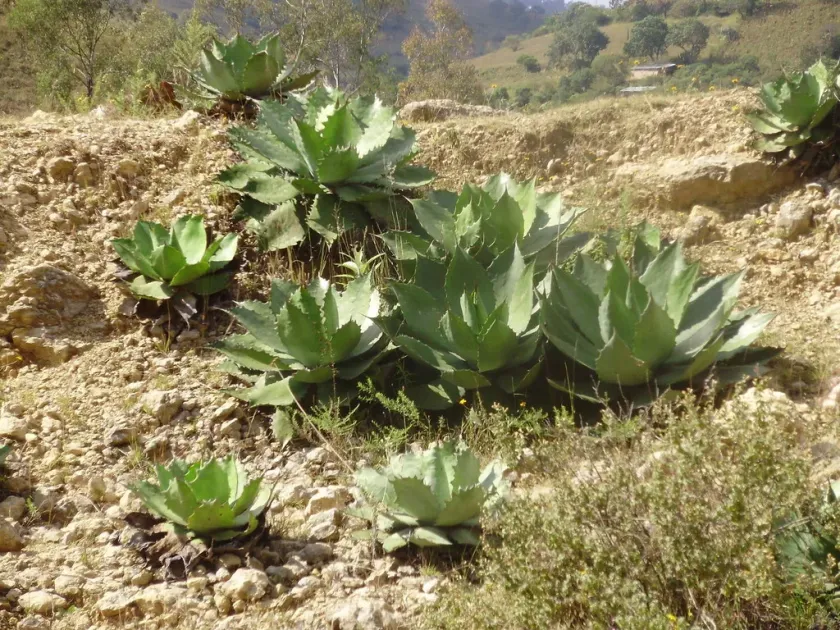
Description
Sowing dates
Propagation of Agave cupreata is primarily carried out through seeds or vegetative offsets known as suckers, which are separated from the mother plant.
Seed sowing typically occurs in specialized nurseries during the end of the dry season to protect young plants from excessive environmental stress.
Substrate moisture must be carefully regulated during germination to prevent the onset of damping-off diseases, which are common in high-humidity nursery environments.
Seedlings are transplanted into the open field at the beginning of the rainy season, allowing the root systems to establish before the dry spell begins.
Optimal planting density ranges from 2,000 to 2,500 plants per hectare, ensuring that each agave has sufficient space for healthy development and air circulation.
Growing requirements
Agave cupreata is a member of the Asparagaceae family and is native to the transition zones and tropical dry forests of western Mexico, particularly in Guerrero.
The plant thrives in regions with a distinct climate, preferring high-altitude areas ranging between 600 and 1,800 meters above sea level.
Soil requirements involve well-drained, porous media, often consisting of rocky or sandy loams that prevent water stagnation around the base.
It is a sun-loving species that requires full exposure to thrive, although it can adapt to light shading in its natural wild habitat.
This species is highly drought-tolerant, adapted to the seasonal rainfall patterns characteristic of the Balsas River basin where it is predominantly cultivated.
Yield
The yield of Agave cupreata is measured by the weight of the harvested heart, known as the 'piña', which contains the essential sugars for distillation.
The plant has a relatively long growth cycle, typically maturing between 7 and 10 years, depending on environmental conditions and management intensity.
A mature heart can weigh anywhere from 30 to 80 kilograms, making the harvest a significant undertaking for farmers in the mezcal-producing regions.
Successful yield depends on the sugar accumulation efficiency within the heart, which is determined by the genetics of the plant and the length of the vegetative phase.
Farmers closely monitor the plant's development to ensure that the harvest occurs at the peak moment before the stalk consumes the stored sugars.
Main diseases and pests
The agave weevil, Scyphophorus acupunctatus, is the primary economic pest, as its larvae bore into the heart, causing extensive structural damage.
Fungal pathogens such as Fusarium and Anthracnose are prevalent, especially in fields with inadequate soil drainage or excessively high rainfall levels.
Invasive weed growth during the early stages of establishment can compete for nutrients, necessitating regular mechanical weeding in the field.
Rodents and other small animals may damage the succulent leaves, creating entry points for secondary bacterial or fungal infections.
Implementing integrated pest management practices, including field sanitation and trap crops, is crucial for preserving the health of large-scale plantations.
Harvesting
The harvest process is a manual operation performed by skilled workers called 'jimadores', who use specialized sharp tools to remove the leaves.
This labor-intensive task requires precision to trim the leaves back to the heart without damaging the plant tissue, which would lead to premature degradation.
Timing the harvest is critical; it is traditionally performed just as the plant begins to send up its flowering spike, signifying maximum sugar content.
Harvested piñas must be transported to processing sites rapidly to avoid oxidation and contamination that could affect the quality of the final product.
After the harvest, field clearing and debris disposal are standard agronomic practices to reduce the likelihood of pest outbreaks in the next planting cycle.