
Agave colorata
Agave colorata
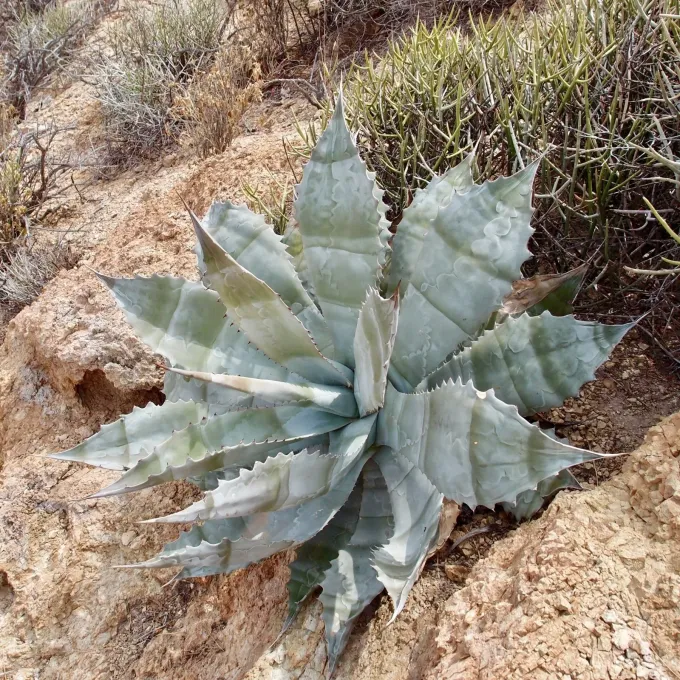
Description
Growing requirements
Agave colorata is a perennial succulent species belonging to the Asparagaceae family, native to the arid landscapes of Sonora, Mexico. It is widely recognized for its compact, symmetrical rosette structure, featuring broad, fleshy leaves with a distinct powdery glaucous finish and striking reddish-brown marginal teeth.
This crop thrives in harsh, xerophytic conditions and requires well-aerated, gritty, or rocky soils with excellent drainage properties. It is essential to avoid waterlogged substrates, as the root system of Agave colorata is highly susceptible to rot if subjected to poor drainage and high moisture levels.
As a light-loving species, Agave colorata requires full sun exposure to maintain its characteristic color intensity and dense, compact growth habit. In terms of temperature, it prefers warm environments but displays remarkable resilience, handling short-term frost once established, provided the soil remains dry.
Agronomic management is minimal, focusing on regulated irrigation cycles. During the active growing season, watering should be infrequent and deep, allowing the root zone to dry out completely before the next irrigation event. Over-watering is the primary cause of physiological decline in this species.
Economically and horticulturally, Agave colorata is valued primarily for its ornamental role in xeriscaping and sustainable garden design. Its architectural form makes it an ideal specimen for hot, dry climate landscaping, where it provides year-round visual interest with low maintenance requirements.
Main diseases and pests
The main threats to the vitality of Agave colorata are fungal pathogens, specifically those causing root and crown rot. These infections typically arise from over-saturation of the growing medium or insufficient air circulation around the plant, necessitating strict irrigation control and sterile planting practices.
Pest pressures primarily stem from sap-sucking insects such as mealybugs and scale insects. These pests can cause significant damage to the leaf tissue and weaken the overall structure of the plant. Early detection and the application of horticultural oils or systemic insecticides are recommended strategies for effective pest control.