
Agave chrysantha
Agave chrysantha
Description
Sowing dates
Propagation of Agave chrysantha is typically achieved through seeds or by separating offsets, commonly referred to as pups, from the base of the mother plant.
Seeds should be sown in a well-draining, sandy-based medium during the warm spring months to ensure rapid and healthy germination.
Maintaining a constant warm temperature during the initial growth phase is critical for the establishment of young seedlings.
Separation of offsets is considered the most efficient propagation method, allowing for faster development of individual, mature plants.
Young plants require a period of careful hardening off before being transplanted into full-sun environments to prevent leaf scorching.
Growing requirements
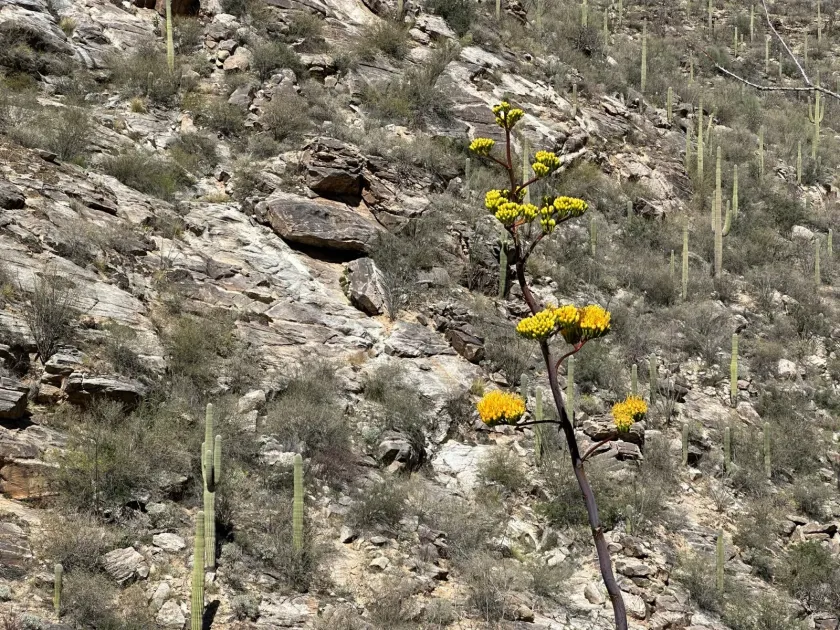
Agave chrysantha is a notable member of the Asparagaceae family, native to the arid desert landscapes of central Arizona.
The plant features a tight, symmetrical rosette of succulent leaves and produces striking, golden-yellow flowers during its blooming cycle.
Soil requirements are strict: the plant mandates an extremely porous, gritty, or rocky soil structure to prevent root suffocation and decay.
Environmental conditions should mimic its native desert habitat, prioritizing high light intensity and low humidity levels throughout the year.
Agave chrysantha is remarkably drought-tolerant, capable of surviving long periods of water deprivation once the root system is established.
Main diseases and pests
The most severe threats to the health of Agave chrysantha are related to excessive moisture, which leads to chronic root and crown rot.
The Agave Snout Weevil (Scyphophorus acupunctatus) is the most destructive pest, causing internal tissue damage that often leads to total plant loss.
Mealybugs and scale insects may also infest the foliage, particularly in environments with poor air circulation or overcrowding.
Fungal pathogens thrive in damp, cold conditions, meaning that winter management is crucial for the survival of the plant in cultivation.
Integrated pest management, including regular inspection and the use of systemic insecticides, is recommended to safeguard the crop from infestation.
Harvesting
In agricultural practice, the harvest of Agave chrysantha is primarily focused on the extraction of high-quality fibers from the mature leaves.
Harvesting is usually conducted on plants that have reached sufficient leaf maturity, typically after several years of growth in open fields.
The inflorescence, while beautiful, marks the end of the life cycle for the individual rosette, and harvesting is often managed to optimize biomass.
Great care must be taken during the harvesting process, as the leaves are equipped with sharp terminal spines that pose a physical danger.
Beyond fiber and ornamental use, the plant serves as a vital component in land restoration projects within its native geographic range.