
Cantala agave
Agave cantala
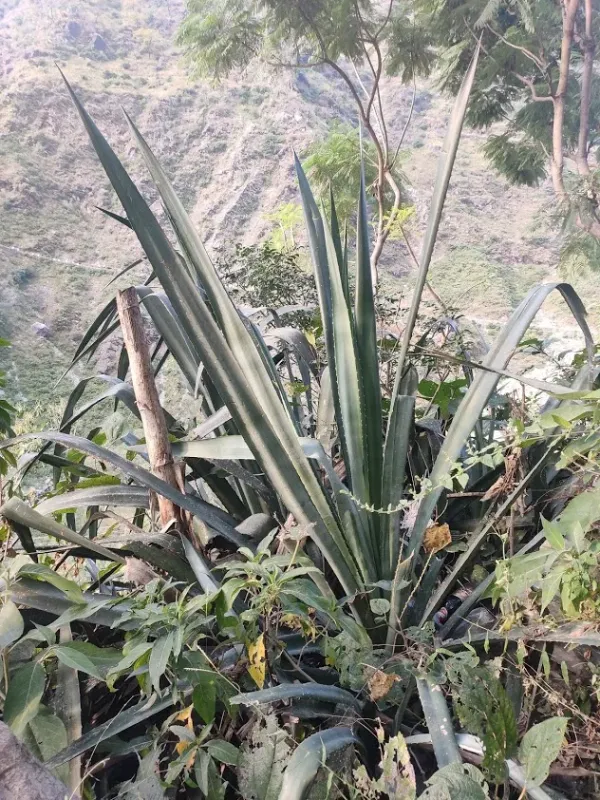
Description
Sowing dates
The propagation of Agave cantala is primarily performed through vegetative reproduction using suckers or bulbils generated by the mature parent plant. Planting is typically scheduled at the beginning of the rainy season to ensure optimal soil moisture levels for root establishment.
For industrial cultivation, a systematic grid pattern is employed, providing adequate spacing between rows to facilitate machinery access and manual maintenance. Density depends on soil quality and the intended cycle of biomass production, which is adjusted based on local regional standards.
The land preparation process involves deep plowing and thorough clearing of weeds, which is crucial for young plants. Young agave is highly susceptible to competition, so maintaining a clear space around the base of the plant is vital during the initial growing stages.
Seed-based propagation is rarely used for commercial plantations because it results in a slow maturation rate and inconsistent fiber characteristics. Vegetative clones are preferred as they ensure genetic uniformity and faster development of the harvestable biomass.
Acclimatization in nursery beds is essential for young suckers before they are transplanted to the field. This phase allows the plants to develop a strong root system, improving their resilience against environmental stressors and potential pathogens.
Growing requirements
Agave cantala is a tropical plant that thrives in warm, stable climates. It requires consistent temperatures between 20 and 30 degrees Celsius throughout the year to maintain an active growth cycle and produce high-quality fiber.
The plant demands full sun exposure and is highly intolerant to shading, which can cause etiolation and reduce the overall tensile strength of the leaves. Open, unobstructed fields are ideal for maintaining healthy plant development.
Soil requirements focus on excellent drainage and aeration. The species performs poorly in heavy, waterlogged soils, which promote root rot and fungal infections; sandy or gravelly loam types are the most suitable for long-term production.
While the agave is drought-tolerant, moderate rainfall or irrigation is required to maximize fiber yield. Prolonged dry spells can stunt leaf elongation, which directly decreases the length and quality of the fiber extracted during processing.
Nutrient management involves monitoring the soil for potassium and phosphorus levels, which support structural leaf development. Excessive nitrogen is discouraged as it promotes rapid but structurally inferior leaf growth, leading to reduced fiber durability.
Yield
The primary economic output of Agave cantala is the long, durable fiber contained within the succulent leaves. Yield is calculated based on the number and weight of mature leaves harvested per hectare during a single agricultural cycle.
Plantations enter the productive stage several years after initial planting, once the central rosette reaches structural maturity. From this point, the outer, older leaves are harvested systematically to ensure the plant continues to produce new foliage.
The quality of the fiber is highly dependent on the age of the leaf and the specific environmental conditions during its growth. Experienced farmers focus on harvesting at the optimal time to ensure the highest tensile strength and flexibility of the material.
Long-term plantation management allows for multiple harvests from the same plant over a decade or more. This makes Agave cantala an efficient and sustainable crop, provided that the heart of the plant remains undamaged during leaf collection.
Research into selecting superior clones has shown significant improvements in fiber yield, with modern varieties producing more biomass under the same agricultural inputs. Optimizing the harvest cycle is essential for balancing plant health and plantation profitability.
Main diseases and pests
Fungal pathogens represent the most significant threat to agave plantations, particularly those caused by excess moisture or poor drainage conditions. These infections can quickly spread through a field if not addressed with rigorous sanitary measures.
Insects such as the agave weevil can cause devastating damage by boring into the plant, which often invites secondary bacterial infections. Regular scouting and monitoring of plantations are necessary to detect these pests before they reach infestation levels.
Viral diseases, often transmitted by sap-sucking insects, present a major hurdle for plantation uniformity. Infected plants must be identified and removed immediately to act as a barrier against the spread of viral agents to healthy stock.
Physical trauma caused by sharp harvesting tools is a common pathway for pathogen entry. Cleaning and disinfecting blades between plants is a standard agricultural practice to minimize the risk of spreading disease across the field.
Effective defense against threats relies on integrated pest management, which emphasizes prevention over chemical intervention. Maintaining adequate spacing and proper soil drainage are the most effective non-chemical strategies for healthy growth.
Harvesting
Harvesting Agave cantala is a labor-intensive operation that involves using sharp blades to remove leaves from the rosette base. Precision is required to ensure that the core is left intact, allowing the plant to continue its metabolic processes.
Post-harvest logistics are critical, as the leaves should be processed within 24 hours to prevent the drying of leaf tissue. Delayed processing makes the extraction of fiber significantly harder and may lower the final grade of the product.
During the decortication process, mechanical scrapers crush the leaf tissue and strip away the succulent pulp. The resulting long fibers are then thoroughly washed in water to remove residual plant juices that could cause discoloration.
The fibers are typically sun-dried on outdoor racks until they reach the desired moisture content. Constant monitoring of the drying process is necessary to prevent sun-bleaching or environmental contamination, which can impact the market value.
Once dried and sorted, the fiber is baled for shipping to textile or cordage facilities. A successful harvest yields consistent, high-strength fiber that meets strict industrial standards for durability and performance in rope and textile manufacturing.