
Cow horn agave
Agave bovicornuta
Description
Sowing dates
Propagation of the cow horn agave (Agave bovicornuta) is typically achieved through seeds or by harvesting offshoots (pups) that develop at the base of the parent plant.
Seeds are sown in a well-draining mix of sand and peat, kept at temperatures between 20–25 degrees Celsius to encourage optimal germination rates.
Early spring is considered the ideal time for sowing, as the increasing natural light promotes stronger growth in young seedlings during their delicate first months.
When propagating by offsets, the pups should be allowed to form their own roots before being carefully detached and moved to a separate container.
Newly established plants require protection from harsh direct sun for the first few weeks until they show signs of active growth.
Growing requirements
The cow horn agave belongs to the Asparagaceae family and is native to the rugged mountainous terrain of Mexico, specifically in Sonora and Chihuahua.
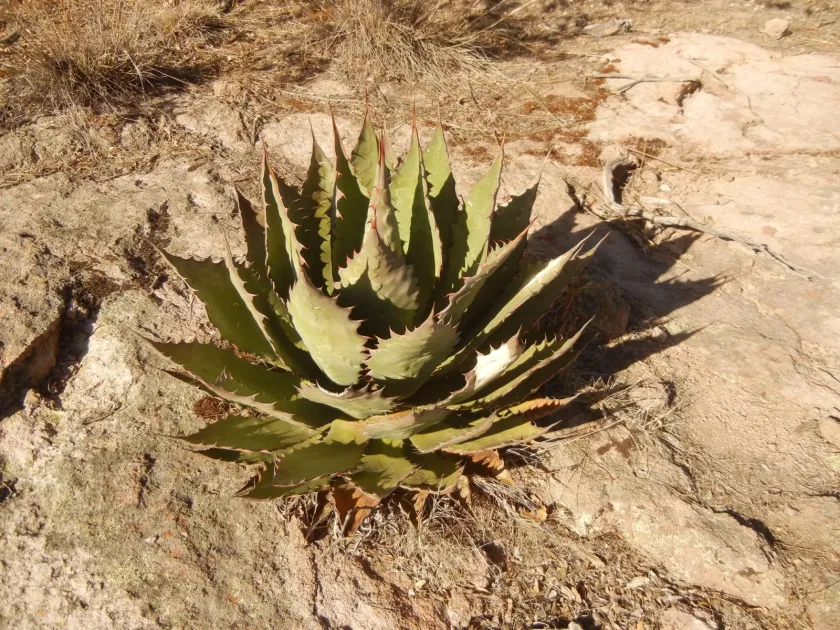
As a true succulent, this species requires a location with full, bright sun to maintain its structural integrity and develop its iconic, curved, horn-like spines.
The planting substrate must be porous and extremely fast-draining, as the plant is highly sensitive to root rot if left in standing water.
While the agave is highly drought-tolerant, it does not tolerate frost and should be cultivated in containers in regions with cold winters to facilitate indoor wintering.
During the growing season, deep watering should be performed only when the soil has completely dried out, with minimal to no water provided during the winter dormancy.
Main diseases and pests
Overwatering is the primary threat to Agave bovicornuta, often leading to irreversible crown rot and the decline of the specimen.
Common succulent pests such as mealybugs and spider mites may infest the plant, particularly in low-airflow indoor environments.
Integrated pest management, including regular inspection and the use of targeted systemic insecticides, is recommended to control populations.
Fungal infections can be minimized by ensuring proper air circulation around the rosette and using inorganic top-dressing around the neck of the plant.
Keeping the foliage dry and preventing soil particles from lodging in the center of the plant help mitigate the risk of pathogen accumulation.