
Agave atrovirens
Agave atrovirens
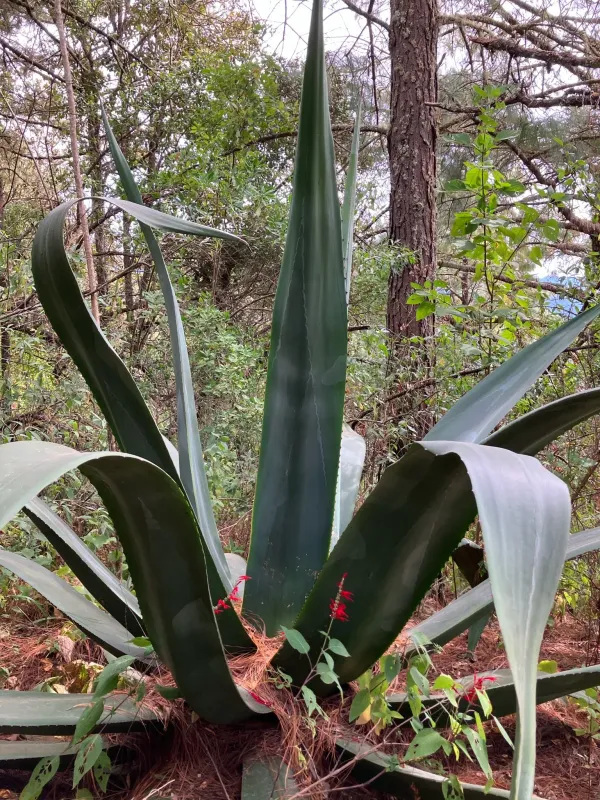
Description
Sowing dates
Agave atrovirens is a perennial succulent belonging to the Asparagaceae family. In agricultural practices, it is primarily propagated vegetatively using offsets, which are small plantlets that develop around the base of the parent plant.
The optimal planting time is at the beginning of the rainy season. This timing allows the root system to establish itself effectively in the soil before the onset of the harsh, dry months typical of the regions where it is cultivated.
Before planting, the field must be cleared of weeds and deep-plowed to ensure proper soil aeration. Seedlings are spaced significantly, often 2–3 meters apart, to provide ample room for the development of the large, fleshy, dark green leaves characteristic of the species.
When transplanting, it is crucial to place the plant carefully in the hole to avoid damaging the base of the rosette, which is highly prone to rot. Initial mineral supplementation can help stimulate faster root growth in the first few months.
The plant grows slowly, and it takes several years for the plant to reach the stage where its core is ready for harvest. This slow maturation process necessitates a long-term management strategy for any commercial plantation.
Growing requirements
Agave atrovirens thrives in well-drained, sandy, or rocky soils with a neutral to slightly acidic pH. The crop is extremely sensitive to waterlogged conditions, which are the primary cause of root rot and total plantation failure.
The species is highly heat-tolerant and drought-resistant, well-adapted to high-altitude environments with significant diurnal temperature fluctuations. However, it cannot survive prolonged freezing temperatures, which can severely damage its succulent tissues.
Intense sunlight is essential for the plant's health and the accumulation of carbohydrates within the central core. Shaded areas significantly reduce the rate of growth and the ultimate yield of the raw material required for fermentation.
Water requirements are minimal for adult plants, as they are expert at storing water in their dense foliage. Supplemental irrigation should only be considered for young, establishing plants during periods of extreme, prolonged drought.
Fertilization should focus on phosphorus and potassium to strengthen the plant's overall resilience against pathogens. Excessive nitrogen should be avoided as it may encourage excessive leaf growth at the expense of the sugar content in the heart.
Yield
The primary economic product is the core or 'piña,' which is harvested for its sugar-rich juice. The total yield depends heavily on the density of the planting and the age of the crop at the time of harvesting.
A single mature plant can yield a core weighing between 40 and 100 kg. High sugar concentration in the core is the critical indicator for farmers, as it directly impacts the production efficiency of pulque or fiber extraction.
This crop is highly valued for its dual-use potential: the juice is fermented to produce traditional beverages, while the tough, long fibers of the leaves are processed for use in textiles, ropes, and artisanal industrial applications.
The profitability of the crop is high due to the low maintenance required once the plants reach the adult stage. The plantation can be managed with minimal inputs for several years before the harvest cycle begins.
Processing the extracted juice requires strict sanitary conditions and modern technology to filter out impurities and ensure the final product meets commercial food and beverage safety standards.
Main diseases and pests
The most devastating threat to Agave atrovirens is the agave snout weevil (Scyphophorus acupunctatus). The larvae of this pest tunnel into the central core, which inevitably leads to the decay and death of the entire plant.
Fungal infections, including Fusarium wilt and anthracnose, often emerge in areas with poor drainage or where the plant tissue has been compromised by mechanical damage, such as improper leaf pruning.
Bacterial rots are also significant, spreading quickly in high-density plantations during humid periods. Sanitation and the immediate removal of infected specimens are the only effective ways to control the spread of these pathogens.
Integrated pest management (IPM) is highly recommended, utilizing pheromone traps and targeted, eco-friendly insecticides. Regular monitoring is essential, as early detection allows for the localized control of outbreaks.
Preventative care during the maintenance of the foliage is vital. Ensuring that all tools are sterilized between plants prevents the accidental transmission of diseases from infected individuals to healthy ones.
Harvesting
Harvesting is a skilled labor-intensive process that takes place just before the plant begins to bolt and produce its massive flower stalk. At this stage, the sugar concentration is at its peak.
Trained workers, known as 'jimadores,' use specialized sharp tools to remove the leaves until only the core remains. This requires precision and deep knowledge of the plant's anatomy to maximize the harvestable volume.
For juice collection, a small cavity is carved into the heart, where the sap collects and is harvested daily for several weeks. This requires diligent, daily attendance to each plant during the active collection phase.
Once the core is exhausted of juice, it is removed, and the plant residue is often used as organic compost for the soil, helping to maintain fertility for the next generation of plantings on the farm.
Because every plant develops at a slightly different rate, harvesting is a year-round, continuous operation rather than a seasonal, once-a-year event, which ensures a steady supply of raw materials.