
Rough agave
Agave asperrima
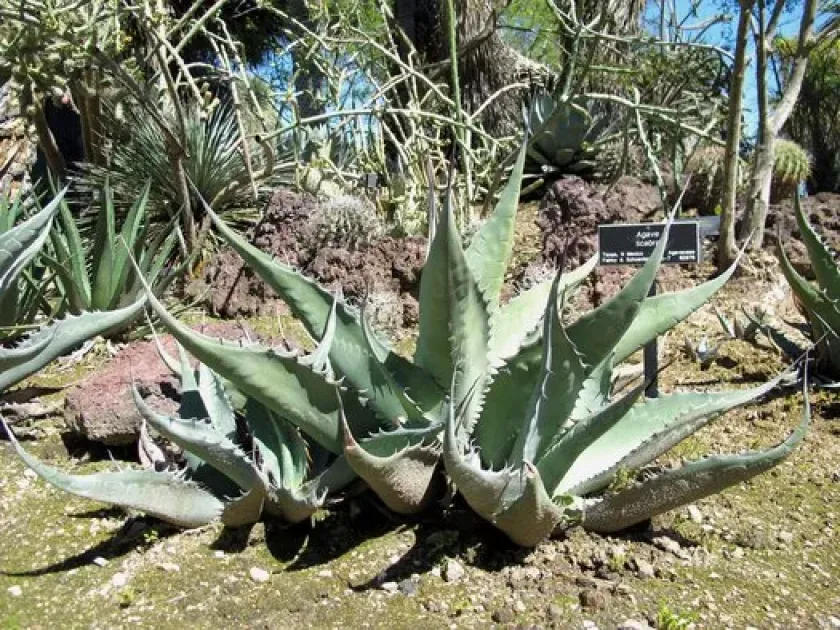
Description
Sowing dates
Propagation of Agave asperrima is predominantly achieved through offsets, as seeds often exhibit variable germination rates and require specific temperature cycles.
When starting from offsets, it is crucial to ensure the cut surface has calloused properly before placing it into the substrate to prevent rot.
For planting in open fields, early spring is considered the ideal time as it allows the root system to establish before the onset of the hottest summer temperatures.
Proper spacing is essential to ensure that each plant has enough room for its expanding basal rosette and to allow for mechanized maintenance between rows.
After transplanting, irrigation should be carefully managed, providing minimal water until signs of new vegetative growth are observed, indicating successful establishment.
Growing requirements
Agave asperrima is a hardy succulent belonging to the Asparagaceae family, native to the arid environments of Northern Mexico and the Southwestern United States.
The plant thrives in well-draining, rocky, or sandy soils and is remarkably efficient at utilizing limited water resources through specialized photosynthetic pathways.
Sunlight is a critical requirement for this species, as it needs full exposure to maintain its characteristic structure and vibrant foliage color throughout the growing season.
In terms of temperature, it is adapted to high heat, but it also demonstrates an impressive ability to withstand occasional light frost in its natural habitat.
Minimal fertilization is required, as the plant is naturally adapted to nutrient-poor soils, making it an efficient candidate for low-input agricultural systems.
Yield
The economic yield of Agave asperrima is primarily measured by the production of high-quality fiber extracted from the fleshy, robust leaves of the plant.
Harvesting for fiber typically occurs after the plant reaches biological maturity, which varies based on climate and soil quality, usually spanning several years.
Sustainable harvesting techniques involve selecting older leaves while ensuring that the central meristem of the rosette remains intact for continuous regrowth.
While the leaves are the primary harvest, the biomass of mature plants can also be utilized for secondary purposes in local markets and industrial extraction processes.
Yield management requires careful observation of the growth rate, as harvesting too frequently or too early can significantly weaken the plant's overall vitality.
Main diseases and pests
Agave asperrima is susceptible to root rot, which is often a secondary symptom of poor soil drainage rather than an inherent weakness of the species.
Pests such as agave snout weevils can cause significant damage to the core of the rosette, potentially leading to the death of the entire plant if untreated.
Fungal pathogens can colonize leaves that remain damp for extended periods, making appropriate plant spacing and humidity control vital for health management.
Integrated pest management strategies are highly recommended to monitor for early signs of infestation and to mitigate damage without harming beneficial insects.
Ensuring that the soil remains porous and that the root neck stays dry is the most effective preventative measure against the most common agricultural threats.