
Caribbean agave
Agave angustifolia
Description
Growing requirements
Caribbean agave (Agave angustifolia) is a perennial succulent plant belonging to the Asparagaceae family. It is native to tropical and subtropical regions of the Americas, thriving in arid to semi-arid environments.
The plant requires well-drained, sandy, or rocky soils to prevent root rot. It is highly drought-tolerant, utilizing its succulent leaves to store water during periods of minimal rainfall.
Optimal growth conditions involve full sun exposure, as the species is intolerant to shade. It thrives in warm temperatures and is generally sensitive to severe frost, which can damage the cellular structure of the leaves.
Agronomic management includes maintaining proper spacing between rows to facilitate airflow and simplify harvesting processes. While the plant can grow in poor soils, additional organic fertilizers may improve biomass production.
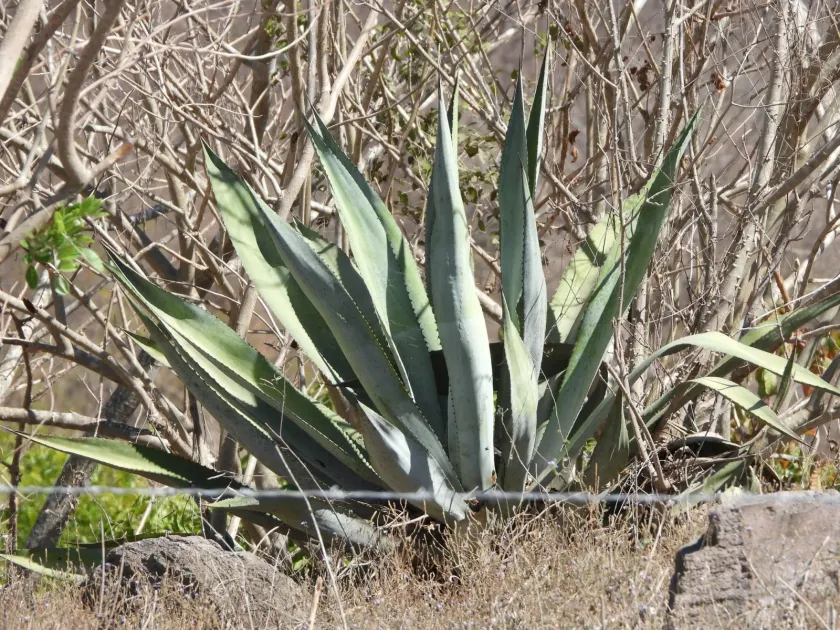
Botanically, it features a dense rosette of narrow, lance-shaped leaves with sharp marginal spines and a terminal thorn, which are critical for the plant's survival against herbivores in its natural habitat.
Yield
This crop is primarily cultivated for its strong, durable fibers, often referred to as sisal, which are utilized for ropes, cords, and various industrial textile applications.
The core of the plant is also an essential raw material for the distillation of artisanal spirits, such as mezcal, due to its high concentration of fermentable sugars.
Crop yields are significantly influenced by the maturity of the plants, typically reaching harvest readiness within five to ten years after initial planting.
Effective plantation management involves monitoring the sugar content in the heart (piña) to determine the ideal harvest time for spirits production, maximizing output per plant.
Ongoing research aims to improve harvest efficiency and explore the use of agave waste products for bioenergy or as soil amendments, increasing overall economic sustainability.
Main diseases and pests
The agave snout weevil (Scyphophorus acupunctatus) is the most destructive pest for Agave angustifolia, capable of devastating entire plantations by feeding on the plant's core tissues.
Fungal diseases, including anthracnose and various types of soft rot, pose a constant threat, especially during seasons with high humidity or excessive rainfall.
Integrated pest management strategies are crucial, involving the use of pheromone traps to monitor populations and early removal of infested individuals to prevent secondary infections.
Avoiding mechanical injury during maintenance is vital, as pathogens often enter the plant through wounds caused by tools or heavy machinery used in the field.
Maintaining high sanitary standards in the nursery and the field is the primary defense against the spread of viral and bacterial pathogens within the agave population.