
Agave albopilosa
Agave albopilosa
Description
Sowing dates
Agave albopilosa is a rare species belonging to the Asparagaceae family, native to the rugged terrains of San Luis Potosi, Mexico. Propagation is primarily carried out through seeds, which require specific conditions to germinate successfully. The soil medium should be highly inorganic, consisting mainly of pumice, perlite, and coarse sand to ensure rapid drainage.
Sowing is best performed in the spring when temperatures consistently range between 20°C and 25°C. Seeds should be kept in a lightly moist environment, avoiding any pooling of water, which could lead to fungal infections. Once the seedlings develop their first true leaves, they should be transplanted into individual pots to avoid competition for root space.
Growing requirements
This succulent thrives in bright, direct sunlight, which is essential for maintaining the compact shape and the characteristic white hairs on the leaf tips. If grown indoors, a South-facing window is recommended to provide the necessary light intensity. Proper airflow is vital to simulate the windswept mountain habitats where this plant naturally evolves.
Soil requirements are strict: a porous, mineral-based succulent mix is mandatory to prevent root rot. Water should be applied sparingly, allowing the soil to dry out completely between waterings. During the winter dormant period, water intake should be significantly reduced or stopped entirely to prevent damage to the plant's succulent tissue.
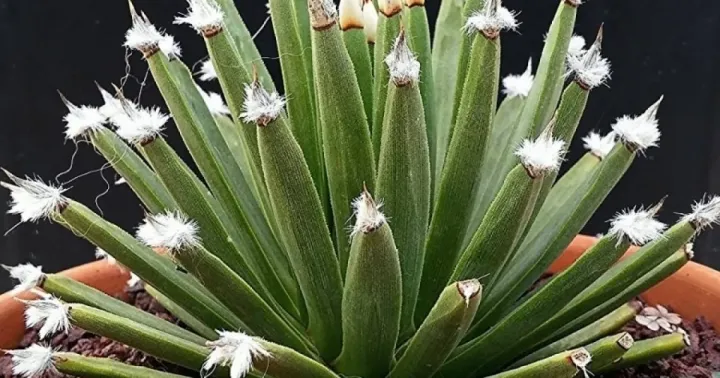
Botanically, Agave albopilosa is known for its stiff, dark green leaves that terminate in delicate white filaments, providing a striking contrast. It grows slowly, forming a dense rosette that remains relatively small compared to other agave species. This compact habit makes it a highly sought-after plant for collectors specializing in arid-zone vegetation.
Main diseases and pests
The primary threat to Agave albopilosa is root rot, which typically stems from poor drainage or excessive watering during dormant phases. Fungal pathogens can invade the tissue rapidly if the environment remains damp for too long. Additionally, mealybugs are a common pest that may hide deep within the rosette, requiring persistent monitoring and treatment.
Management involves using systemic insecticides if an infestation occurs and employing fungicides to combat localized rot. Maintaining high levels of hygiene and ensuring excellent air circulation are the best defensive strategies against these issues. Regular visual inspections of the leaf base are recommended to detect pests or early signs of decay before they spread.