
Narrowleaf onion
Allium strictum
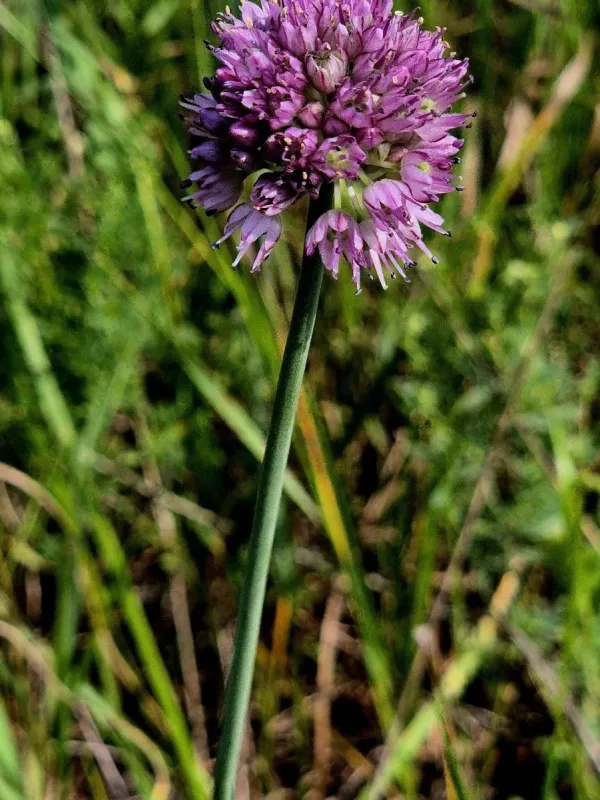
Description
Sowing dates
Sowing of Allium strictum in open ground is best performed in early spring as soon as the soil warms up or alternatively in late autumn for winter sowing.
Seeds should be sown at a shallow depth of approximately 1 to 1.5 cm, ensuring they are adequately covered with fine, loose soil to prevent desiccation.
The germination process typically takes about two to three weeks, during which it is critical to maintain consistent soil moisture for successful emergence.
Initial thinning is recommended once the first true leaf appears, which helps reduce competition and allows for stronger establishment of the young seedlings.
Final thinning should be carried out a few weeks later to ensure a spacing of at least 15 to 20 cm between individual plants for healthy bulb development.
Growing requirements
Allium strictum is a perennial plant belonging to the Amaryllidaceae family, characterized by its narrow, linear leaves and hardy growth habit.
It thrives in well-drained, fertile, loamy or sandy soil types and requires full sun exposure to achieve optimal vegetative growth and photosynthesis.
The species is highly valued for its extreme cold tolerance, making it an excellent choice for gardens in regions with severe winters and late spring frosts.
While the plant is quite resilient, it prefers moderate watering and does not tolerate waterlogged conditions, which can lead to root rot and other issues.
Applying organic compost or balanced potassium-based fertilizers can significantly boost plant vigor and improve overall resistance to environmental stresses.
Main diseases and pests
Like many species in the onion family, Allium strictum may be susceptible to the onion fly, especially if crop rotation cycles are not strictly followed.
Fungal diseases such as downy mildew can occur in overly humid environments, often identified by discolored spots on leaves and a decline in overall plant health.
Rust is another potential threat that manifests during cool, wet seasons, causing premature drying of foliage and potentially affecting the plant's overall longevity.
Pests like thrips may occasionally infest the plants, causing silvering or streaking on the leaves, which significantly impacts the aesthetic and culinary value.
Integrated pest management, including regular weeding and maintaining good air circulation, is the best strategy to keep these plants healthy and productive.
Harvesting
The harvest of green leaves can begin from the second year of growth, with selective cutting performed once the foliage reaches a height of about 20–25 cm.
Selective harvesting ensures a continuous supply of fresh greens throughout the season while allowing the bulb to remain energized for the following years.
For those interested in harvesting bulbs, the procedure should be done in late summer when the top foliage begins to yellow and naturally dies back down.
Once harvested, the bulbs must be cured in a shaded, well-ventilated area for approximately ten days to ensure the outer scales dry and harden effectively.
Properly cured bulbs should be stored in a cool, dry environment with temperatures maintained around 0–5 degrees Celsius to maximize shelf life throughout winter.