
Allium splendens
Allium splendens
Description
Sowing dates
Direct sowing of Allium splendens seeds should be performed in early spring as soon as the soil reaches a temperature of 5-8 degrees Celsius. Autumn sowing is also an effective strategy, allowing the seeds to undergo cold stratification over the winter.
For indoor starts, sowing in trays during February or March is recommended. Use a high-quality, well-draining seed-starting mix and maintain consistent moisture until germination occurs, which typically takes a few weeks.
Seeds should be sown at a depth of 1-1.5 centimeters. It is crucial to monitor moisture levels closely, as tiny seeds can easily desiccate, leading to poor emergence rates if the soil surface is allowed to crust over.
Planting distances are critical for long-term productivity. Rows should be spaced 25-30 centimeters apart, with individual plants placed 10-15 centimeters apart within the row to ensure adequate airflow and nutrient access.
Vegetative propagation via bulb division is the most efficient method for rapid expansion. This is best achieved by lifting the clump in early spring before growth initiates or in late summer once the foliage starts to senescence.
Growing requirements
Allium splendens is a hardy perennial belonging to the Amaryllidaceae family. Native to regions like Siberia, the Russian Far East, Mongolia, and Northern China, it is well-adapted to rocky slopes and open, sunny meadows.
The plant demonstrates remarkable cold tolerance and adaptability. It can withstand harsh winters and erratic spring weather, making it an excellent candidate for regions where less hardy onion species might struggle.
A well-draining soil profile is non-negotiable for this species. It thrives in loamy or sandy soils enriched with organic matter. Heavy, waterlogged soils are the primary cause of bulb rot and should be avoided or heavily amended.
Full sun is essential for optimal growth. While the plant can tolerate slight shade, excessive shadow will result in etiolation, reduced flavor intensity, and a lack of the characteristic vigor that defines this species.
Basic agronomic practices include regular weeding and shallow cultivation to break up the soil surface. Adding composted organic material in the spring helps maintain soil fertility and structure without the need for synthetic fertilizers.
Yield
The primary harvest for Allium splendens consists of its vibrant, nutrient-rich leaves. The greens are highly valued in spring for their sharp flavor and high content of vitamin C and essential oils.
Yield capacity is influenced by soil nutrition and the age of the stand. A well-established patch can provide up to 2 kilograms of fresh greens per square meter annually, harvested in multiple cuttings throughout the season.
Culinary uses are diverse; the leaves are an excellent addition to fresh salads, savory soups, and herb blends. Their culinary profile bridges the gap between cultivated spring onions and wild foraging herbs.
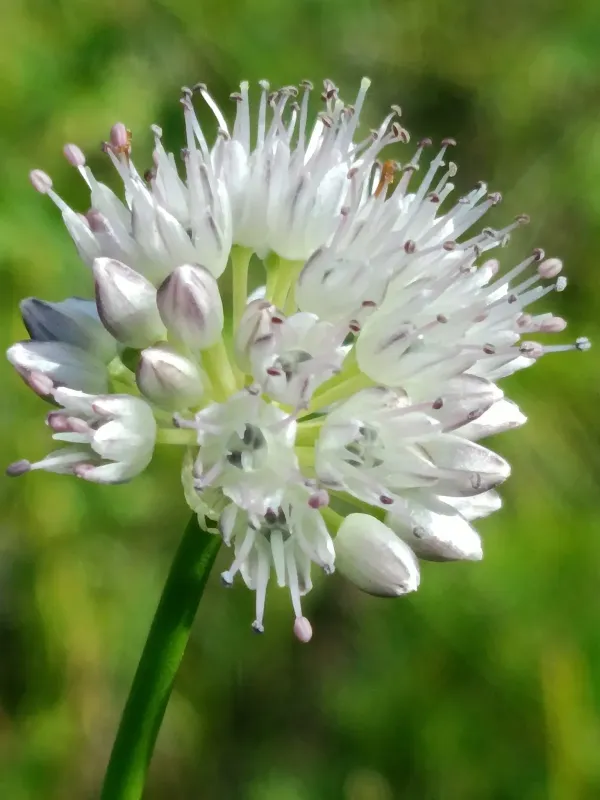
The plant also offers aesthetic value. During the flowering stage, it produces attractive pink-to-violet umbels that serve as excellent forage for pollinators, making it a dual-purpose plant for edible landscaping.
Managing the plant for yield requires periodic cutting back. By preventing the plant from focusing entirely on seed production, you can force the energy back into the bulbs and encourage a continuous supply of fresh, tender leaves.
Main diseases and pests
Common pests include onion flies and various aphids that may attack the foliage. Integrated pest management, including the use of companion plants like marigolds or aromatic herbs, helps to deter these threats naturally.
Fungal diseases, such as powdery mildew or rust, can occur if humidity levels are high and air circulation is restricted. Preventive measures include maintaining appropriate plant spacing and avoiding overhead irrigation during humid weather.
Root rot is the most significant threat if the soil remains waterlogged. Ensuring that the site is well-drained and preventing soil compaction are the most effective ways to mitigate the risk of pathogen build-up in the root zone.
Regular inspection of the foliage for signs of discoloration or wilting is recommended. Early detection of pest infestations or disease allows for localized intervention, preventing the need for broad-spectrum chemical treatments.
Keeping the garden area free of debris and weeds reduces the habitat available for pests. A clean, well-tended plot is naturally more resistant to the stressors that typically invite disease and insect attacks.
Harvesting
Harvesting typically commences in early spring and lasts through mid-summer. Foliage should be cut with a sharp, sterile blade, leaving at least 2-3 centimeters of growth above the soil to ensure the plant can regenerate.
Freshly harvested greens should be kept in a cool environment, preferably in an airtight container or a vegetable drawer, where they can last for up to a week. For longer storage, blanching and freezing are effective.
If seeds are required, select the healthiest plants with the most robust flower stalks and allow them to fully mature. Once the seed pods turn brown and begin to split, harvest and dry them in a shaded, well-ventilated area.
Seed viability usually lasts for two to three years when stored in a cool, dry place. Proper labeling of seeds with the harvest year is essential for maintaining a rotation schedule in your garden.
Post-harvest, the plants enter a period of rest. No specific winter preparation is required as the species is fully cold-hardy, allowing it to emerge again with renewed vigor once the spring thaw begins.