
Long-spathed garlic
Allium longispathum
Description
Growing requirements
Long-spathed garlic (Allium longispathum) belongs to the Amaryllidaceae family, a diverse group of bulbous plants. Originating primarily from Southern Europe and parts of Western Asia, this species thrives in dry, rocky, and sun-exposed habitats.
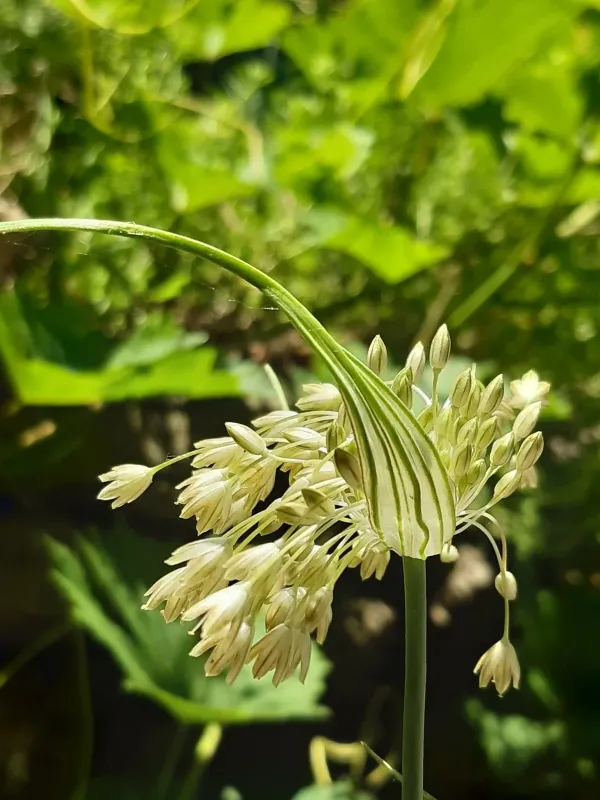
The plant is distinguished by its narrow, channeled leaves and a characteristically long spathe that encloses the inflorescence during the bud stage. Its bulb is elongated and protected by brownish or grayish tunics, which are well-adapted to surviving arid climate conditions.
In terms of soil requirements, this crop demands excellent drainage and loose, aerated substrates. It is highly intolerant of waterlogged soils, which frequently lead to the rapid development of bacterial or fungal pathogens in the root zone.
Climate preferences focus on high light intensity and distinct seasonal cycles. Allium longispathum is considered a drought-tolerant species, preferring warmer temperatures and lower humidity levels, which simulate its natural Mediterranean environmental conditions.
In agricultural practice, it is often treated as a specialty or niche crop. Its usage ranges from culinary applications as a seasoning with a sharp, pungent profile to ornamental use in rock gardens, owing to its unique aesthetic appearance and modest water requirements.
Main diseases and pests
Fungal infections remain the primary threat to the stability of Allium longispathum crops. Fusarium wilt and basal rot are particularly problematic in instances where soil moisture management is insufficient, leading to rapid degradation of the plant structure.
Insect pests such as the onion fly (Delia antiqua) and onion thrips present significant challenges. These pests can severely damage the foliage and the subterranean bulbs, reducing overall vigor and potentially leading to total loss if left unmanaged.
Weed competition is another critical factor in the early stages of plant development. Due to its relatively slow initial growth, the crop requires careful maintenance of weed-free rows to ensure optimal light and nutrient uptake, especially in fields with high weed pressure.
Preventative measures involve crop rotation strategies, ensuring that the land has not been occupied by other Allium species for several years. This practice significantly reduces the buildup of soil-borne pathogens and larvae of specific onion pests.
Monitoring programs, including the use of sticky traps for winged insects, allow for timely intervention. When necessary, the use of selective insecticides or organic fungicides is implemented to protect the crop while maintaining safety standards for agricultural produce.