
Lebanese onion
Allium libani
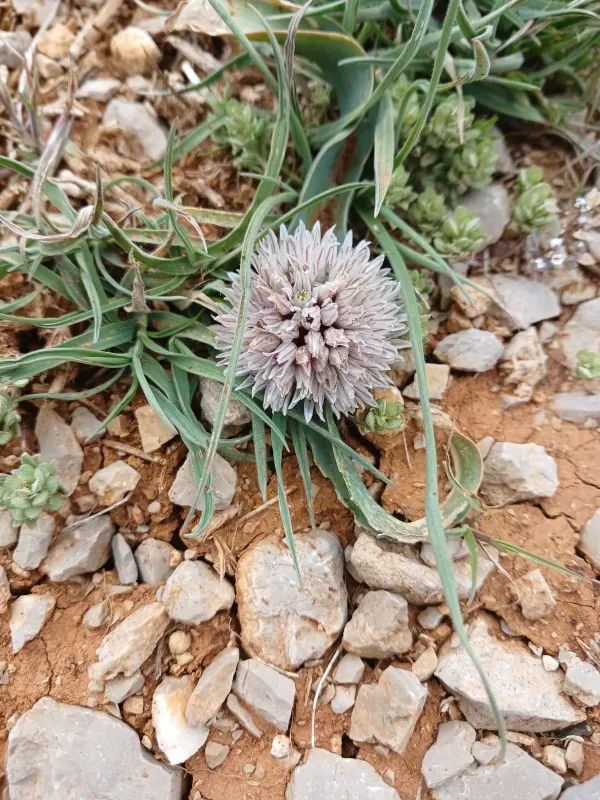
Description
Growing requirements
The Lebanese onion (Allium libani) is a member of the Amaryllidaceae family, originating from the mountainous regions of the Middle East. It is a perennial plant characterized by its adaptation to rugged and dry habitats.
Successful cultivation requires soil that is exceptionally well-draining, mimicking the stony and gritty terrain of its natural environment. Heavy, moisture-retentive soils are detrimental to the bulb's health.
The plant thrives in full sun, requiring significant light exposure during its growing season to develop robust foliage and maintain its biological cycle.
Watering management is crucial; the substrate should remain moist only while the foliage is active. Once the leaves begin to fade, the plant must be kept dry to ensure a proper dormant phase.
Due to its aesthetic and botanical properties, it is often utilized in rock gardens, though it remains a subject of interest for those studying the agricultural potential of wild Allium species.
Main diseases and pests
The most significant threats to Allium libani are fungal pathogens, specifically those causing basal rot and mildew, which flourish if the soil drainage is inadequate.
Pests such as onion maggots can severely impact the bulb, necessitating proactive monitoring during the early stages of the growing season.
Preventative measures include crop rotation and ensuring that the planting site has excellent air circulation to reduce humidity levels.
Soil sterilization or the use of clean, pathogen-free growing media is recommended, particularly for nursery production or small-scale specialized cultivation.
Early identification of wilting or discoloration in leaves allows for quick intervention, which is essential for protecting the integrity of the bulbous rootstock.