
Snowdrop onion
Allium galanthum
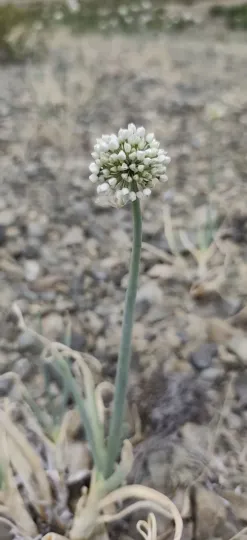
Description
Sowing dates
Snowdrop onion is a perennial crop typically sown in early spring, once the soil temperature consistently reaches 5–8 degrees Celsius to support germination.
Seeds should be placed in prepared furrows at a depth of 1.5 to 2 centimeters, ensuring the soil is firmed over them to maintain moisture contact for the seeds.
Winter sowing is also a viable practice, allowing seeds to undergo natural stratification in the ground, resulting in earlier and more uniform emergence in the spring.
This species is characterized by its high cold hardiness, making it an excellent candidate for regions with harsh winter climates where other crops might fail.
A row spacing of 25–30 centimeters is recommended to allow for adequate airflow, weeding, and mechanical cultivation between the plant rows.
Growing requirements
Snowdrop onion (Allium galanthum), a member of the Amaryllidaceae family, thrives in well-lit, sunny areas with loose, fertile sandy or loamy soils.
The crop is highly sensitive to waterlogging, necessitating the selection of well-drained locations to prevent rot in the root system and bulb tissue.
The optimal soil pH level for healthy development ranges from 6.0 to 7.0; acidic soils should be amended with lime or dolomite to achieve these levels.
Incorporating organic matter, such as well-rotted compost or manure, into the soil prior to planting provides essential nutrients for strong vegetative growth.
Regular maintenance, including weeding and hoeing, is crucial for preserving soil moisture and ensuring the roots have access to sufficient oxygen.
Yield
The yield of snowdrop onion is influenced by the plant's maturity; as the perennial clumps enlarge over several years, the total production of greens increases significantly.
In the initial year of growth, yields are modest as the plant focuses its energy on establishing a deep, robust root system and developing healthy bulbs.
By the second and subsequent years, the plant produces a dense cluster of shoots, providing a consistent supply of green leaves throughout the growing season.
Average yields can reach between 1.5 and 3 kilograms per square meter, depending on soil fertility, water management, and the frequency of harvesting the foliage.
Applying nitrogen-rich fertilizers immediately after each harvest encourages rapid regrowth, effectively maximizing the total seasonal output of the crop.
Main diseases and pests
Fungal diseases are the primary threat, particularly under conditions of high humidity or poor ventilation, which can lead to downy mildew or bulb rot.
Common pests include onion flies and thrips, which can rapidly damage the leaves and negatively impact the overall commercial quality of the produce.
Disease management relies heavily on strict crop rotation and avoiding the planting of Allium species in the same spot for several consecutive years.
Integrated pest management, including the use of biological control agents and physical barriers, is recommended to minimize the need for chemical interventions.
- Maintain appropriate watering schedules to avoid soggy conditions.
- Remove and destroy any infected plant material immediately upon detection.
- Practice proper spacing to ensure adequate air circulation between plants.
Harvesting
Harvesting usually begins when the green leaves reach a height of 20–25 centimeters, typically occurring from late spring to the early summer months.
The foliage should be cut with a sharp tool, leaving a small stump of 2–3 centimeters above the root base to protect the growing point and facilitate regrowth.
In regions with mild temperatures, multiple harvests can be obtained during a single growing season by allowing the plants to recover for several weeks between cuts.
If bulbs are the target crop, they should be harvested at the end of the season once the leaves have naturally withered and dried back to the soil surface.
After harvesting, the bulbs should be cured in a shaded, well-ventilated area to reduce moisture content and improve their storage life for future use.