
Heath garlic
Allium ericetorum
Description
Growing requirements
Heath garlic (Allium ericetorum) is a perennial herbaceous plant belonging to the Amaryllidaceae family. In the wild, it typically thrives in open, sunny locations with well-drained sandy or rocky soils, commonly found in heathlands, which explains its common name and specific adaptation to nutrient-poor environments.
The natural range of this species covers various parts of Central and Eastern Europe. It is well-adapted to temperate climates and prefers sites with significant solar exposure. The plant exhibits high resilience to drought due to its bulbous nature and efficient water storage capabilities within its tissues.
In terms of soil requirements, the species favors light, loose, and slightly acidic to neutral substrates. Proper drainage is essential to prevent waterlogging, which the plant cannot tolerate. Growers should prioritize sites that allow for rapid moisture runoff to ensure the longevity of the bulbs.
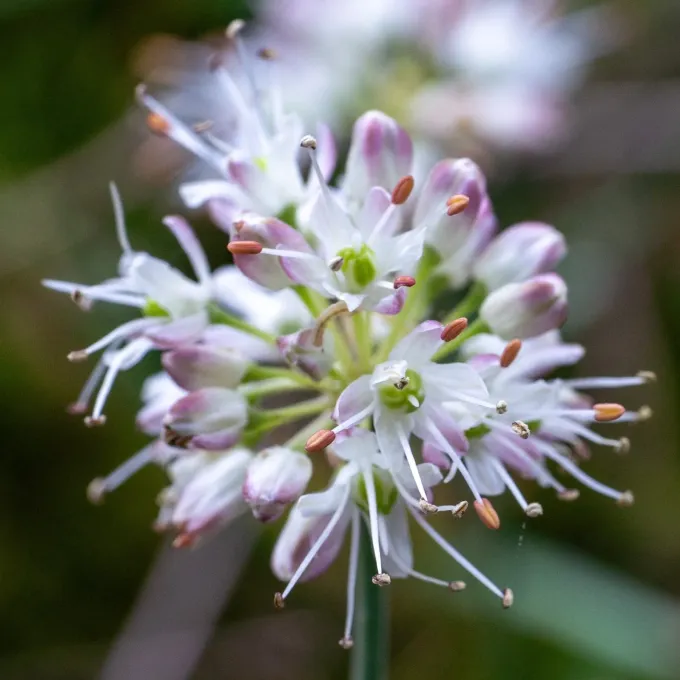
Botanically, the plant features thin, linear leaves forming a basal rosette and a slender flowering stem, usually reaching 20 to 40 centimeters in height. The inflorescence is a small, umbellate cluster of white to pale pink flowers that are characteristic of many wild Allium species.
Regarding its utility, heath garlic is primarily used in ornamental gardening and alpine rockeries rather than commercial food production. Its ability to grow in challenging, low-nutrient soils makes it a unique candidate for xeriscaping and biodiversity-focused gardening projects.
Main diseases and pests
The primary threats to the healthy growth of this species include fungal pathogens such as downy mildew and various types of bulb rot. These diseases are almost exclusively linked to poor drainage or overly humid growing conditions that compromise the health of the subterranean parts.
Common insect pests include onion flies, which target the root systems, and thrips, which can cause significant foliar damage during dry spells. Integrated pest management strategies, such as maintaining optimal plant spacing and ensuring good airflow, are crucial to prevent widespread outbreaks.