
Desert onion
Allium desertorum
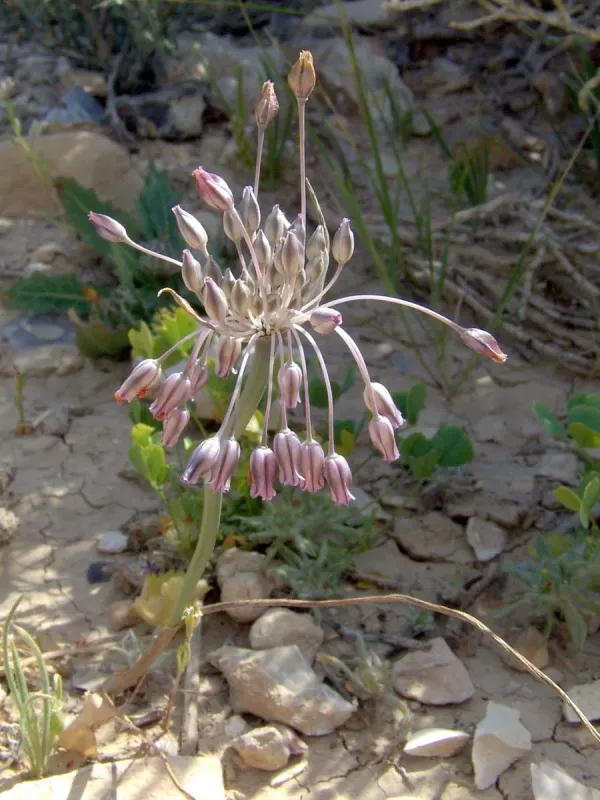
Description
Sowing dates
The sowing of the desert onion is best carried out in the autumn, as the seeds require a period of cold stratification to break dormancy.
In arid environments, late autumn seeding allows the plant to establish its root system before the onset of the hottest summer temperatures.
When choosing a site, ensure that the soil is prepared to a fine tilth, as desert onion seeds are relatively small and need good contact with the earth.
Sowing depth should be kept shallow, typically between 1 and 2 centimeters, to facilitate rapid emergence when moisture is present.
The spacing between rows should be sufficient to allow for air circulation, which helps reduce the risk of humidity-related issues at the base of the plant.
Growing requirements
The desert onion (Allium desertorum) belongs to the Amaryllidaceae family and is specifically adapted to survive in harsh, arid landscapes.
It demands full sun exposure throughout its entire growth cycle and cannot tolerate shading from neighboring crops or weeds.
Well-drained, sandy soils are ideal, as these mimic the plant's natural habitat and prevent the accumulation of moisture around the bulbs.
The species is remarkably drought-tolerant, utilizing its storage bulb to maintain metabolic activity during prolonged periods without rainfall.
Soil pH should remain near neutral, as extreme alkalinity or acidity can hinder the nutrient uptake necessary for robust bulb development.
Yield
Yield potential of the desert onion is optimized when the plant is given sufficient space and minimal competition from aggressive weeds.
While not a traditional large-scale industrial crop, its yield is highly valued in specialized markets for its unique, pungent flavor profile.
Productivity can be enhanced by the controlled application of organic amendments that improve soil structure without introducing excessive moisture.
The total yield per hectare depends heavily on the density of the initial stand and the consistency of the environmental conditions during the spring.
Proper management of the vegetation period ensures that each bulb reaches its maximum mass before the plant enters its summer dormancy phase.
Main diseases and pests
The primary threats to this crop include various soil-borne pathogens that thrive if the irrigation levels exceed the plant's natural requirements.
Root rot is a major concern in heavier clay soils, which hold water for too long and lead to the rapid decay of the onion bulb.
Insect pests, particularly bulb-boring flies, can cause significant damage if the crop is not rotated away from previous Allium-family sites.
Foliar diseases, such as fungal spots, may occur if dew lingers on the leaves during high-humidity periods, requiring careful monitoring.
Integrated pest management strategies focusing on early detection and prevention are essential for maintaining a healthy and productive population.
Harvesting
Harvesting should take place when the foliage has largely turned yellow and collapsed, indicating that the bulb has completed its growth.
Using a mechanical digger or hand tools, the bulbs are lifted carefully to avoid bruising, which could shorten the shelf life of the crop.
Curing is a critical step, requiring the bulbs to be left in a dry, ventilated area until the outer skins become papery and dry.
Once cured, the neck of the bulb should feel firm, and the roots should be trimmed to prevent moisture retention during the storage phase.
Storage must be in a cool, dark location with low humidity to maintain the culinary quality of the desert onion for future consumption.