
Corsican onion
Allium corsicum
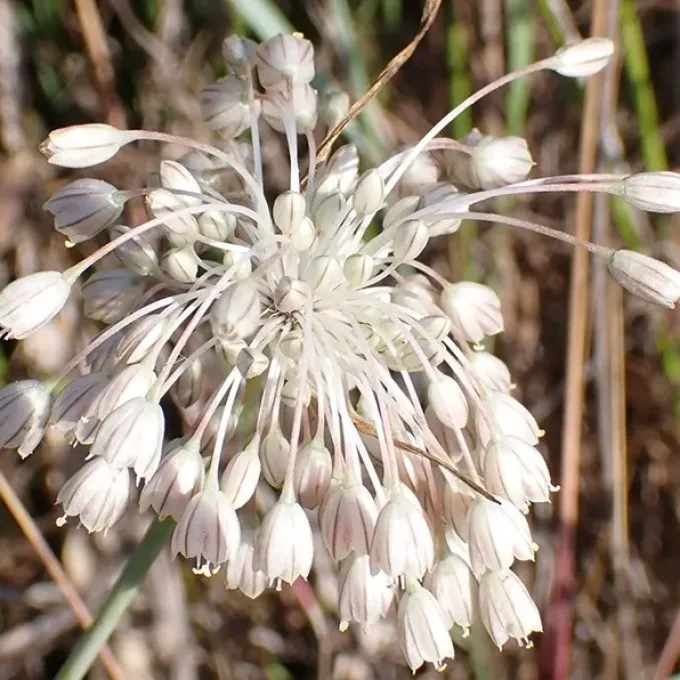
Description
Sowing dates
Corsican onion is a perennial herbaceous plant belonging to the Amaryllidaceae family. It is a rare species endemic to the island of Corsica, thriving primarily in stony habitats and Mediterranean environments.
In agricultural practice, this plant is considered a botanical rarity rather than a major food crop. Propagation is typically achieved through seeds, which often require cold stratification to break dormancy and ensure high germination rates.
Seeds should be sown in autumn or early spring in a well-draining substrate. Shallow sowing depth, approximately 0.5 cm, is crucial to prevent the seeds from suffocating or rotting before they can germinate.
Seedlings need plenty of light and should be kept in a well-ventilated area. Once the plants develop their first true leaves, they can be transplanted into individual pots or a permanent location in the garden.
The establishment period is relatively slow, and plants usually require careful monitoring during their first year of growth to ensure they develop strong bulbs.
Growing requirements
The primary requirement for successful cultivation is excellent drainage. This plant is a xerophyte, adapted to harsh, dry conditions, and it will suffer quickly in heavy, waterlogged soils.
Exposure to full sunlight is necessary to encourage healthy growth and bulb maturation. In regions with long, dark winters, greenhouse cultivation may be preferred to maintain adequate light levels.
The soil should have a neutral or slightly alkaline pH. Adding grit or coarse sand to the substrate helps mimic the natural rocky soils where Allium corsicum is typically found.
Temperature management is straightforward, as the plant prefers Mediterranean-style seasons. Extreme frosts should be avoided, and providing a light winter cover is recommended in colder climates.
Fertilization should be kept to a minimum. Over-feeding with nitrogen-heavy fertilizers can lead to weak, lush growth that is more susceptible to pests and diseases.
Main diseases and pests
Excessive humidity is the most common cause of failure. Fungal pathogens, including Fusarium oxysporum, can cause bulb rot if the plants are kept in soil that does not drain rapidly.
Pests such as onion flies (Delia antiqua) pose a significant threat to the bulb integrity. Early detection is key to preventing the spread of infestations across the planting area.
Thrips may also become an issue during hot, dry summer months. Regular inspection of the foliage and the application of organic or chemical pest control measures are recommended.
To prevent disease spread, it is essential to ensure that tools are disinfected and that no damaged bulbs are planted in the field. Sanitation of the planting site is a standard procedure.
Crop rotation should be strictly followed to avoid the accumulation of soil-borne pathogens. Planting Allium species in the same spot for consecutive years should be avoided at all costs.